Plastic pollution is harming our planet, animals, and oceans. We can reduce this problem by making small, smart choices every day. Saying no to single-use plastics, reusing items, and cleaning our surroundings can help protect nature. When everyone works together, even simple actions create a cleaner, safer Earth.
5 Pointers on ‘How to Reduce Plastic Pollution’
- Plastic pollution harms animals, plants, and people.
- We should use less plastic in our daily life.
- Reusing and recycling plastic helps reduce waste.
- Cloth bags and steel bottles are better than plastic ones.
- Small actions by everyone can make a big difference
‘How to Reduce Plastic Pollution’ Paragraph Writing
Hamburger Paragraph on ‘How to Reduce Plastic Pollution’ (Free Template)
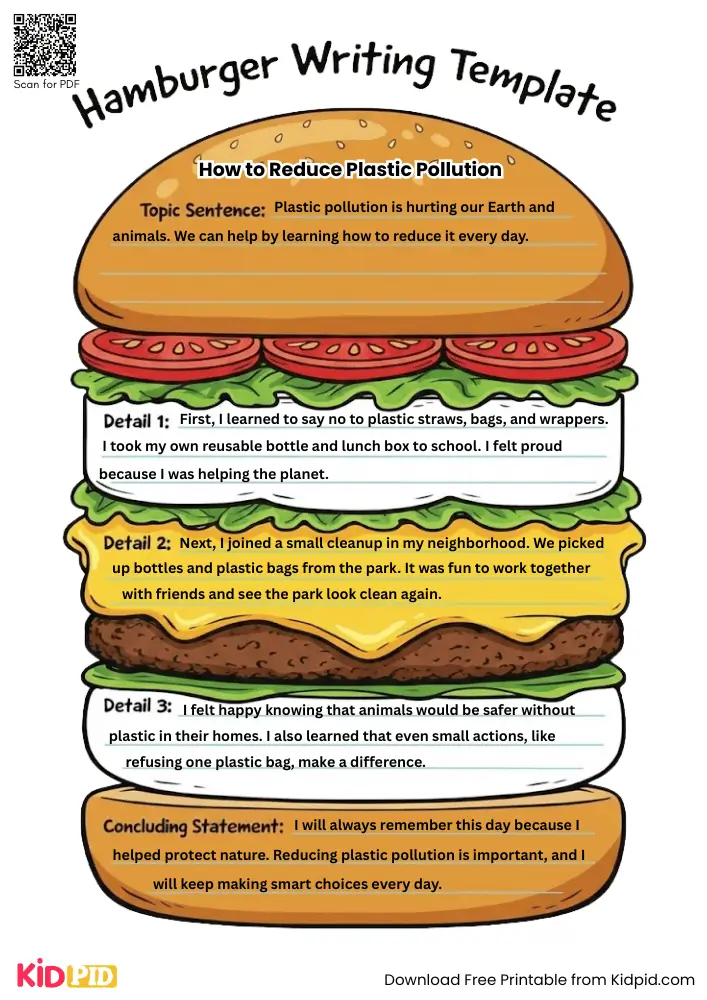
Topic Sentence: Plastic pollution is hurting our Earth and animals. We can help by learning how to reduce it every day.
Details 1: First, I learned to say no to plastic straws, bags, and wrappers. I took my own reusable bottle and lunch box to school. I felt proud because I was helping the planet.
Details 2: Next, I joined a small cleanup in my neighborhood. We picked up bottles and plastic bags from the park. It was fun to work together with friends and see the park look clean again.
Details 3: I felt happy knowing that animals would be safer without plastic in their homes. I also learned that even small actions, like refusing one plastic bag, make a difference. This day taught me that everyone can help the Earth.
Concluding Statement: I will always remember this day because I helped protect nature. Reducing plastic pollution is important, and I will keep making smart choices every day.
Short Paragraph on ‘How to Reduce Plastic Pollution’ – 50 Words for Grade 3
You can help reduce plastic pollution! Start by saying no to plastic straws and bags. Use a reusable water bottle and lunch box. Choose snacks with less plastic wrapping. Recycle the plastic you do use correctly. Every piece of plastic you refuse or reuse helps our planet.
Long Paragraph on ‘How to Reduce Plastic Pollution’ – 100 Words for Grade 4

Reducing plastic pollution is easy and important. First, refuse single-use plastics like straws, bags, and cutlery. Always carry your own reusable bottle and bag. At the store, pick items with paper or cardboard packaging instead of plastic. Reuse plastic containers for crafts or storage before you recycle them. Finally, always put clean plastic bottles and containers in the recycling bin, not the trash. You can also join a cleanup to pick up litter in your community. Small changes by many people make a huge difference for animals and the health of our Earth.
‘How to Reduce Plastic Pollution’ Essay Writing
‘How to Reduce Plastic Pollution’ – 150 to 200 Words Essay for Grades 5 to 7 Students
Plastic pollution is a big problem for our planet, but you have the power to be part of the solution! The best place to start is by reducing the amount of plastic you use every day.
First, focus on saying “no” to single-use plastics. These are items like straws, shopping bags, and water bottles that we use once and throw away. Instead, carry your own reusable versions. Keep a metal bottle in your backpack and bring cloth bags to the store. Second, be a smart shopper. Choose products that use paper, glass, or metal packaging instead of plastic when you can. Buying one big bag of chips is better than lots of small ones!
Finally, make sure you recycle properly. Ask your family to help you learn which plastics go in the blue bin. Always rinse out containers so they can be turned into something new. You can also help by joining a cleanup to pick up litter in your neighborhood. Every piece of plastic you refuse, reuse, or recycle helps protect animals and keeps our Earth beautiful.
‘How to Reduce Plastic Pollution’ – 300 Words Essay for Grades 8 to 10 Students
Plastic pollution is like a puzzle that hurts our environment. You’ve seen the pieces: bottles in a ditch, bags in a tree, or tiny bits in the sand. This plastic doesn’t go away; it just breaks into smaller and smaller pieces, harming animals and polluting soil and water for hundreds of years. The good news is that we can solve this puzzle together by following three key steps: refuse, reduce, and reuse.
The most powerful step is to refuse unnecessary plastic before it even enters your home. This means saying “no, thank you” to a plastic straw at a restaurant, skipping the plastic bag for one or two items, and choosing a treat without a plastic wrapper. By refusing, you stop the problem at the source. Next, reduce your overall plastic footprint. At the grocery store, look for items sold in cardboard, glass, or metal. Choose a bar of soap instead of liquid soap in a plastic pump, and buy the big container of yogurt instead of small plastic cups. Every choice adds up!
After refusing and reducing, focus on reusing creatively. Give plastic a second life! Wash and reuse plastic containers for storing leftovers or art supplies. Turn an old bottle into a bird feeder or a planter. Most importantly, switch to dependable reusables: a sturdy water bottle, cloth shopping bags, and a lunchbox with compartments. Finally, when plastic can’t be refused or reused, recycle it correctly. Learn your local rules, clean the items, and make sure they go in the right bin so they can be made into new products.
Remember, your actions inspire others. Talk to your family and friends about why this matters. By being a plastic-conscious kid, you’re not just cleaning up—you’re helping to build a healthier, cleaner future for all living things, one smart choice at a time.
Related Essay & Paragraph Topic
- Simple Ways to Reduce Plastic Pollution
- How Students Can Help Stop Plastic Pollution
- Small Steps to Reduce Plastic Waste
- Reducing Plastic Pollution in Our Daily Life
- Say No to Plastic: Protecting Our Earth
You May like this:
Adapting To Change
Adapting to change strengthens flexibility, resilience, innovation, confidence, growth mindset, and success in dynamic environments.
Overcoming Self-Doubt

Overcoming self-doubt builds confidence, self-belief, resilience, courage, positive mindset, and personal achievement.
Learning New Habits

Learning new habits supports self-discipline, personal development, productivity, healthy lifestyle, and positive transformation.
Importance Of Self-Belief

Self-belief strengthens confidence, motivation, resilience, goal achievement, positive mindset, and personal growth.
Returning Lost Items Honestly

Returning lost items honestly reflects integrity, honesty, empathy, trustworthiness, ethical behavior, and moral responsibility.