“Every child should travel to explore new places and cultures. Traveling teaches children about different people, traditions, and nature. It improves curiosity, learning, and understanding of the world. Seeing new things also inspires creativity and confidence. Traveling makes childhood exciting, educational, and full of memorable experiences.”
5 Pointers on ‘Why Every Child Should Travel’
- Traveling helps children learn about new places and cultures.
- It makes learning fun and real outside the classroom.
- Travel teaches children to be independent and confident.
- Visiting new places improves curiosity and creativity.
- Traveling creates happy memories and life lessons.
‘Why Every Child Should Travel’ Paragraph Writing
Hamburger Paragraph on ‘Why Every Child Should Travel’ (Free Template)
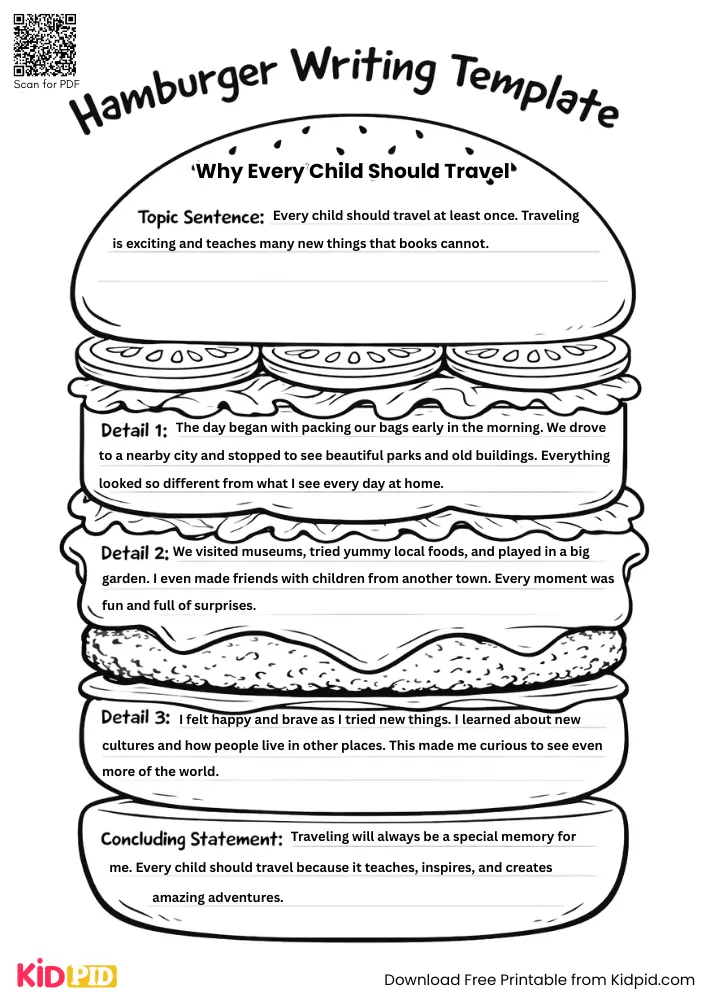
Topic Sentence : Every child should travel at least once. Traveling is exciting and teaches many new things that books cannot.
Details 1 : The day began with packing our bags early in the morning. We drove to a nearby city and stopped to see beautiful parks and old buildings. Everything looked so different from what I see every day at home.
Details 2 : We visited museums, tried yummy local foods, and played in a big garden. I even made friends with children from another town. Every moment was fun and full of surprises.
Details 3 : I felt happy and brave as I tried new things. I learned about new cultures and how people live in other places. This made me curious to see even more of the world.
Concluding Statement : Traveling will always be a special memory for me. Every child should travel because it teaches, inspires, and creates amazing adventures.
Short Paragraph on ‘Why Every Child Should Travel’ – 50 Words for Grades 2 to 3
Every child should travel. It is the best way to learn. You see new places, taste new foods, and meet new people. Travel makes you braver and more curious. It turns book lessons into real adventures and creates the best family memories that last a lifetime.
Long Paragraph on ‘Why Every Child Should Travel’ – 100 Words for Grade 4
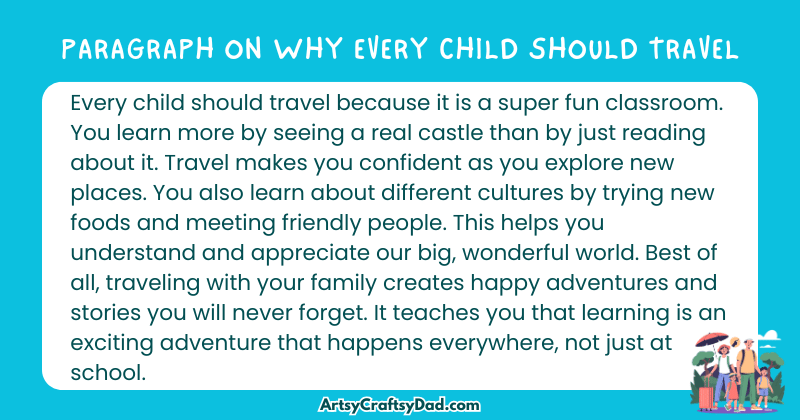
Every child should travel because it is a super fun classroom. You learn more by seeing a real castle than by just reading about it. Travel makes you confident as you explore new places. You also learn about different cultures by trying new foods and meeting friendly people. This helps you understand and appreciate our big, wonderful world. Best of all, traveling with your family creates happy adventures and stories you will never forget. It teaches you that learning is an exciting adventure that happens everywhere, not just at school.
‘Why Every Child Should Travel’ Essay Writing
‘Why Every Child Should Travel’ – 150 to 200 Words Essay for Grades 5 to 7 Students
Every child should have the chance to travel because it is the most fun and effective classroom in the world. Traveling takes lessons out of books and makes them real. You don’t just read about the Roman Colosseum—you can stand inside it. You don’t just learn a Spanish word – you get to use it to order a snack. These experiences make learning exciting and unforgettable.
Travel also teaches important life skills. It helps you become more confident as you navigate airports, try new activities, and explore unfamiliar streets. Most importantly, travel opens your heart and mind. By meeting people from different cultures, tasting new foods, and seeing different ways of life, you learn that our world is beautifully diverse. You become more patient, flexible, and curious. These adventures, whether to a nearby city or a far-off country, create precious family memories and help shape you into a knowledgeable, kind, and globally-minded person.
‘Why Every Child Should Travel’ – 300 Words Essay for Grades 8 to 10 Students
Traveling is far more than a vacation; it is a vital part of a child’s education and personal growth. While school teaches important facts, travel brings those facts to life and teaches irreplaceable lessons about the world and oneself.
First, travel is active, immersive learning. History becomes tangible when a child walks on cobblestone streets used centuries ago. Geography makes sense when they see the vastness of an ocean or the height of a mountain. They learn biology by snorkeling in a reef and social studies by visiting a local market. This kind of learning sparks curiosity and makes children eager to know more, proving that education exists everywhere, not just at a desk.
Beyond academics, travel builds essential character traits. It naturally fosters adaptability and problem-solving—what do we do if we get lost? How do we communicate without knowing the language? Overcoming these small challenges builds tremendous confidence and resilience. Children learn to be flexible when plans change and to appreciate simple joys.
Perhaps the greatest gift of travel is the cultivation of empathy and a global perspective. By interacting with people who speak, dress, eat, and live differently, children learn that their way is not the only way. They learn tolerance, respect, and find common ground through shared smiles and games. This breaks down prejudices from a young age and nurtures open-minded, compassionate future citizens.
Finally, travel strengthens family bonds through shared discovery and adventure. The memories created—from getting lost together to witnessing a stunning sunset—become the stories that define a childhood. In a world that can feel divided, giving a child the gift of travel is giving them the tools to navigate it with confidence, curiosity, and kindness. It shows them how big, beautiful, and welcoming the world truly.
Related Essay & Paragraph Topic
- The Importance of Traveling for Children
- How Traveling Helps Children Learn
- Why Travel Is a Great Teacher
- Learning Beyond Books Through Travel
- Traveling: Fun, Learning, and Growth
You May like this:
Importance Of Trustworthiness

Learn why being trustworthy builds strong relationships and respect. Encourages honesty, reliability, responsibility, and strong moral character in personal and social life.
Choosing Kindness Over Anger

Learn why choosing kindness instead of anger improves relationships and emotional health. Encourages patience, empathy, peaceful communication, and positive behavior.
Respect As a Life Value

Understand how respect strengthens relationships and builds a peaceful society. Promotes kindness, empathy, tolerance, and positive social interactions.
Learning Beyond Classrooms
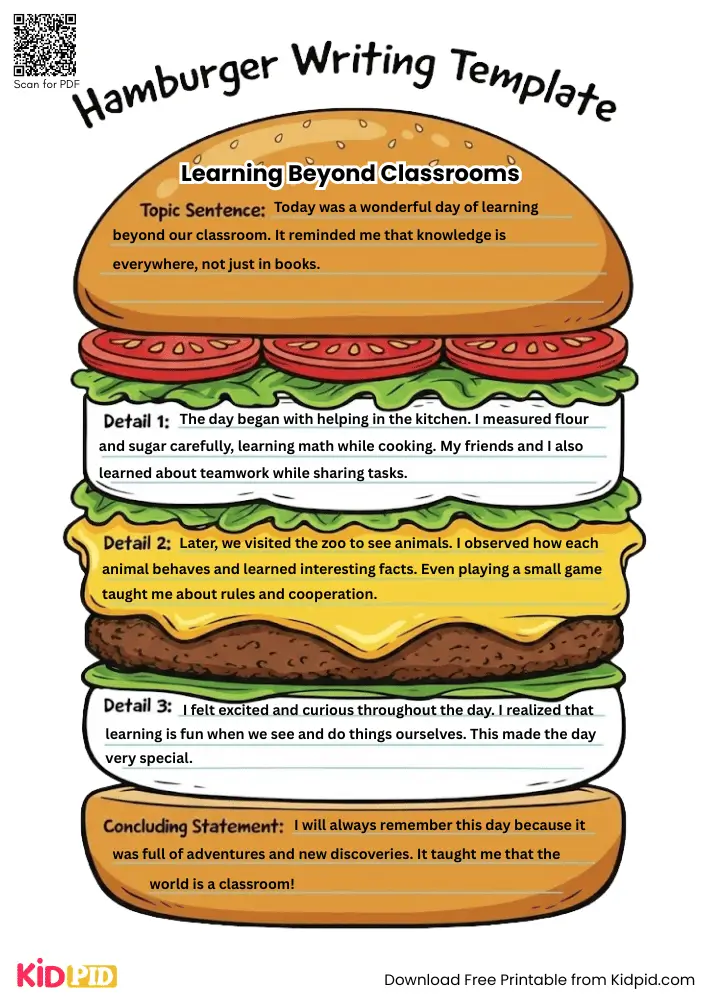
Understand how learning happens outside classrooms through experiences, observations, and real-life interactions. Promotes practical knowledge, curiosity, and lifelong learning.
Observing The World Carefully

Discover how careful observation improves understanding and learning. Promotes curiosity, awareness, critical thinking, and deeper appreciation of the surrounding world.