“Understanding others’ feelings helps us become kind, caring, and thoughtful people. By listening closely, watching expressions, and noticing small actions, we learn what someone may be going through. This skill builds strong friendships, reduces conflicts, and creates a warm, friendly world where everyone feels safe, valued, and understood.”
5 Pointers on ‘Understanding Others’ Feelings ‘
- Pay attention to what people say and how they act.
- Notice facial expressions, tone of voice, and body language.
- Listen carefully without interrupting when someone talks.
- Imagine how you would feel in their situation.
- Be kind and supportive based on what they are feeling.
‘Understanding Others’ Feelings ‘ Paragraph Writing
Hamburger Paragraph on ‘Understanding Others’ Feelings’ (Free Template)

Topic Sentence: Yesterday was a very special day because I learned how important it is to understand others’ feelings. Knowing how someone feels helps us become kind and caring friends.
Details 1: The day started when I saw my friend looking sad at school. I noticed he was quiet and his shoulders were slumped. I asked him gently, “Are you okay?”
Details 2: He told me he lost his favorite toy, and I listened carefully. I tried to imagine how I would feel if I lost something I loved. Then we played a game together, and I helped him feel happy again.
Details 3: I felt proud that I could understand his feelings. I learned that just listening or asking kindly can make someone feel better. This made the day very special because I helped my friend feel cared for.
Concluding Statement: I will always remember this day because it taught me how important empathy is. Understanding others’ feelings makes friendships stronger and hearts happier.
Short Paragraph on ‘Understanding Others’ Feelings’ – 50 Words for Grade 3
Understanding others’ feelings is called empathy. Look at their face and body. Listen to their words and voice. Ask how they are feeling. Think how you would feel in their place. This helps you be a kind friend who knows when to cheer, help, or just listen.
Long Paragraph on ‘Understanding Others’ Feelings’ – 100 Words for Grades 4 to 5

Understanding others’ feelings is an important skill. It means paying close attention. Look at a person’s eyes and smile. Listen to what they say and how they say it. If they are quiet or look down, they might be sad. If they are laughing, they are happy. You can also ask a kind question like, “How are you feeling today?” Try to imagine yourself in their situation to better understand. When you understand how someone feels, you can be a better friend. You will know when to share, help, or just give them space. This makes everyone feel cared for.
‘Understanding Others’ Feelings ‘ Essay Writing
‘Understanding Others’ Feelings’ – 150 to 200 Words Essay for Grades 5 to 7 Students
Understanding how other people feel is an important life skill. It’s called empathy. It helps you be a good friend and makes the world a kinder place. To understand someone’s feelings, you need to listen carefully and watch closely. Listen not just to their words, but also notice their tone of voice and see their facial expressions.
Their body gives you clues, too. A person jumping up and down is probably excited. Someone looking at the ground might be sad or shy. If you are unsure, you can gently ask them a question like, “You seem upset, do you want to talk?” Remembering a time you felt the same way can also help you understand.
When you understand others’ feelings, you know when to offer help, share a toy, or just be a quiet friend beside them. It stops misunderstandings and builds strong, caring friendships.
‘Understanding Others’ Feelings’ – 300 Words Essay for Grades 8 to 10 Students
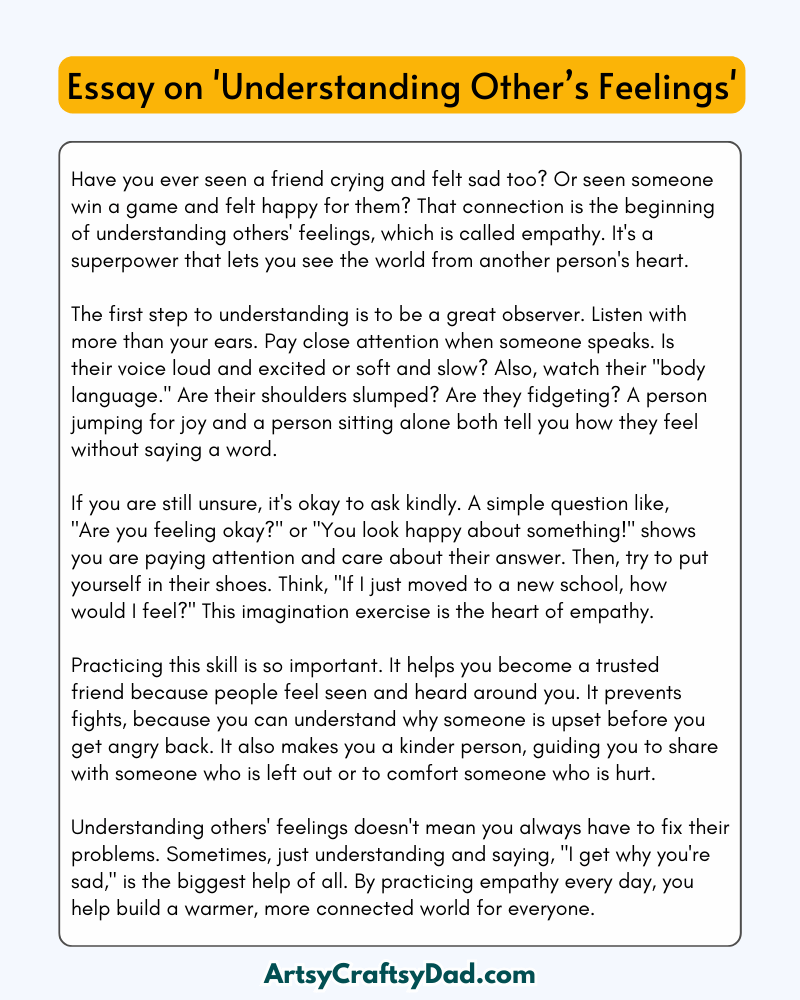
Have you ever seen a friend crying and felt sad too? Or seen someone win a game and felt happy for them? That connection is the beginning of understanding others’ feelings, which is called empathy. It’s a superpower that lets you see the world from another person’s heart.
The first step to understanding is to be a great observer. Listen with more than your ears. Pay close attention when someone speaks. Is their voice loud and excited or soft and slow? Also, watch their “body language.” Are their shoulders slumped? Are they fidgeting? A person jumping for joy and a person sitting alone both tell you how they feel without saying a word.
If you are still unsure, it’s okay to ask kindly. A simple question like, “Are you feeling okay?” or “You look happy about something!” shows you are paying attention and care about their answer. Then, try to put yourself in their shoes. Think, “If I just moved to a new school, how would I feel?” This imagination exercise is the heart of empathy.
Practicing this skill is so important. It helps you become a trusted friend because people feel seen and heard around you. It prevents fights, because you can understand why someone is upset before you get angry back. It also makes you a kinder person, guiding you to share with someone who is left out or to comfort someone who is hurt.
Understanding others’ feelings doesn’t mean you always have to fix their problems. Sometimes, just understanding and saying, “I get why you’re sad,” is the biggest help of all. By practicing empathy every day, you help build a warmer, more connected world for everyone.
Related Essay & Paragraph Topic
- Learning to Understand How Others Feel
- Why Empathy Helps Us Be Kind
- Understanding Friends’ and Family Emotions
- Seeing the World Through Others’ Eyes
- Being Caring by Understanding Feelings
You May like this:
Healthy Habits For Students
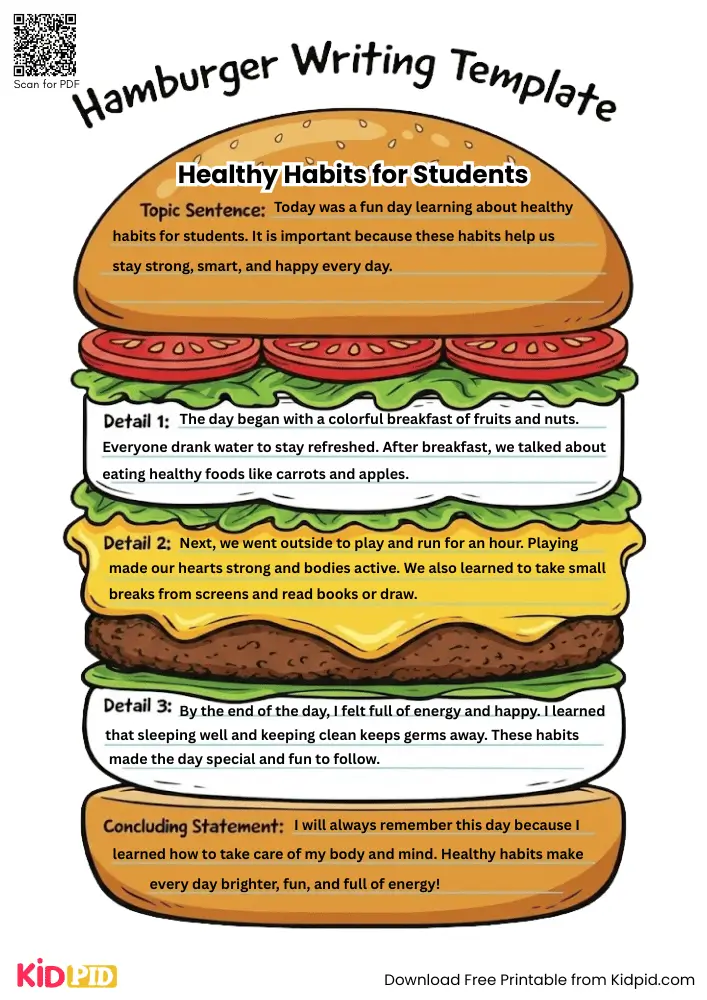
Healthy habits for students include balanced nutrition, regular exercise, proper sleep, time management, positive thinking, hydration, and consistent study routines.
Benefits Of Outdoor Play
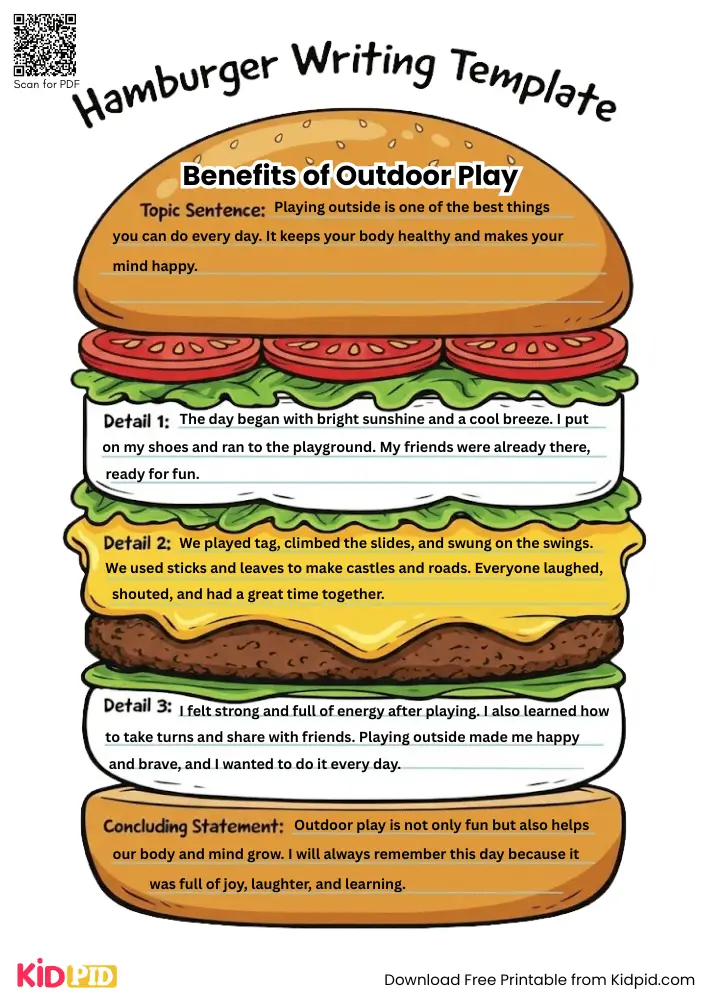
Outdoor play improves physical fitness, social skills, creativity, mental health, teamwork, confidence, and overall child development.
Why Every Student Should Read More

Reading more enhances vocabulary, comprehension skills, imagination, academic performance, focus, knowledge expansion, and lifelong learning habits.
Why Kindness Matters

Kindness builds strong relationships, fosters empathy, improves emotional health, strengthens communities, promotes positivity, and encourages cooperation.
Should Junk Food Be Banned At School?

Banning junk food promotes healthy eating habits, reduces childhood obesity, improves concentration, supports student health, and encourages nutritious choices.