“Life goals are like guiding stars that show us the way. They help us know what is important, make smart choices, and grow step by step. By thinking about what we love and practicing regularly, we can reach our dreams and become confident, happy, and responsible people.”
5 Pointers on “Understanding Life Goals”
- Life goals give us a sense of direction and purpose.
- They help us make decisions about what is important in life.
- Setting small goals leads to achieving bigger dreams.
- Life goals encourage self-discipline, focus, and hard work.
- Understanding and following our goals brings happiness and confidence.
‘Understanding Life Goals’ Paragraph Writing
Hamburger Paragraph on ‘Understanding Life Goals’ (Free Template)

Topic Sentence: One unforgettable day helped me understand the importance of life goals. It mattered because it changed the way I think about my future.
Details 1: The day began with a lesson comparing life to a treasure hunt. Our teacher said goals are like the ‘X’ on the map. This idea made learning fun and clear.
Details 2: We discussed our interests and hobbies. We learned how small steps can lead to big dreams. Activities like reading and practicing were shared as examples.
Details 3: I felt inspired and confident after the lesson. I learned that goals can change as we grow. Trying new things helps us learn more about ourselves.
Concluding Statement: This day will always stay in my memory. It taught me that learning and effort make dreams possible.
Short Paragraph on ‘Understanding Life Goals’ – 50 Words for Grades 2 & 3
Life goals are like a treasure map for your future. They are the big dreams you want to come true. Maybe you want to be a kind friend, a great artist, or a scientist. Thinking about your goals helps you plan fun steps to reach them!
Long Paragraph on ‘Understanding Life Goals’ – 100 Words for Grade 4
Life goals are your big dreams for the future. They are like destinations on a personal treasure map. Your goal could be to learn an instrument, help animals, or become a teacher. Goals give you something exciting to work toward. They are not just about jobs; they can be about being a good listener or learning a new skill. Start by thinking about what makes you happy and what you are curious about. Every small step you take, like practicing or reading a book, brings you closer to your big dream. Goals help make your journey through life an amazing adventure.
‘Understanding Life Goals’ Essay Writing
‘Understanding Life Goals’ – 150 to 200 Words Essay for Grades 5 to 7 Students
Imagine your life is a fantastic treasure hunt. Your life goals are like the ‘X’ on the map—the special treasures you want to find! These treasures aren’t always gold coins; they can be things like becoming a kind veterinarian, learning to paint beautiful skies, or being a great friend who always helps others.
The coolest part? You get to draw your own map. You start by listening to your heart. What do you love to do or think about? That’s your first clue. Maybe you love animals, stories, or building things. That feeling is your compass.
Remember, a giant goal can seem far away. If your goal is to climb a huge mountain, you don’t jump to the top! You take small steps. Want to be a scientist? Start by watching fun science videos or growing a bean plant. Every little step is a victory. And guess what? It’s perfectly fine if your treasure map changes as you discover new islands of interest. The adventure of learning and trying is what makes you stronger and wiser, no matter where your ‘X’ ends up being!
‘Understanding Life Goals’ – 300 Words Essay for Grades 8 to 10 Students
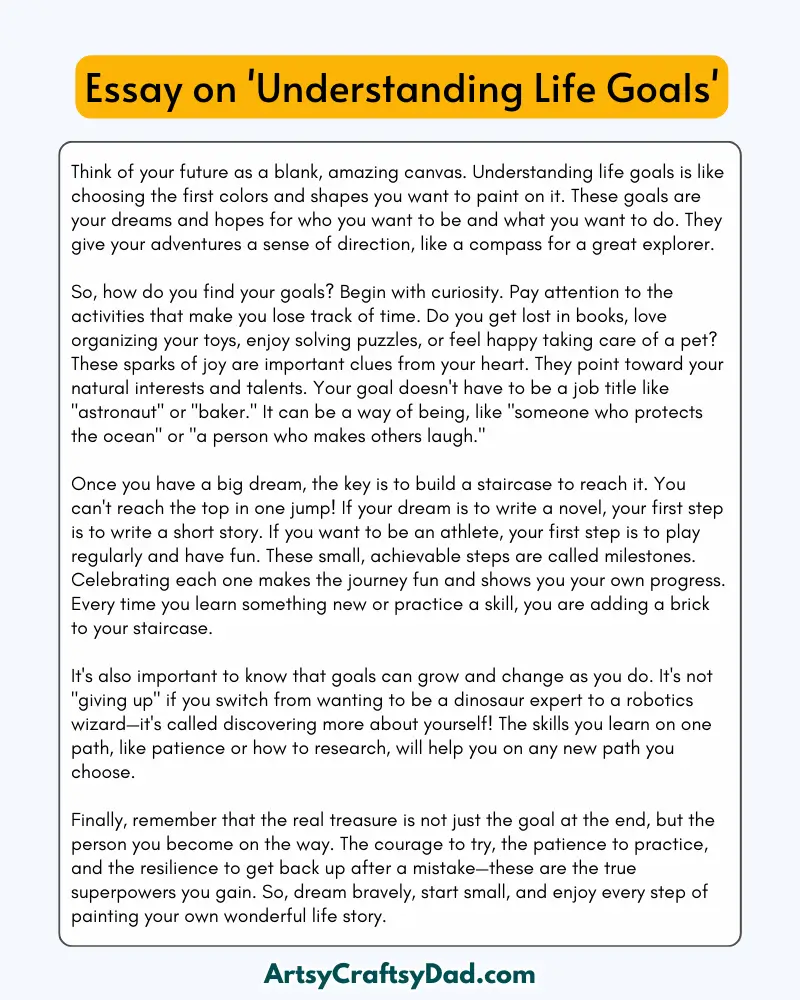
Think of your future as a blank, amazing canvas. Understanding life goals is like choosing the first colors and shapes you want to paint on it. These goals are your dreams and hopes for who you want to be and what you want to do. They give your adventures a sense of direction, like a compass for a great explorer.
So, how do you find your goals? Begin with curiosity. Pay attention to the activities that make you lose track of time. Do you get lost in books, love organizing your toys, enjoy solving puzzles, or feel happy taking care of a pet? These sparks of joy are important clues from your heart. They point toward your natural interests and talents. Your goal doesn’t have to be a job title like “astronaut” or “baker.” It can be a way of being, like “someone who protects the ocean” or “a person who makes others laugh.”
Once you have a big dream, the key is to build a staircase to reach it. You can’t reach the top in one jump! If your dream is to write a novel, your first step is to write a short story. If you want to be an athlete, your first step is to play regularly and have fun. These small, achievable steps are called milestones. Celebrating each one makes the journey fun and shows you your own progress. Every time you learn something new or practice a skill, you are adding a brick to your staircase.
It’s also important to know that goals can grow and change as you do. It’s not “giving up” if you switch from wanting to be a dinosaur expert to a robotics wizard—it’s called discovering more about yourself! The skills you learn on one path, like patience or how to research, will help you on any new path you choose.
Finally, remember that the real treasure is not just the goal at the end, but the person you become on the way. The courage to try, the patience to practice, and the resilience to get back up after a mistake—these are the true superpowers you gain. So, dream bravely, start small, and enjoy every step of painting your own wonderful life story.
Related Essay & Paragraph Topics
- The Importance of Setting Life Goals
- Steps to Achieve Your Dreams
- How Goals Shape Our Future
- Overcoming Challenges to Reach Life Goals
- The Role of Perseverance in Achieving Goals
You May like this:
Living A Simple Life

Living a simple life encourages minimalism, gratitude, mindfulness, peace, financial stability, and contentment.
Helping Underprivileged People
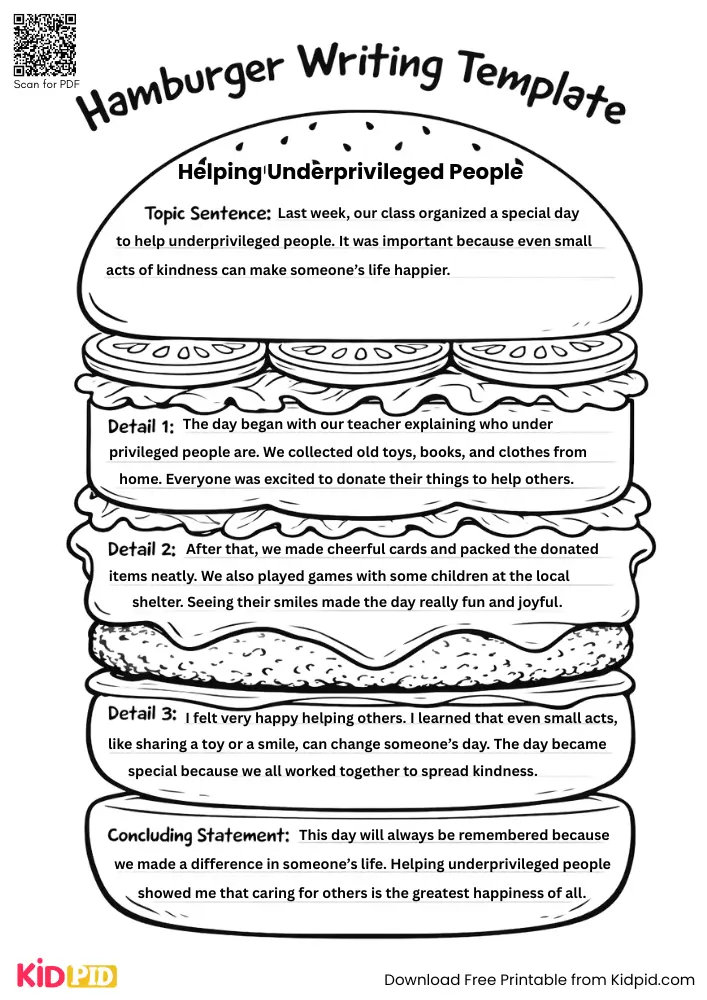
Helping underprivileged people promotes equality, compassion, social justice, community support, and human dignity.
Community Cleanliness Drives
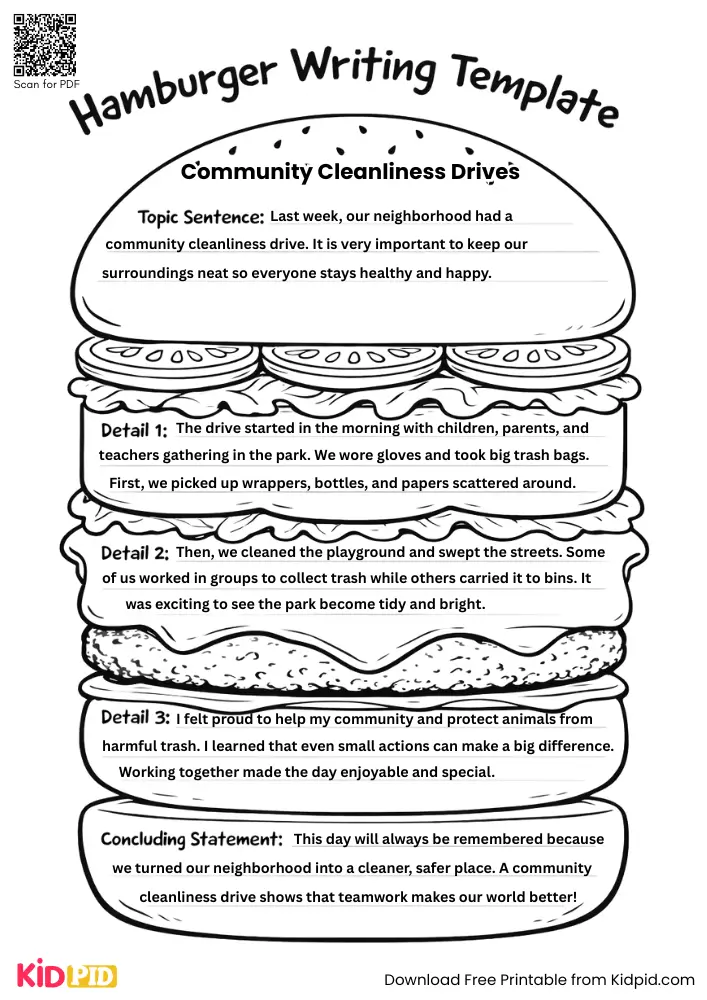
Community cleanliness drives improve hygiene, environmental protection, civic responsibility, teamwork, and public awareness.
Helping During Emergencies

Helping during emergencies builds courage, compassion, teamwork, responsibility, and community resilience.
Supporting Local Workers
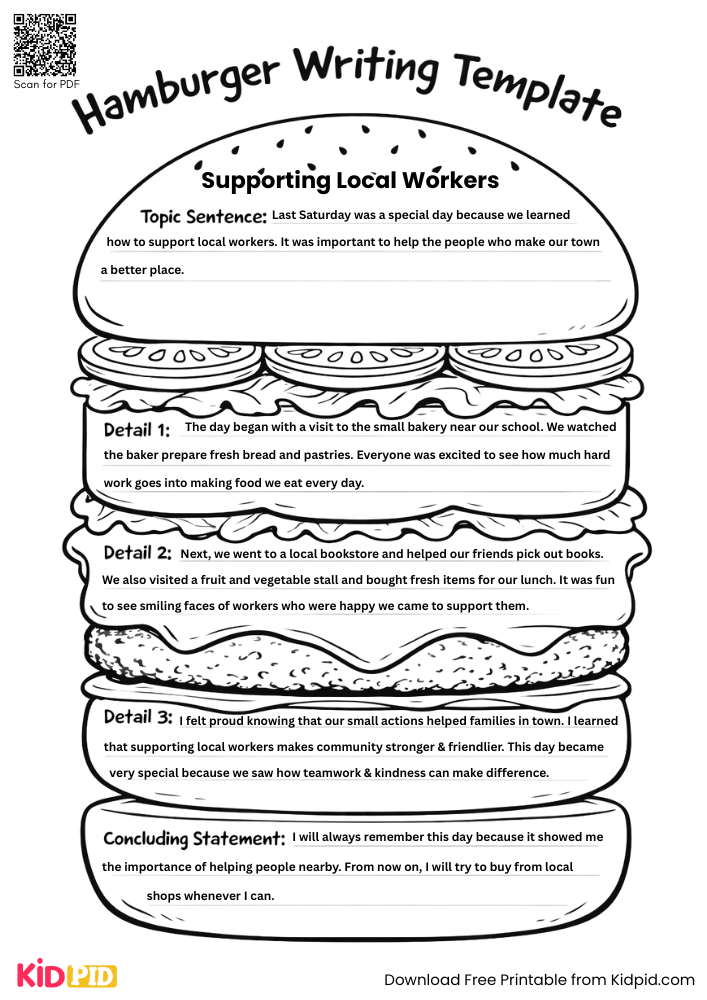
Supporting local workers boosts economic growth, community development, sustainability, small businesses, and social responsibility.