“Setting meaningful goals helps us know what we want and how to reach it. When we choose dreams that matter, break them into small steps, and keep trying, we feel proud and confident. Goals guide us, teach patience, and make every little achievement a step toward success.”
5 Pointers on “Setting Meaningful Goals”
- Meaningful goals give direction and help us know what we want to achieve.
- Goals should match our interests, values, and abilities.
- Setting small steps makes big goals easier to reach.
- Goals motivate us to work hard and stay focused.
- Learning from mistakes helps us improve while chasing our goals.
‘Setting Meaningful Goals’ Paragraph Writing
Hamburger Paragraph on ‘Setting Meaningful Goals’ (Free Template)

Topic Sentence: One unforgettable day, I learned the importance of setting meaningful goals. It was important because it showed me how dreams can come true with effort.
Details 1: The day began when I thought about something I wanted to improve. I decided to get better at drawing. I made a clear plan to practice a little every day.
Details 2: I practiced drawing after school and tried new ideas. Each drawing made me feel more confident. I celebrated every small improvement.
Details 3: I felt proud of myself for not giving up. I learned that goals work best when they are clear and simple. This made the day very special for me.
Concluding Statement: I will always remember this day because I learned how to work toward my dreams. Setting goals helped me believe in myself.
Short Paragraph on ‘Setting Meaningful Goals’ – 50 Words for Grade 3
A meaningful goal is a dream you plan to achieve. Pick something you really want, like reading a new book. Make your goal clear and small. Celebrate each step you finish. This makes you feel proud and strong. Goals help you grow and learn new things.
Long Paragraph on ‘Setting Meaningful Goals’ – 100 Words for Grade 4

Setting a meaningful goal means choosing a dream that is important to you. It could be learning to ride a bike or getting better at drawing. First, make your goal clear. Say exactly what you want to do. Then, break it into tiny steps. Each small step is a win! Celebrate when you finish a step. This keeps you happy and excited. If something is hard, don’t give up. Ask for help and try again. Meaningful goals help you learn, make you brave, and show you how amazing you can be. You can do it
‘Setting Meaningful Goals’ Essay Writing
‘Setting Meaningful Goals’ – 150 to 200 Words Essay for Grades 5 to 7 Students
Imagine you’re on a treasure hunt, but instead of a map, you have a dream. Setting a meaningful goal is like drawing your own map to that treasure! It starts with a wish in your heart, something you really, truly want to achieve. Maybe it’s reading a harder book, learning a skateboard trick, or helping out more at home.
The secret is to turn that big wish into a clear, small step. Instead of “be a better reader,” try “read one chapter every night before bed.” This is a goal you can see and track. The best goals are the ones you choose, because your own excitement will be the fuel that keeps you going. When you work on something you care about, every little bit of progress feels great. Don’t forget to tell someone your goal! They can encourage you when it gets tough. And remember, even if you stumble, you haven’t failed. You’ve just learned a new way not to do it. So, pick your treasure, draw your map, and enjoy the adventure of reaching your goal!
‘Setting Meaningful Goals’ – 300 Words Essay for Grades 8 to 10 Students
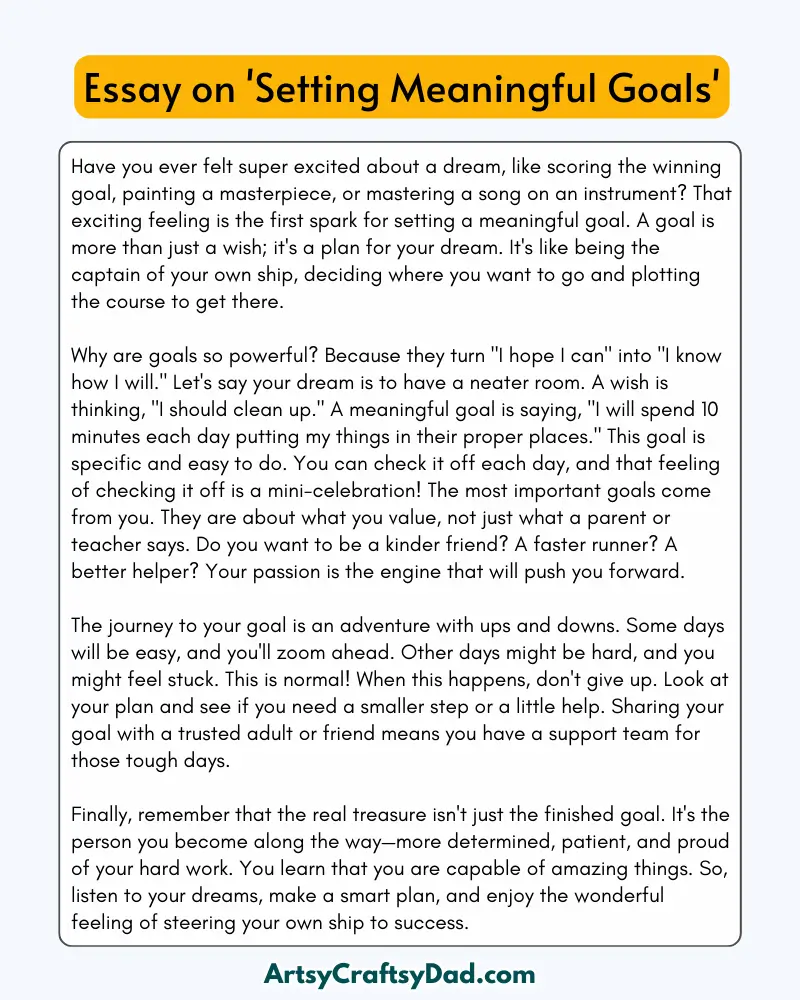
Have you ever felt super excited about a dream, like scoring the winning goal, painting a masterpiece, or mastering a song on an instrument? That exciting feeling is the first spark for setting a meaningful goal. A goal is more than just a wish; it’s a plan for your dream. It’s like being the captain of your own ship, deciding where you want to go and plotting the course to get there.
Why are goals so powerful? Because they turn “I hope I can” into “I know how I will.” Let’s say your dream is to have a neater room. A wish is thinking, “I should clean up.” A meaningful goal is saying, “I will spend 10 minutes each day putting my things in their proper places.” This goal is specific and easy to do. You can check it off each day, and that feeling of checking it off is a mini-celebration! The most important goals come from you. They are about what you value, not just what a parent or teacher says. Do you want to be a kinder friend? A faster runner? A better helper? Your passion is the engine that will push you forward.
The journey to your goal is an adventure with ups and downs. Some days will be easy, and you’ll zoom ahead. Other days might be hard, and you might feel stuck. This is normal! When this happens, don’t give up. Look at your plan and see if you need a smaller step or a little help. Sharing your goal with a trusted adult or friend means you have a support team for those tough days.
Finally, remember that the real treasure isn’t just the finished goal. It’s the person you become along the way—more determined, patient, and proud of your hard work. You learn that you are capable of amazing things. So, listen to your dreams, make a smart plan, and enjoy the wonderful feeling of steering your own ship to success.
Related Essay & Paragraph Topics
- Understanding the Importance of Meaningful Goals
- How Setting Goals Gives Direction in Life
- Short-Term and Long-Term Goals Explained
- Steps to Set Meaningful and Achievable Goals
- How Goals Help Us Grow and Succeed
You May like this:
Learning Adaptability

Adaptability builds resilience, flexibility, growth mindset, confidence, coping skills, and success in changing environments.
Building Good Digital Habits

Building good digital habits promotes cybersecurity, balanced usage, productivity, online etiquette, privacy protection, and healthy screen time.
Positive Use Of Social Platforms

Positive social platform use encourages meaningful connections, knowledge sharing, creativity, responsible engagement, and digital growth.
Using Technology Wisely

Using technology wisely enhances productivity, innovation, learning, communication, digital responsibility, and balanced screen time.
Balancing Online And Offline Life

Balancing online and offline life improves mental health, productivity, relationships, focus, and overall well-being.