Self-control helps children manage actions, emotions, and decisions wisely. It teaches patience, focus, and calmness, helping children avoid mistakes and solve problems. Practicing self-control builds confidence, responsibility, and better relationships with friends and family. Children with self-control grow into confident, thoughtful, and successful individuals.
5 Pointers on ‘Importance of Self-Control’
- Self-control helps children think before they act.
- It teaches patience and calmness in difficult situations.
- Children with self-control make better choices.
- Self-control helps in managing emotions like anger and frustration.
- Practicing self-control builds responsibility and confidence.
‘Importance of Self-Control’ Paragraph Writing
Hamburger Paragraph on ‘Importance of Self-Control’ (Free Template)

Topic Sentence: Today was a special day to learn about self-control. It helps us manage our actions, words, and feelings.
Details 1: The morning began with a math test. I felt nervous, but I stayed calm and focused. This helped me solve the questions carefully.
Details 2: In the afternoon, we had a group activity. I listened patiently to my friends and followed the rules. Self-control made working together fun and smooth.
Details 3: I felt confident and proud of my choices. I learned that staying calm and thinking first makes life easier. The day taught me the value of patience.
Concluding Statement: I will always remember this day because it showed me how self-control helps in school and friendships. It is a skill I will practice every day.
Short Paragraph on ‘Importance of Self-Control’ – 50 Words for Grade 3
Self-control helps children think before acting. It teaches patience, calmness, and good decision-making. Children with self-control manage emotions like anger and frustration. Practicing self-control builds confidence and responsibility. It helps children succeed in school, friendships, and daily life.
Long Paragraph on ‘Importance of Self-Control’ – 100 Words for Grade 4

The importance of self-control is in helping children manage actions, feelings, and words. Children learn to stay calm when upset and think before making decisions. Self-control teaches patience, focus, and responsibility. It helps children finish homework, follow rules, and handle challenges calmly. Parents and teachers guide children with examples and reminders. Practicing self-control builds confidence and improves relationships with friends, teachers, and family. Children who develop this skill grow into responsible, confident, and patient individuals. Self-control is essential for success in school, friendships, and everyday life.
‘Importance of Self-Control’ Essay Writing
‘Importance of Self-Control’—150 to 200 Words Essay for Grades 5 to 7 Students
Self-control is your superpower to be the boss of your own feelings and actions. It’s what helps you raise your hand instead of shouting out, choose an apple over a third cookie, or walk away when you’re angry instead of saying something mean. Why is this so important? Because self-control is the key to freedom! It doesn’t mean you can’t have fun; it means you’re in charge. By using it, you can save your allowance for something special, finish your homework before playing, and be a better friend.
This power helps you earn trust from adults and respect from friends. People will know you are thoughtful and reliable. It also keeps you safe, helping you think, “Is this a good idea?” before you act. Like any skill, you build self-control with practice. Every time you wait patiently, take a deep breath when frustrated, or stick to a plan, you make this inner muscle stronger, helping you become the best version of yourself.
‘Importance of Self-Control’ – 300 Words Essay for Grades 8 to 10 Students
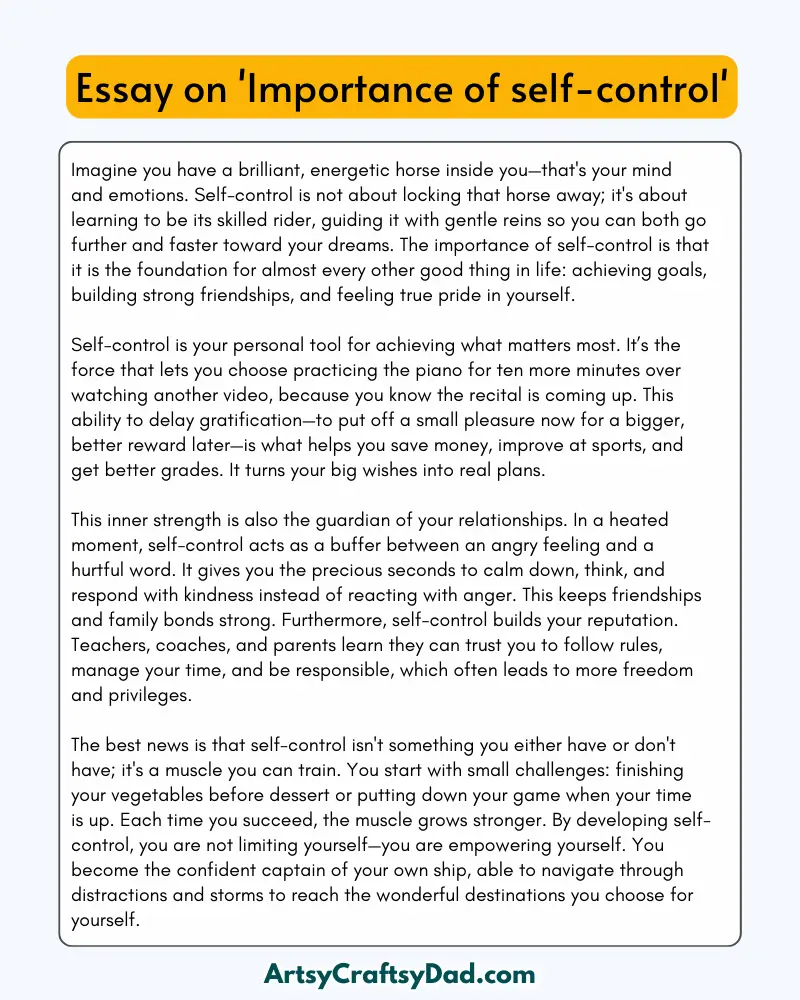
Imagine you have a brilliant, energetic horse inside you—that’s your mind and emotions. Self-control is not about locking that horse away; it’s about learning to be its skilled rider, guiding it with gentle reins so you can both go further and faster toward your dreams. The importance of self-control is that it is the foundation for almost every other good thing in life: achieving goals, building strong friendships, and feeling true pride in yourself.
Self-control is your personal tool for achieving what matters most. It’s the force that lets you choose practicing the piano for ten more minutes over watching another video, because you know the recital is coming up. This ability to delay gratification—to put off a small pleasure now for a bigger, better reward later—is what helps you save money, improve at sports, and get better grades. It turns your big wishes into real plans.
This inner strength is also the guardian of your relationships. In a heated moment, self-control acts as a buffer between an angry feeling and a hurtful word. It gives you the precious seconds to calm down, think, and respond with kindness instead of reacting with anger. This keeps friendships and family bonds strong. Furthermore, self-control builds your reputation. Teachers, coaches, and parents learn they can trust you to follow rules, manage your time, and be responsible, which often leads to more freedom and privileges.
The best news is that self-control isn’t something you either have or don’t have; it’s a muscle you can train. You start with small challenges: finishing your vegetables before dessert or putting down your game when your time is up. Each time you succeed, the muscle grows stronger. By developing self-control, you are not limiting yourself—you are empowering yourself. You become the confident captain of your own ship, able to navigate through distractions and storms to reach the wonderful destinations you choose for yourself.
Related Essay & Paragraph Topics
- Importance of Self-Control in Daily Life
- How Self-Control Helps Children Grow
- Learning Patience and Self-Control
- Self-Control: A Key to Success
- Developing Self-Control for School and Life
You May like this:
My First Day At A New School

A new school experience brings excitement, nervousness, and learning opportunities. Meeting classmates, understanding routines, and adapting to change build confidence, friendships, and personal growth.
Purposeful Living
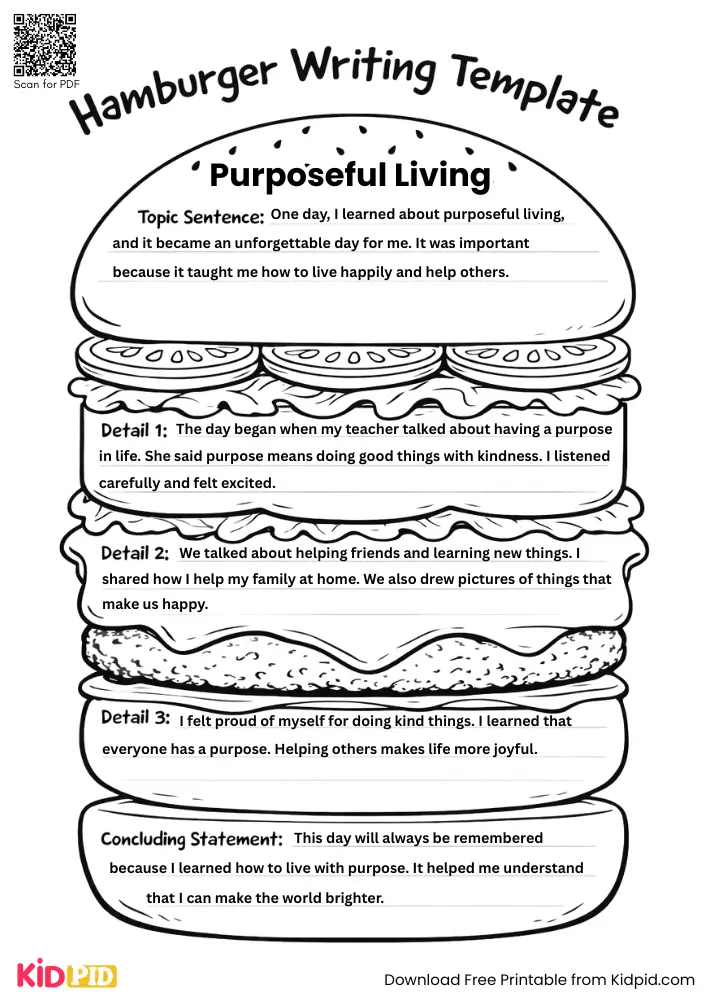
Purposeful living builds clarity, motivation, and fulfillment. Acting with intention, values, and meaningful goals encourages responsible decisions, personal growth, and a satisfying, balanced life.
Understanding Personal Mission

A personal mission builds direction, clarity, and purpose. Knowing one’s values and goals helps individuals live intentionally and responsibly.
Purpose-Driven Actions

Purpose-driven actions improve focus, productivity, and satisfaction. Working toward meaningful goals strengthens motivation, responsibility, and achievement.
Understanding Life Goals

Clear life goals guide planning, discipline, and achievement. Setting meaningful objectives improves motivation, direction, and long-term success while helping individuals use time and resources wisely.