Freedom gives children the chance to explore, choose, and grow. When used responsibly, freedom helps build good habits, respect, and discipline. Learning to balance freedom with rules teaches children how to make wise decisions and become thoughtful, caring individuals in everyday life.
5 Pointers on ‘Responsibility of Using Freedom’
- Freedom means making our own choices.
- Every choice should follow rules and values.
- Using freedom wisely helps everyone feel safe.
- Responsible freedom shows respect for others.
- Good use of freedom builds trust and discipline.
‘Responsibility of Using Freedom’ Paragraph Writing
Hamburger Paragraph on ‘Responsibility of Using Freedom’ (Free Template)

Topic Sentence: Today was special because we learned the importance of using freedom responsibly. Freedom is a wonderful gift, but it must be used wisely.
Details 1: The day started with our teacher explaining that freedom means we can make choices. We discussed how choices can be good or harmful. Everyone shared examples of responsible and careless actions.
Details 2: Then we played a group activity to show freedom with rules. We had fun choosing what to do while respecting others. The game taught us how freedom works best when we are responsible.
Details 3: I felt proud when I followed the rules and helped my friends. I learned that being responsible makes freedom enjoyable. This day taught me to think before I act.
Concluding Statement: I will remember this day because I learned to use freedom wisely. Responsible freedom helps us become caring and trustworthy people.
Short Paragraph on ‘Responsibility of Using Freedom’ – 50 Words for Grades 3 to 4
Freedom allows us to make choices. Using freedom responsibly means following rules and respecting others. Children should think before acting and behave kindly. Responsible use of freedom helps build trust and makes life peaceful and happy.
Long Paragraph on ‘Responsibility of Using Freedom’ – 100 Words for Grade 5
Freedom means having the chance to make our own choices. But freedom also brings responsibility. Children must use freedom wisely by following rules and respecting others. Speaking politely and behaving well show responsible freedom. Freedom should not harm anyone. When children complete tasks on time and listen to elders, they show maturity. Responsible use of freedom helps build trust and self-control. It prepares children to become good and caring adults in the future.
‘Responsibility of Using Freedom’ Essay Writing
‘Responsibility of Using Freedom’—150 to 200 Words Essay for Grades 6 to 8 Students
Freedom is an amazing gift that allows you to make choices, but it comes with a very important companion: responsibility. Think of it like getting a bicycle. The freedom to ride is fun, but you have the responsibility to watch for pedestrians, follow traffic rules, and take care of your bike.
Using your freedom responsibly means thinking about how your choices affect you and others. It’s the difference between choosing to play music loudly because you can (which might disturb your family) and choosing to use headphones instead. It means using your free time to finish homework before watching TV or standing up for someone being treated unfairly. Every day, you have small freedoms—what to say, how to act, and what to do. When you use these freedoms wisely, by being kind, honest, and considerate, you build a happier classroom, a stronger home, and a better character for yourself. Freedom isn’t just about doing what you want; it’s about having the power to do what is right.
‘Responsibility of Using Freedom’ – 300 Words Essay for Grades 9 to 10 Students
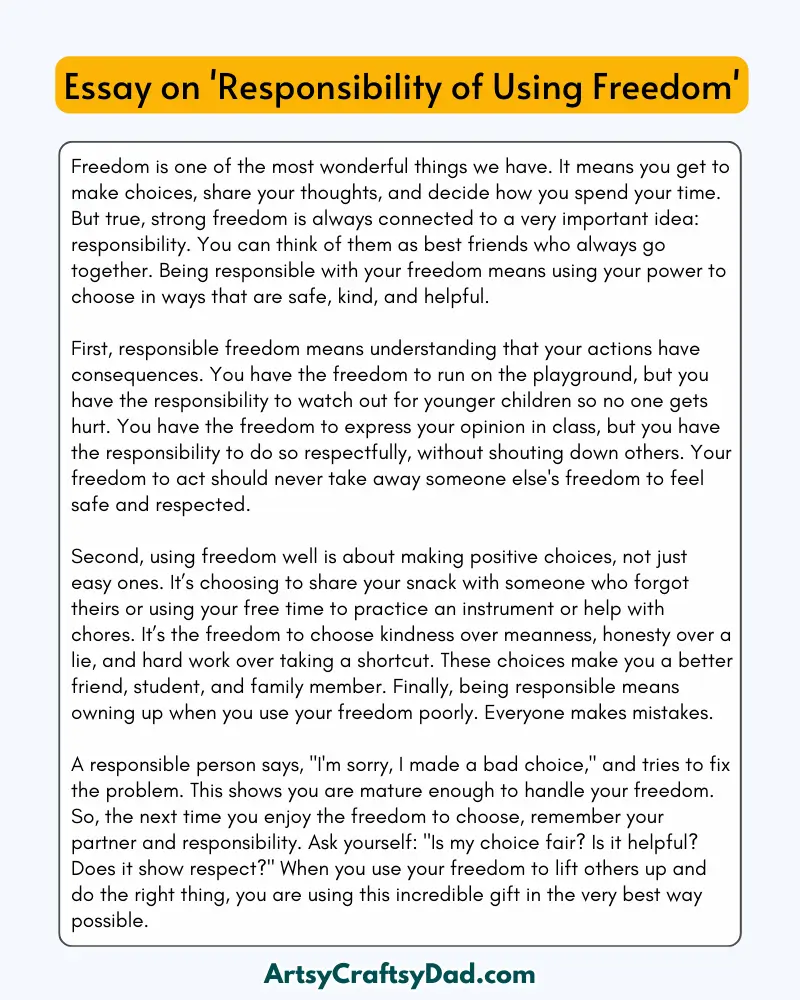
Freedom is one of the most wonderful things we have. It means you get to make choices, share your thoughts, and decide how you spend your time. But true, strong freedom is always connected to a very important idea: responsibility. You can think of them as best friends who always go together. Being responsible with your freedom means using your power to choose in ways that are safe, kind, and helpful.
First, responsible freedom means understanding that your actions have consequences. You have the freedom to run on the playground, but you have the responsibility to watch out for younger children so no one gets hurt. You have the freedom to express your opinion in class, but you have the responsibility to do so respectfully, without shouting down others. Your freedom to act should never take away someone else’s freedom to feel safe and respected.
Second, using freedom well is about making positive choices, not just easy ones. It’s choosing to share your snack with someone who forgot theirs or using your free time to practice an instrument or help with chores. It’s the freedom to choose kindness over meanness, honesty over a lie, and hard work over taking a shortcut. These choices make you a better friend, student, and family member.
Finally, being responsible means owning up when you use your freedom poorly. Everyone makes mistakes. A responsible person says, “I’m sorry, I made a bad choice,” and tries to fix the problem. This shows you are mature enough to handle your freedom.
So, the next time you enjoy the freedom to choose, remember your partner and responsibility. Ask yourself: “Is my choice fair? Is it helpful? Does it show respect?” When you use your freedom to lift others up and do the right thing, you are using this incredible gift in the very best way possible.
Related Essay & Paragraph Topics
- Freedom with Responsibility
- Using Freedom the Right Way
- Smart Choices and True Freedom
- Learning Responsibility Through Freedom
- Why Freedom Needs Rules
You May like this:
Value Of Honesty

Honesty builds trust, integrity, and strong relationships. Truthful behavior strengthens character, improves credibility, and promotes ethical living while creating respect, transparency, and stability in personal and social life.
Self-Learning Habits
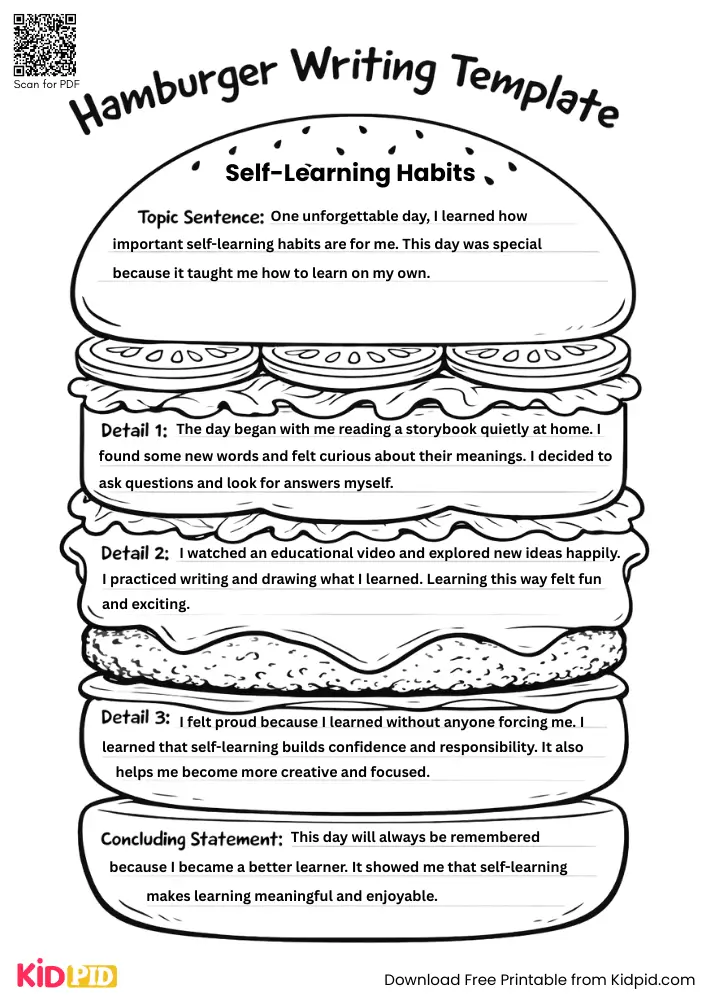
Self-learning encourages independence, curiosity, and lifelong education. Reading, exploring resources, and practicing regularly improve knowledge, creativity, and problem-solving skills while fostering confidence and continuous personal growth.
Gaining Knowledge From Life
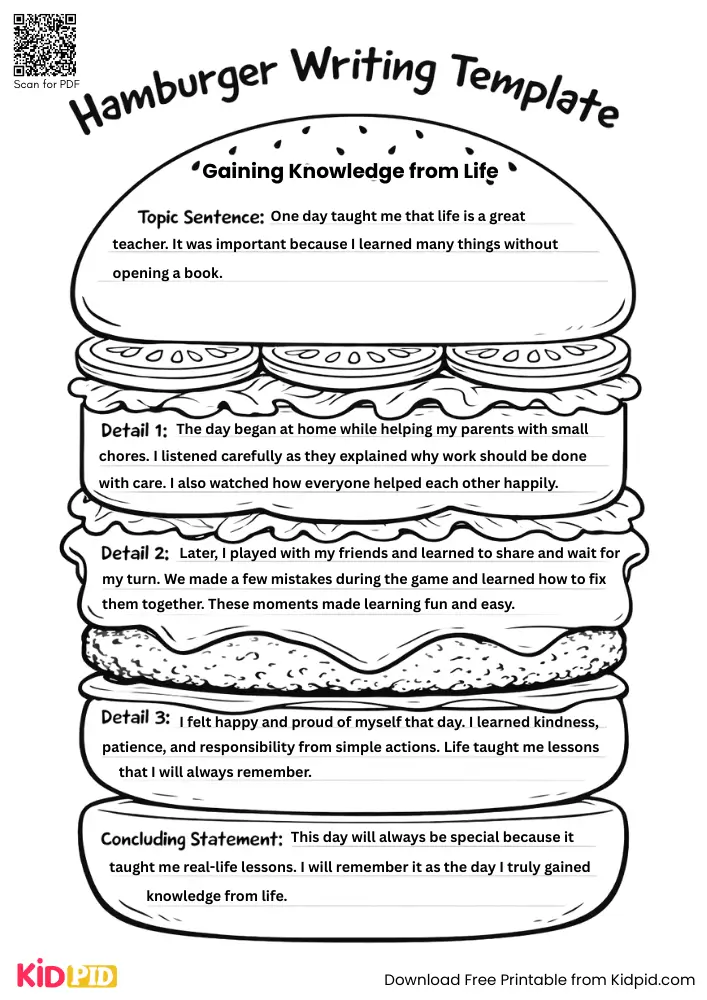
Life experiences teach practical wisdom, adaptability, and emotional strength. Real-world learning improves decision-making, awareness, and maturity while helping individuals grow through challenges, relationships, and everyday situations beyond textbooks.
Learning From Elders

Elders offer wisdom, life experience, and cultural knowledge. Listening to their guidance teaches patience, values, decision-making, and resilience while strengthening family bonds and helping younger generations learn practical lessons for life and character development.
Observing To Learn

Observation improves understanding, awareness, and analytical skills. Watching surroundings carefully helps individuals learn patterns, behaviors, and solutions, strengthening knowledge, creativity, and problem-solving abilities.