Time is something we all have, but many of us forget its importance. In this essay, I share how small experiences helped me understand why time matters. I learned that using time wisely makes life smoother, happier, and more meaningful every single day.
5 Pointers on ‘How I Learned to Value Time’
- Time is precious and never comes back once lost.
- Wasting time can make us miss important chances.
- Planning daily work helps save time.
- Using time wisely reduces stress and worry.
- Valuing time helps us grow and succeed.
‘How I Learned to Value Time’ Paragraph Writing
Hamburger Paragraph on ‘How I Learned to Value Time’ (Free Template)

Topic Sentence: I learned to value time the day I missed my favorite cartoon. That moment made me realize time is very important.
Details 1: I was playing outside and didn’t notice the clock. When I looked, the cartoon had already started. I felt sad and disappointed.
Details 2: My mom taught me to make a simple schedule. I now divide my day into homework, play, and rest. Using a timer helps me manage everything.
Details 3: I feel proud when I finish tasks on time. I don’t waste my day anymore. I understand that every minute is valuable.
Concluding Statement: This day showed me why planning matters. I will always remember it because it made me smarter with time.
Short Paragraph on ‘How I Learned to Value Time’ – 50 Words for Grade 3
I learned to value time by missing my favorite cartoon. I was playing too long and forgot! Now I use a timer. Playtime, homework, and fun all get their own time. Everything fits when I plan. Time is like a treasure—use it wisely!
Long Paragraph on ‘How I Learned to Value Time’ – 100 Words for Grade 4
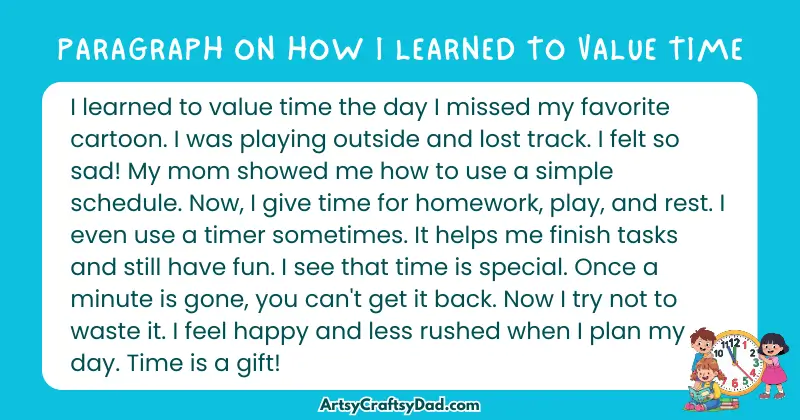
I learned to value time the day I missed my favorite cartoon. I was playing outside and lost track. I felt so sad! My mom showed me how to use a simple schedule. Now, I give time for homework, play, and rest. I even use a timer sometimes. It helps me finish tasks and still have fun. I see that time is special. Once a minute is gone, you can’t get it back. Now I try not to waste it. I feel happy and less rushed when I plan my day. Time is a gift!
‘How I Learned to Value Time’ Essay Writing
‘How I Learned to Value Time’- 150 to 200 Words Essay for Grades 5 to 7 Students
I never understood why adults were always talking about time until I missed my best friend’s birthday party. I was playing video games and lost track, and by the time I looked at the clock, it was too late. I felt awful! Then, a week later, I was up all night, panicking to finish a giant science poster. I was tired, my work was messy, and I promised myself, “Never again!”
My grandma saw I was stressed. She took me to her garden and said, “See these flowers? They didn’t grow in a day. I give them a little time and care every morning. Time is like that—use little bits wisely, and wonderful things grow.” Her words clicked. I made a simple chart for my week, blocking small times for homework, chores, and fun.
Now, I do things bit by bit. It’s magic! My work is better, I’m not stressed, and I actually have more free time for my favorite books and games. I learned that valuing time isn’t about being busy; it’s about being smart so you can enjoy life and never miss the important moments.
‘How I Learned to Value Time’ – 300 Words Essay for Grades 8 to 10 Students
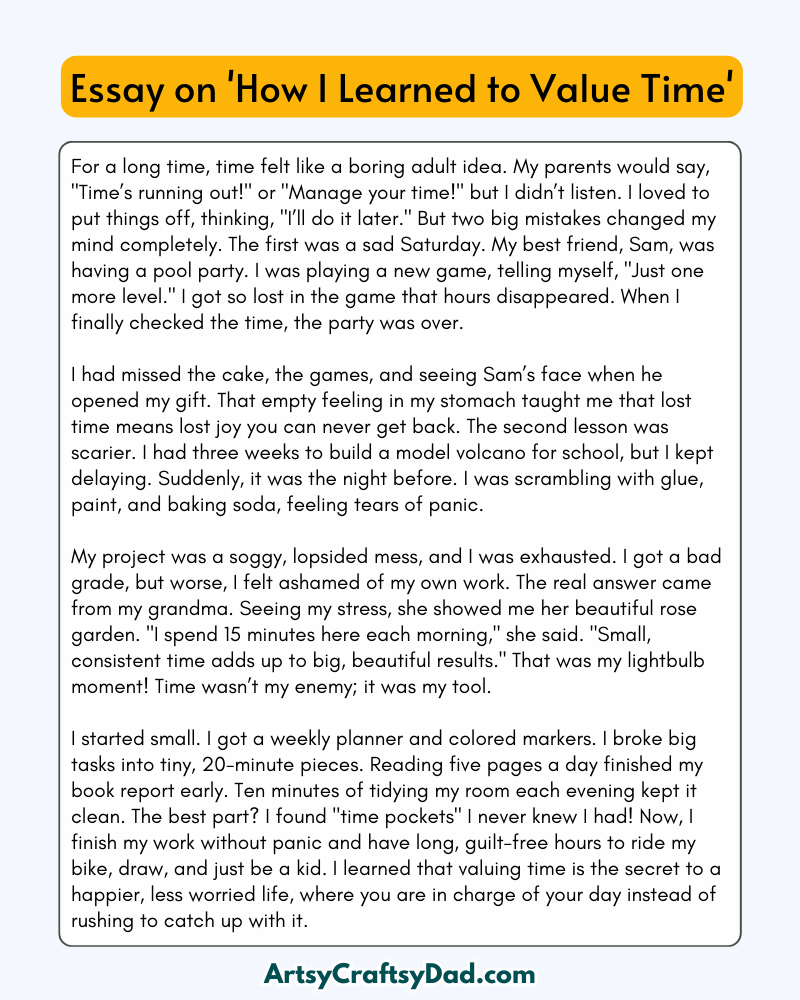
For a long time, time felt like a boring adult idea. My parents would say, “Time’s running out!” or “Manage your time!” but I didn’t listen. I loved to put things off, thinking, “I’ll do it later.” But two big mistakes changed my mind completely.
The first was a sad Saturday. My best friend, Sam, was having a pool party. I was playing a new game, telling myself, “Just one more level.” I got so lost in the game that hours disappeared. When I finally checked the time, the party was over. I had missed the cake, the games, and seeing Sam’s face when he opened my gift. That empty feeling in my stomach taught me that lost time means lost joy you can never get back.
The second lesson was scarier. I had three weeks to build a model volcano for school, but I kept delaying. Suddenly, it was the night before. I was scrambling with glue, paint, and baking soda, feeling tears of panic. My project was a soggy, lopsided mess, and I was exhausted. I got a bad grade, but worse, I felt ashamed of my own work.
The real answer came from my grandma. Seeing my stress, she showed me her beautiful rose garden. “I spend 15 minutes here each morning,” she said. “Small, consistent time adds up to big, beautiful results.” That was my lightbulb moment! Time wasn’t my enemy; it was my tool.
I started small. I got a weekly planner and colored markers. I broke big tasks into tiny, 20-minute pieces. Reading five pages a day finished my book report early. Ten minutes of tidying my room each evening kept it clean. The best part? I found “time pockets” I never knew I had! Now, I finish my work without panic and have long, guilt-free hours to ride my bike, draw, and just be a kid. I learned that valuing time is the secret to a happier, less worried life, where you are in charge of your day instead of rushing to catch up with it.
Related Essay & Paragraph Topics
- The Day I Realized Time Is Precious
- Learning to Use My Time Wisely
- A Lesson That Taught Me the Importance of Time
- How Time Became My Best Teacher
- Understanding the Value of Every Minute
You May like this:
Power Of Thoughtful Thinking

Thoughtful thinking improves problem-solving, decision-making, and responsible actions. Careful reflection helps avoid mistakes and supports personal and social growth.
Importance Of Mental Discipline
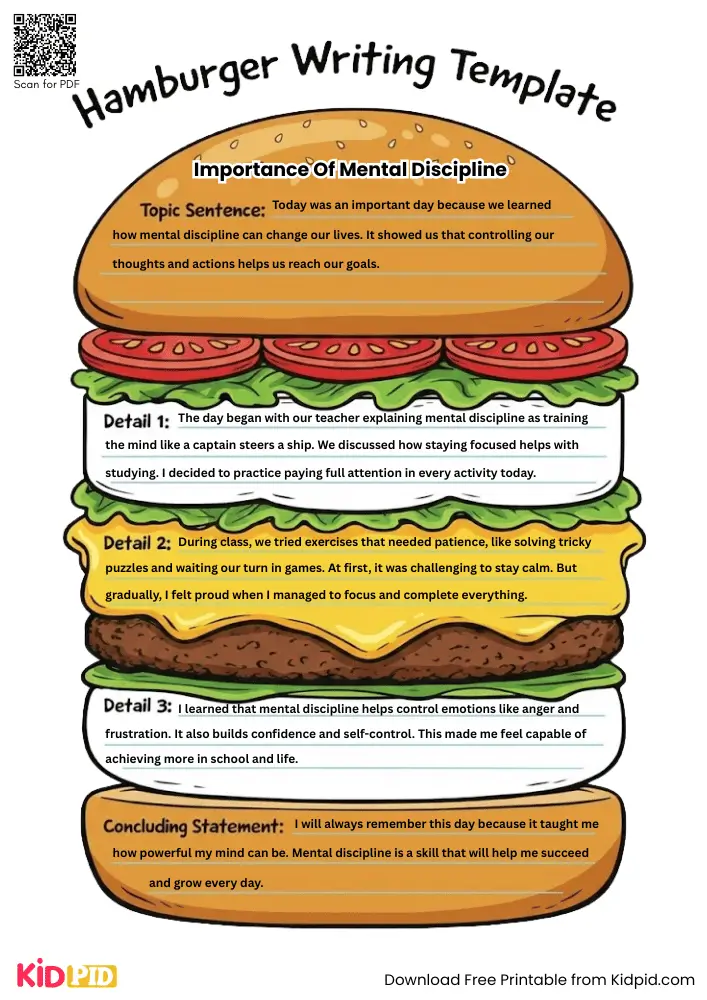
Mental discipline strengthens focus, emotional control, and productivity. Strong mental habits support responsible decisions and long-term success.
Learning To Stay Centered
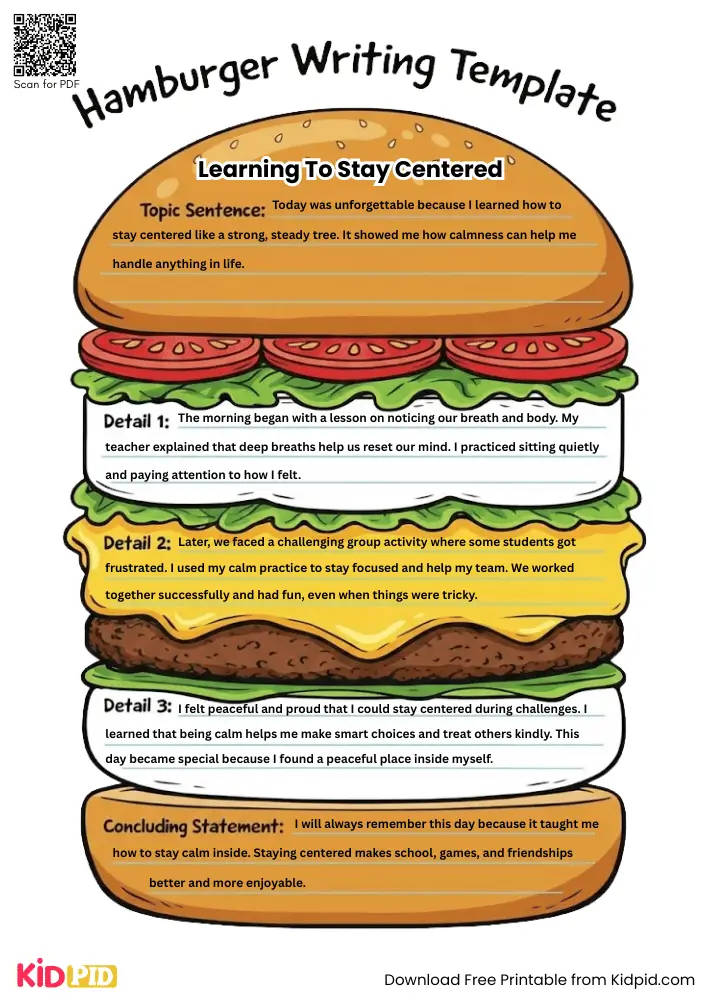
Staying centered promotes calm thinking, emotional balance, and focus during challenges, supporting better decisions and mental well-being.
How Discipline Creates Responsibility

Discipline encourages consistent behavior, accountability, and strong work habits, helping individuals become responsible and dependable.
Importance Of Dependable Behavior
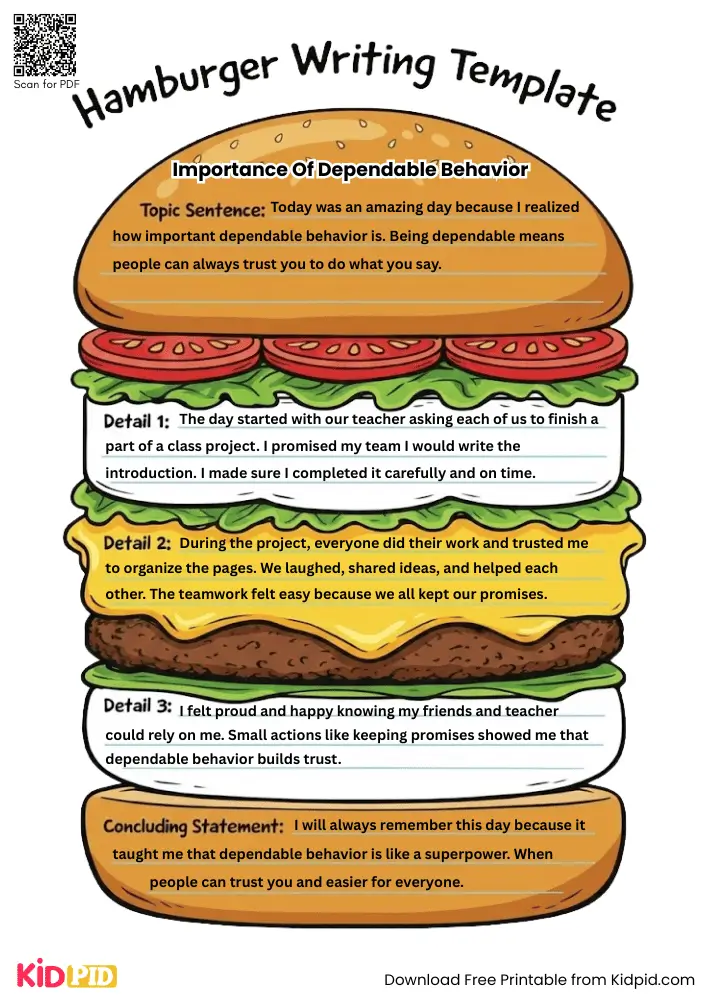
Dependable behavior reflects reliability, commitment, and trustworthiness, helping build strong relationships and social credibility.