“Today, children use the internet for games, learning, and chatting with friends. While going online is fun, it is important to keep personal details safe. Protecting personal information like passwords and home addresses helps prevent danger and keeps you secure. Smart online habits protect both you and your family.”
5 Pointers on ‘Protecting Personal Information’
- Do not share your full name, address, phone number, or school name online.
- Keep passwords private and do not tell anyone.
- Ask parents or teachers before sharing photos or personal details.
- Be careful while chatting or making friends online.
- Protecting personal information keeps you and your family safe.
‘Protecting Personal Information’ Paragraph Writing
Hamburger Paragraph on ‘Protecting Personal Information’ (Free Template)
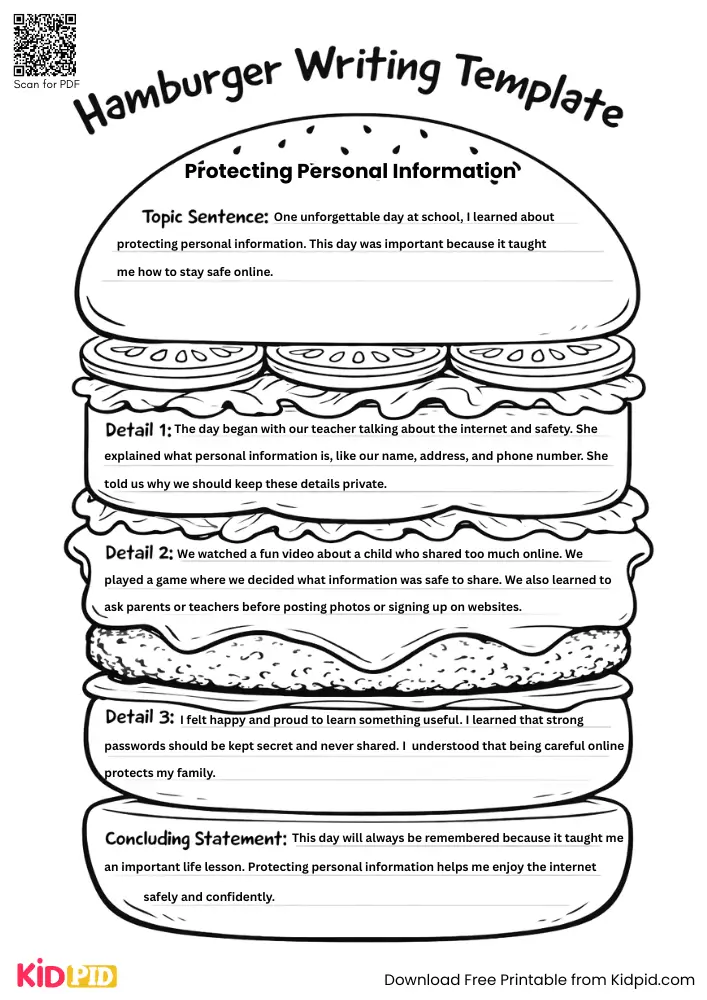
Topic Sentence : One unforgettable day at school, I learned about protecting personal information. This day was important because it taught me how to stay safe online.
Details 1 : The day began with our teacher talking about the internet and safety. She explained what personal information is, like our name, address, and phone number. She told us why we should keep these details private.
Details 2 : We watched a fun video about a child who shared too much online. We played a game where we decided what information was safe to share. We also learned to ask parents or teachers before posting photos or signing up on websites.
Details 3 : I felt happy and proud to learn something useful. I learned that strong passwords should be kept secret and never shared. I understood that being careful online protects me and my family.
Concluding Statement : This day will always be remembered because it taught me an important life lesson. Protecting personal information helps me enjoy the internet safely and confidently.
Short Paragraph on ‘Protecting Personal Information’ – 50 Words for Grade 4
Protecting personal information means keeping details like name, address, phone number, and passwords safe. Children should never share them online. Ask parents or teachers before posting photos or information. Being careful online keeps children and their families safe. Responsible use of personal information protects everyone.
Long Paragraph on ‘Protecting Personal Information’ – 100 Words for Grade 5

Protecting personal information helps keep us safe online. We should never share our full name, address, phone number, or passwords. This information is private. Strangers on the internet may try to trick us. We must ask parents or teachers before signing up on new websites. Strong passwords should be kept secret. We should not click on unknown links. Being careful online helps protect our identity. When we follow safety rules, we can enjoy the internet without fear.
‘Protecting Personal Information’ Essay Writing
‘Protecting Personal Information’ – 150 to 200 Words Essay for Grades 6 to 7 Students
Protecting your personal information is like being the guardian of your own special treasure chest. Inside this chest are private details about you: your full name, your home address, your phone number, and the name of your school. These are not for sharing with just anyone, especially online.
When you’re on the internet, you must be careful. Never fill out forms or answer questions that ask for this private treasure without checking with a parent first. Create strong passwords for your accounts to act as locks on your chest, and never give those passwords to friends. Also, be smart about what you post. A photo can show your school uniform, or a comment can reveal your location. Ask yourself, “Is this safe for everyone to see?” By guarding your information, you keep yourself safe from strangers and protect your identity. It’s the most important rule for being smart and secure online.
‘Protecting Personal Information’ – 300 Words Essay for Grades 8 to 10 Students
In our connected world, protecting your personal information is one of the most important skills you can learn. Think of your personal details—your full name, home address, birth date, school name, and phone number—as the pieces of a puzzle that, when put together, create a picture of you. Your job is to keep that puzzle safe and not let strangers put it together.
The internet is a public space, even when you’re in your own room. When you sign up for a game, use a social app, or even just browse, you leave traces of information. The first rule is to share as little as possible. Use a nickname instead of your real name in games, and never, ever post your address or school online. Be extra careful with “free” quizzes or offers—they often try to trick you into giving away personal facts.
Your passwords are the secret keys to your online life. Make them strong by using a mix of capital letters, lowercase letters, numbers, and symbols. Don’t use easy-to-guess words like “password123” or your pet’s name. Most importantly, never share your passwords, even with your best friend.
Also, remember that what you post can give away information. A photo might show your house number or your school logo in the background. A post saying, “Can’t wait to get home!” tells people you’re not there right now. Always think: “Could this be used to find me or pretend to be me?”
If you’re ever unsure, your best defense is to ask for help. Talk to a trusted adult if something feels suspicious. By being careful and thoughtful about your personal information, you build a strong wall of privacy around yourself, allowing you to explore the online world safely and with confidence.
Related Essay & Paragraph Topic
- How to Stay Safe Online
- Keeping Your Personal Details Private
- Using Passwords Safely
- Asking Parents Before Sharing Online
- Being Responsible with Personal Information
You May like this:
Power Of Kindness

Kindness spreads positivity, compassion, and emotional connection. Small acts of generosity improve relationships, reduce conflicts, and promote social harmony while creating supportive environments that encourage happiness, empathy, and mutual respect.
Importance Of Compassion

Compassion promotes empathy, kindness, and social responsibility. Understanding others’ struggles encourages support, reduces conflicts, and builds caring communities where people help one another with respect and humanity.
Value Of Humility

Humility fosters learning, respect, and personal growth. Staying modest encourages openness to feedback, strengthens relationships, and promotes balanced character while preventing arrogance and supporting continuous improvement.
Maintaining Daily Cleanliness
Daily cleanliness promotes hygiene, health, and discipline. Keeping surroundings neat prevents illness, improves productivity, and builds responsible habits while encouraging self-respect, organization, and a positive lifestyle.
Staying Active Daily

Daily physical activity improves fitness, stamina, and mental health. Exercise strengthens muscles, boosts mood, increases energy, and supports long-term wellness while reducing stress and encouraging healthy habits.