“Managing anger calmly is an essential life skill for children and students. While anger is a normal emotion, learning to respond with patience and self-control makes a big difference. Simple calming techniques and kind communication help prevent conflict and build strong relationships at home, school, and beyond.”
5 Pointers on ‘Managing Anger Calmly’
- Anger is a natural feeling, but we must control it.
- Taking deep breaths helps calm us down.
- Counting slowly to ten before reacting can prevent mistakes.
- Talking politely about problems is better than shouting.
- Managing anger calmly builds patience, friendship, and confidence.
‘Managing Anger Calmly’ Paragraph Writing
Hamburger Paragraph on ‘Managing Anger Calmly’ (Free Template)
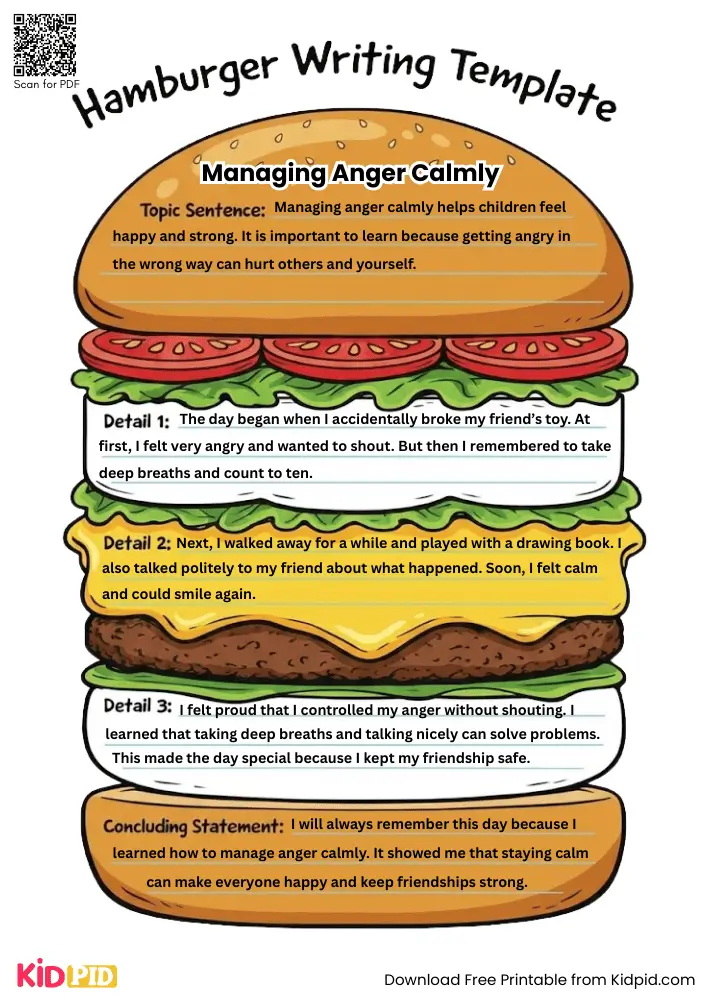
Topic Sentence: Managing anger calmly helps children feel happy and strong. It is important to learn because getting angry in the wrong way can hurt others and yourself.
Details 1: The day began when I accidentally broke my friend’s toy. At first, I felt very angry and wanted to shout. But then I remembered to take deep breaths and count to ten.
Details 2: Next, I walked away for a while and played with a drawing book. I also talked politely to my friend about what happened. Soon, I felt calm and could smile again.
Details 3: I felt proud that I controlled my anger without shouting. I learned that taking deep breaths and talking nicely can solve problems. This made the day special because I kept my friendship safe.
Concluding Statement: I will always remember this day because I learned how to manage anger calmly. It showed me that staying calm can make everyone happy and keep friendships strong.
Short Paragraph on ‘Managing Anger Calmly’ – 50 Words for Grade 4
Managing anger calmly helps children stay happy and confident. Taking deep breaths, counting to ten, and talking politely reduces anger. Walking away or doing a fun activity also helps. Calm children solve problems wisely and keep good relationships with friends, teachers, and family.
Long Paragraph on ‘Managing Anger Calmly’ – 100 Words for Grade 5
Managing anger calmly is important for children. Everyone feels angry sometimes, but shouting or hitting is not good. Taking deep breaths, counting to ten, talking politely, or walking away can help calm anger. Doing activities like drawing or listening to music can also release anger safely. Children who manage anger calmly are trusted by teachers and parents. They solve problems wisely, keep friendships, and stay happy. Learning to handle anger at a young age helps children grow into kind, patient, and responsible adults. Managing anger calmly makes life peaceful and enjoyable.
‘Managing Anger Calmly’ Essay Writing
‘Managing Anger Calmly’ – 150 to 200 Words Essay for Grades 6 to 7 Students
Anger is like a fire alarm in your body—a loud, important signal that something feels wrong or unfair. But just like we don’t start spraying water everywhere when an alarm sounds, we shouldn’t let anger control our actions. Managing anger calmly means learning to hear the alarm without letting the fire take over.
The first and most powerful step is to pause. When you feel that hot, tight feeling, stop. Don’t speak, don’t hit, don’t throw. Just breathe deeply. This gives your smart brain a chance to catch up with your upset feelings. It can help to move your body in a safe way, like doing jumping jacks or squeezing a pillow, to release the angry energy. Once the wave calms, you can use your words. Try saying, “I feel angry because…” This helps everyone understand the problem. Managing anger calmly isn’t about never feeling mad; it’s about being strong enough to feel the anger and still choose kind, respectful, and smart actions.
‘Managing Anger Calmly’ – 300 Words Essay for Grades 8 to 10 Students
Imagine anger as a sudden, powerful summer storm inside you. Thunderclouds of frustration gather, lightning bolts of unfairness flash, and you feel like you might just explode like booming thunder. Managing anger calmly is the skill of being a wise weather expert for your own emotional storms. You can’t stop the storm from coming, but you can learn how to navigate through it safely, without causing damage.
The moment you feel the first gust of anger, your most important job is to create a calm shelter. This means hitting the pause button on your reactions. Your brain is sending “EMERGENCY!” signals, so you need to send back “CALM DOWN” signals. You do this by taking slow, deep belly breaths—this literally tells your nervous system the danger is passing. You can also help your body release the tense energy safely. Clench and unclench your fists, stomp your feet in place, or go to a private space and yell into a pillow. The goal is to let the storm’s intensity peak and pass without aiming it at someone.
Once the thunder in your chest quiets, you can use your brightest tool: your words. This is the “cleanup” after the storm. Try to explain what happened using “I feel” statements: “I felt really angry when my tower was knocked over because I worked hard on it.” This doesn’t blame others; it explains your inner weather. Finally, you can think like a problem-solver. What could make this better?
Do you need an apology, some space, or help fixing something? Managing anger calmly transforms you from someone who is controlled by the storm to someone who can understand and move through it. It shows everyone, and yourself, that your heart is stronger than any passing tempest.
Related Essay & Paragraph Topics
- How to Manage Anger Calmly
- Importance of Controlling Anger
- Ways to Stay Calm When Angry
- Managing Emotions in Daily Life
- Anger Management for Children
You May like this:
Learning To Take Initiative

Understand the value of taking initiative in learning and life. Encourages leadership skills, proactive behavior, confidence, and personal responsibility.
Why Life Is The Best Teacher
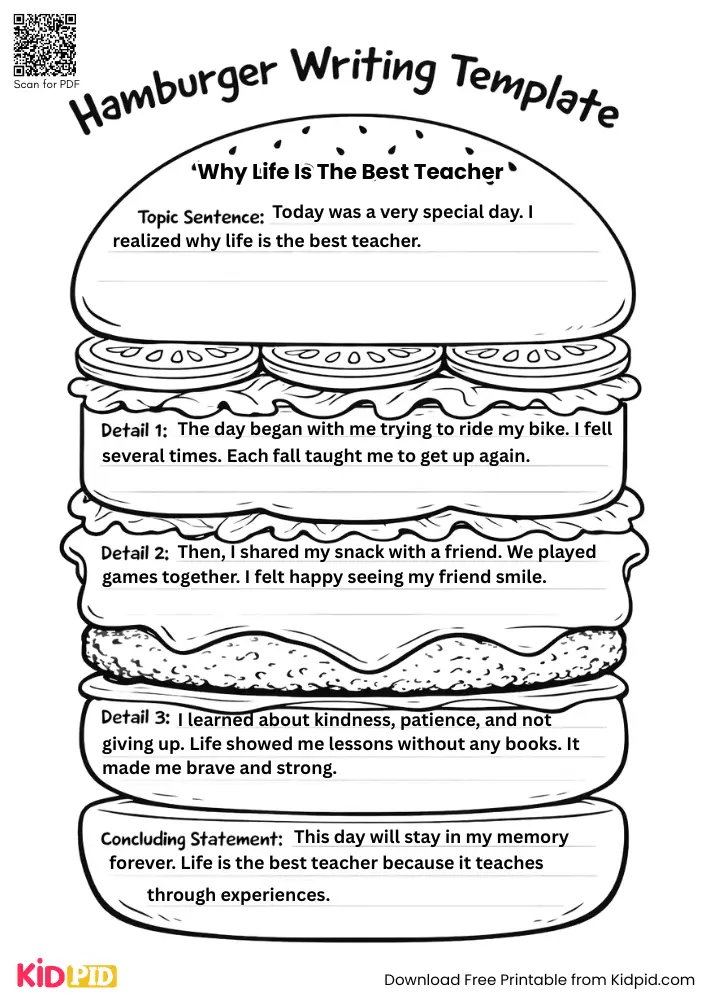
Discover how life experiences provide powerful lessons and personal growth. Encourages reflection, learning from mistakes, resilience, and practical wisdom.
Learning Through Responsibility
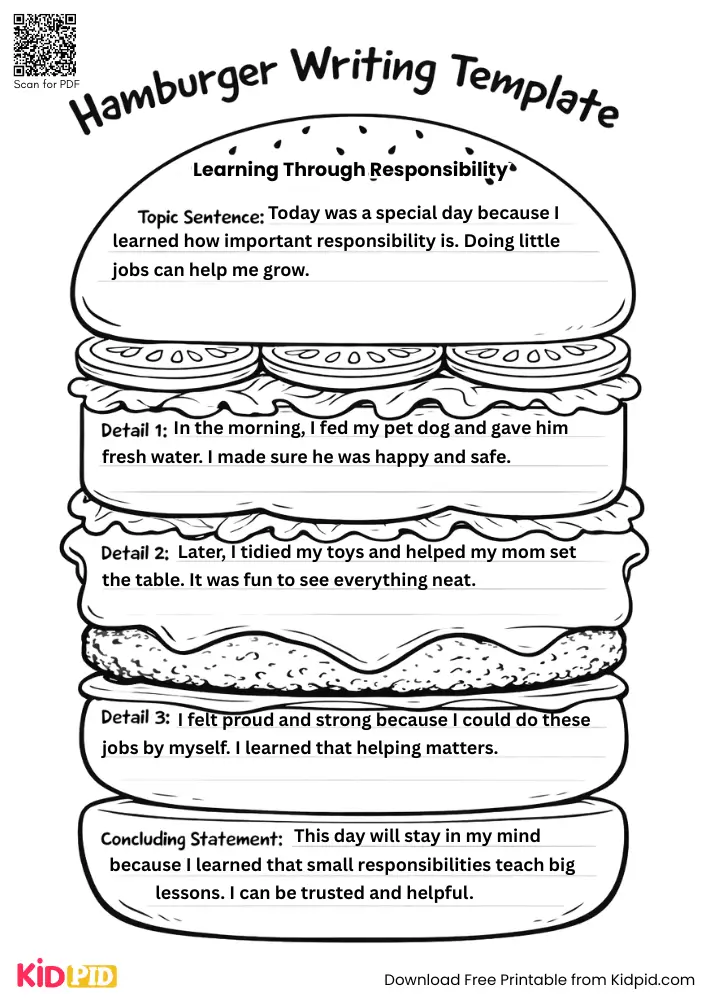
Learn how responsibility teaches discipline, accountability, and maturity. Encourages practical learning, character development, and leadership skills.
Importance Of Self-Observation

Learn how self-observation improves self-awareness, emotional intelligence, and personal growth. Encourages reflection, mindful thinking, understanding behaviors, and developing better habits for responsible and balanced living.
Learning Through Discipline

Understand how discipline builds focus, responsibility, and success in life. Encourages self-control, organized habits, consistent effort, and strong character development.