Public places can be fun but also need careful behavior. Being alert helps children notice danger, follow safety rules, and stay close to trusted adults. Simple habits like watching surroundings and staying calm help children remain safe and confident wherever they go.
5 Pointers on ‘Being Alert in Public Places’
- Being alert means paying attention to our surroundings.
- We should stay close to parents or teachers in public places.
- Not talking to strangers helps keep us safe.
- Watching roads and signals prevents accidents.
- Being alert helps us react quickly in danger.
‘Being Alert in Public Places’ Paragraph Writing
Hamburger Paragraph on ‘Being Alert in Public Places’ (Free Template)
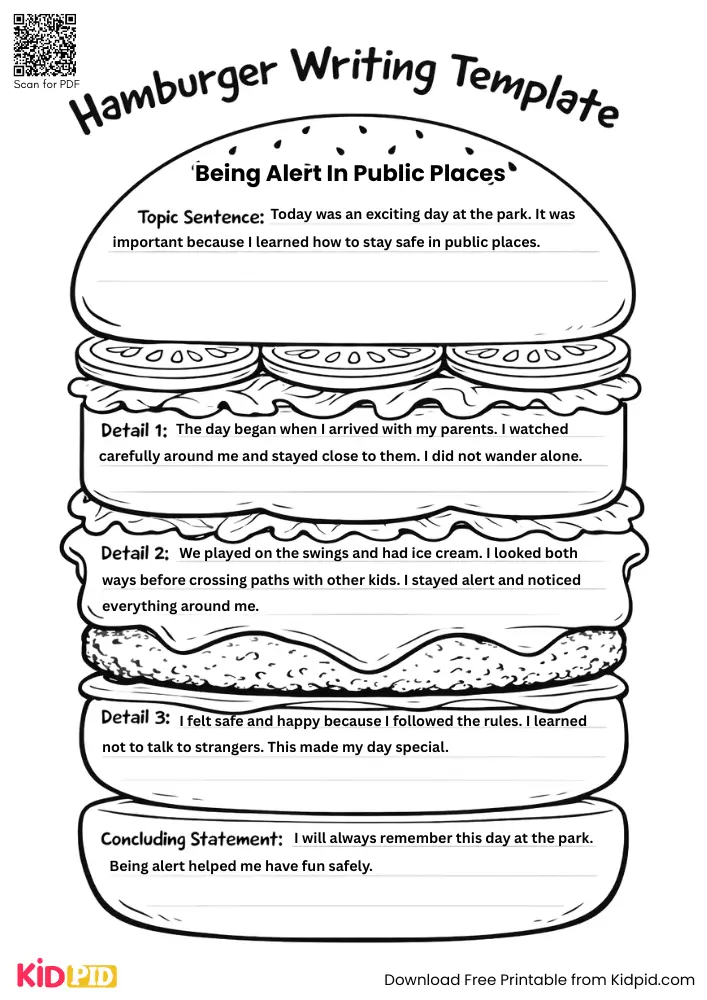
Topic Sentence: Today was an exciting day at the park. It was important because I learned how to stay safe in public places.
Details 1: The day began when I arrived with my parents. I watched carefully around me and stayed close to them. I did not wander alone.
Details 2: We played on the swings and had ice cream. I looked both ways before crossing paths with other kids. I stayed alert and noticed everything around me.
Details 3: I felt safe and happy because I followed the rules. I learned not to talk to strangers. This made my day special.
Concluding Sentence: I will always remember this day at the park. Being alert helped me have fun safely.
Short Paragraph on ‘Being Alert in Public Places’ – 50 Words for Grade 4
Being alert in public places keeps children safe. It means watching around and staying with elders. Children should not talk to strangers or wander alone. Looking both ways before crossing roads helps avoid accidents and danger.
Long Paragraph on ‘Being Alert in Public Places’ – 100 Words for Grade 5
Being alert in public places is very important for children. It means paying attention to people and things around us. Children should stay close to parents or teachers and never walk alone. They must be careful while crossing roads and follow traffic rules. Talking to strangers should be avoided. If a child feels lost or unsafe, asking for help from a trusted adult is important. Being alert helps children stay safe,
‘Being Alert in Public Places’ Essay Writing
‘Being Alert in Public Places’—150 to 200 Words Essay for Grades 6 to 8 Students
Being alert in public places is like being a friendly, careful superhero for your own safety. It doesn’t mean being scared; it means being smart and aware. When you’re at a mall, park, or busy street, the first thing to do is notice what’s around you. Look for exits, notice where your family is, and pay attention if something feels unusual.
Always try to stay close to your parents or the trusted adult you’re with. If you ever feel lost, find a safe person like a police officer, a store clerk, or a family with children to ask for help. It’s also important to listen to the “uh-oh” feeling inside you. If a situation or a stranger makes you feel uncomfortable, walk away quickly toward safety. Remember, it’s okay to say “no” loudly if someone you don’t know tries to make you go with them. By staying alert, you take good care of yourself and help your family feel at ease, so everyone can enjoy their time out together.
‘Being Alert in Public Places’ – 300 Words Essay for Grades 9 to 10 Students
Imagine your mind is a brilliant flashlight. When you’re in a public place, like a bustling train station, a crowded fair, or a big supermarket, you want to shine that flashlight around you. This is what it means to be alert: paying gentle but careful attention to your surroundings to keep yourself safe. It’s a very important skill, and it’s something you can practice to become a safety expert for yourself!
First, always use your “owl eyes” and “deer ears.” Keep your head up and look around. Notice where the doors are, spot where your family member is, and be aware of the people nearby. Try not to get too distracted by just your phone or a game, as this can make you unaware of what’s happening. Second, have a superhero plan. Before you go out, talk to your family. Decide on a special meeting spot, like a fountain or a specific store entrance, in case you get separated. It’s also a superpower to know your parent’s phone number and your full home address by heart.
Most importantly, trust your instincts—that little voice or funny feeling in your tummy. If a person, a path, or a situation makes you feel nervous, scared, or just unsure, listen to that feeling right away. Move quickly toward other people, a store, or a trusted adult. A good rule is to never go anywhere or take anything from a stranger, even if they seem nice. If someone you don’t know makes you uncomfortable, it’s perfectly okay to yell, “No!” or “I don’t know you!” to get attention.
Being alert doesn’t mean you can’t have fun. In fact, it makes your adventure safer and better! When you know how to look after yourself, you feel more confident. Your family will also be proud of you for being so smart and responsible. So, shine your awareness flashlight, have a plan, and enjoy your day out as your own capable safety hero.
Related Essay & Paragraph Topics
- Staying Safe in Public Places
- Alert Today, Safe Tomorrow
- Smart Safety Habits for Children
- Being Careful Outside Home
- How Alertness Keeps Us Safe
You May like this:
Staying Active Daily

Daily physical activity improves fitness, stamina, and mental health. Exercise strengthens muscles, boosts mood, increases energy, and supports long-term wellness while reducing stress and encouraging healthy habits.
Maintaining Daily Cleanliness
Daily cleanliness promotes hygiene, health, and discipline. Keeping surroundings neat prevents illness, improves productivity, and builds responsible habits while encouraging self-respect, organization, and a positive lifestyle.
Value Of Humility

Humility fosters learning, respect, and personal growth. Staying modest encourages openness to feedback, strengthens relationships, and promotes balanced character while preventing arrogance and supporting continuous improvement.
Importance Of Compassion

Compassion promotes empathy, kindness, and social responsibility. Understanding others’ struggles encourages support, reduces conflicts, and builds caring communities where people help one another with respect and humanity.
Power Of Kindness

Kindness spreads positivity, compassion, and emotional connection. Small acts of generosity improve relationships, reduce conflicts, and promote social harmony while creating supportive environments that encourage happiness, empathy, and mutual respect.