Learning to say no politely helps children make safe and smart choices. Using kind words to refuse builds confidence, self-respect, and strong relationships. This skill prevents peer pressure and mistakes while teaching children to set limits responsibly. Practicing polite refusal helps children grow into thoughtful, confident, and kind individuals.
5 Pointers on ‘Learning to Say No Politely’
- Saying no politely means refusing without hurting others’ feelings.
- It helps children stay safe and make smart choices.
- Using kind words shows respect even when disagreeing.
- Saying no politely builds confidence and self-respect.
- Practicing polite refusal prevents peer pressure and mistakes.
‘Learning to Say No Politely’ Paragraph Writing
Hamburger Paragraph on ‘Learning to Say No Politely’ (Free Template)

Topic Sentence: Today was a special day because I learned how to say no politely. It is important to know this skill to make safe and smart choices.
Details 1: The day started with our teacher telling us stories about children facing peer pressure. She explained how saying yes when we want to say no can lead to trouble. I listened carefully and thought about my own experiences.
Details 2: We practiced using polite words like “No, thank you” or “I cannot do that.” It was fun to role-play different situations with friends. I felt proud when I said no politely during practice.
Details 3: I learned that saying no politely shows respect and confidence. True friends will understand my choice. This lesson helped me feel strong and responsible.
Concluding Statement: I will always remember this day because it taught me a very useful skill. Saying no politely helps me stay safe and make better choices.
Short Paragraph on ‘Learning to Say No Politely’ – 50 Words for Grade 4
Learning to say no politely is important for children. It helps them stay safe and make smart choices. Using kind words like “No, thank you” shows respect and confidence. Polite refusal prevents peer pressure and mistakes. Children who practice this skill build self-respect and good relationships.
Long Paragraph on ‘Learning to Say No Politely’ – 100 Words for Grade 5
Saying no politely is an important skill for children. Sometimes, friends or others may ask us to do something unsafe, wrong, or uncomfortable. Using polite words like “No, thank you” or “I cannot do that” helps children refuse kindly without hurting feelings. It builds confidence, self-respect, and responsibility. Polite refusal also helps children avoid peer pressure and make better decisions. Parents and teachers can guide children by giving examples and practicing refusal in different situations. Children who learn to say no politely stay safe, make smart choices, and maintain good relationships with friends and family.
‘Learning to Say No Politely’ Essay Writing
‘Learning to Say No Politely’—150 to 200 Words Essay for Grades 6 to 8 Students
Learning to say “no” politely is a superpower for your feelings and friendships. It doesn’t mean you are being mean or unhelpful. It means you know your own limits and respect yourself. Imagine your energy is like the battery in a tablet. You need to be in charge of how it’s used so it doesn’t drain completely.
Saying no politely is easy with a little practice. You can use kind but clear words. If a friend asks you to play when you need to finish homework, you can say, “That sounds fun, but I need to finish this first. Can we play later?” This shows you heard them, you’re being responsible, and you still value them. You don’t have to make up a big excuse. A simple, honest reason is best. Remember, a true friend will respect your “no.” By saying no politely to things you can’t or shouldn’t do, you say “yes” to your own health, your priorities, and your peace of mind.
‘Learning to Say No Politely’ – 300 Words Essay for Grades 9 to 10 Students
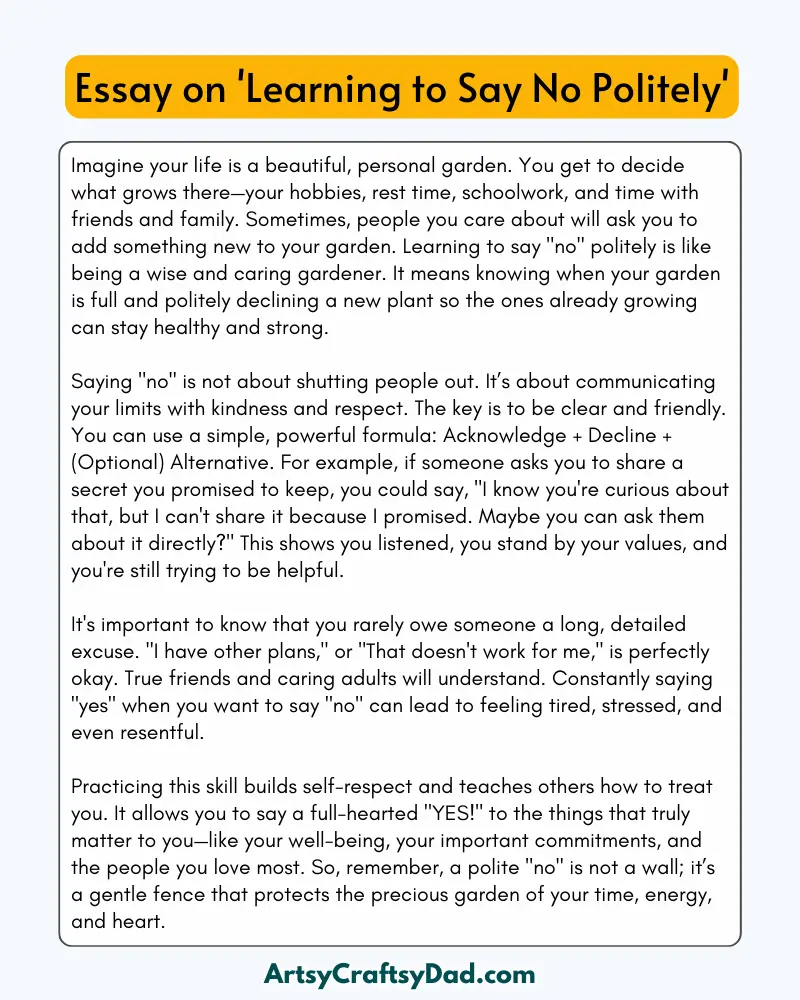
Imagine your life is a beautiful, personal garden. You get to decide what grows there—your hobbies, rest time, schoolwork, and time with friends and family. Sometimes, people you care about will ask you to add something new to your garden. Learning to say “no” politely is like being a wise and caring gardener. It means knowing when your garden is full and politely declining a new plant so the ones already growing can stay healthy and strong.
Saying “no” is not about shutting people out. It’s about communicating your limits with kindness and respect. The key is to be clear and friendly. You can use a simple, powerful formula: Acknowledge + Decline + (Optional) Alternative. For example, if someone asks you to share a secret you promised to keep, you could say, “I know you’re curious about that, but I can’t share it because I promised. Maybe you can ask them about it directly?” This shows you listened, you stand by your values, and you’re still trying to be helpful.
It’s important to know that you rarely owe someone a long, detailed excuse. “I have other plans,” or “That doesn’t work for me,” is perfectly okay. True friends and caring adults will understand. Constantly saying “yes” when you want to say “no” can lead to feeling tired, stressed, and even resentful.
Practicing this skill builds self-respect and teaches others how to treat you. It allows you to say a full-hearted “YES!” to the things that truly matter to you—like your well-being, your important commitments, and the people you love most. So, remember, a polite “no” is not a wall; it’s a gentle fence that protects the precious garden of your time, energy, and heart.
Related Essay & Paragraph Topics
- How to Refuse Kindly
- Saying No Without Being Rude
- Smart Choices with Polite Words
- Avoiding Peer Pressure Safely
- Learning Confidence Through Polite Refusal
You May like this:
Using Gadgets Responsibly

Responsible gadget use improves productivity, digital balance, and well-being. Limiting unnecessary usage, protecting privacy, and focusing on meaningful activities help individuals maintain healthy routines, improve learning, and avoid technology addiction.
Helping Create Harmony

Promoting harmony builds peaceful relationships, social unity, and mutual respect. Encouraging cooperation, understanding differences, resolving conflicts calmly, and supporting kindness help create balanced communities where people live together with trust, empathy, and shared responsibility.
Supporting Fairness

Fairness strengthens justice, equality, and ethical behavior. Promoting honesty and unbiased actions builds trust, encourages responsible decisions, reduces conflict, and creates a balanced society where everyone receives equal opportunities.
Treating Everyone Equally
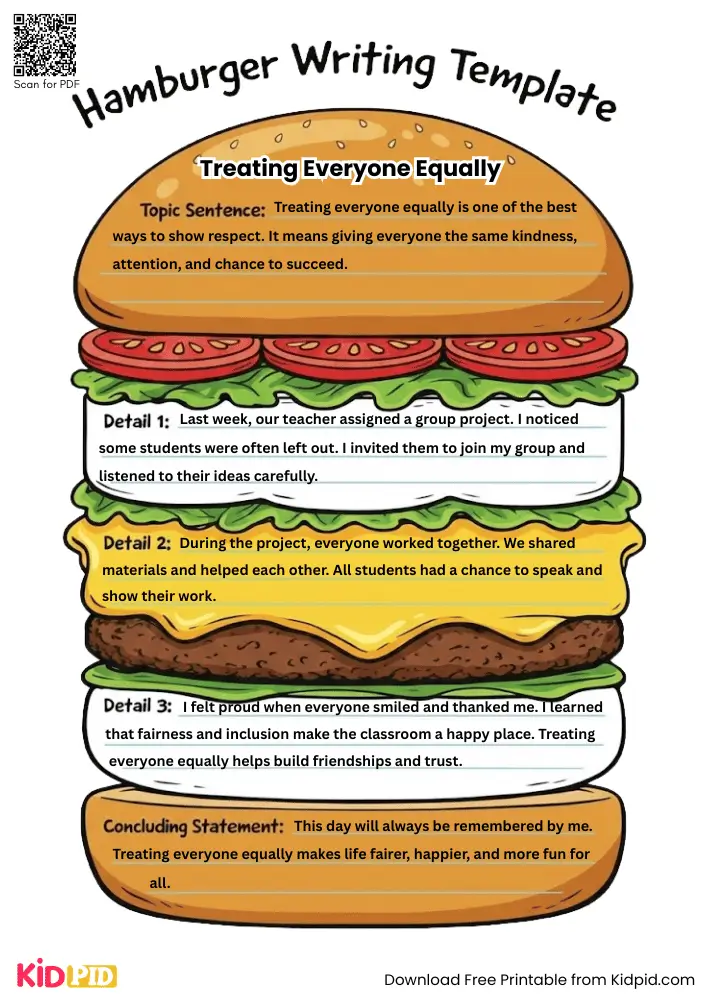
Equality promotes fairness, justice, and social harmony. Treating everyone with respect strengthens inclusive communities, builds trust, reduces discrimination, and supports ethical values essential for a balanced and progressive society.
Helping People In Need

Helping others builds compassion, kindness, and social harmony. Acts of service strengthen communities, improve relationships, encourage empathy, and promote a culture of generosity, cooperation, and shared responsibility for collective well-being.