Time is one of the most valuable gifts we have. Respecting the time of others teaches children responsibility, discipline, and good manners. Simple habits like being punctual and completing work on time help children build trust, improve relationships, and succeed in school and everyday life.
5 Pointers on ‘Respecting Time of Others’
- Time is valuable for everyone.
- Being on time shows good manners and respect.
- Finishing work on time helps others too.
- Not wasting time makes relationships better.
- Respecting time builds trust and responsibility.
‘Respecting Time of Others’ Paragraph Writing
Hamburger Paragraph on ‘Respecting Time of Others’ (Free Template)
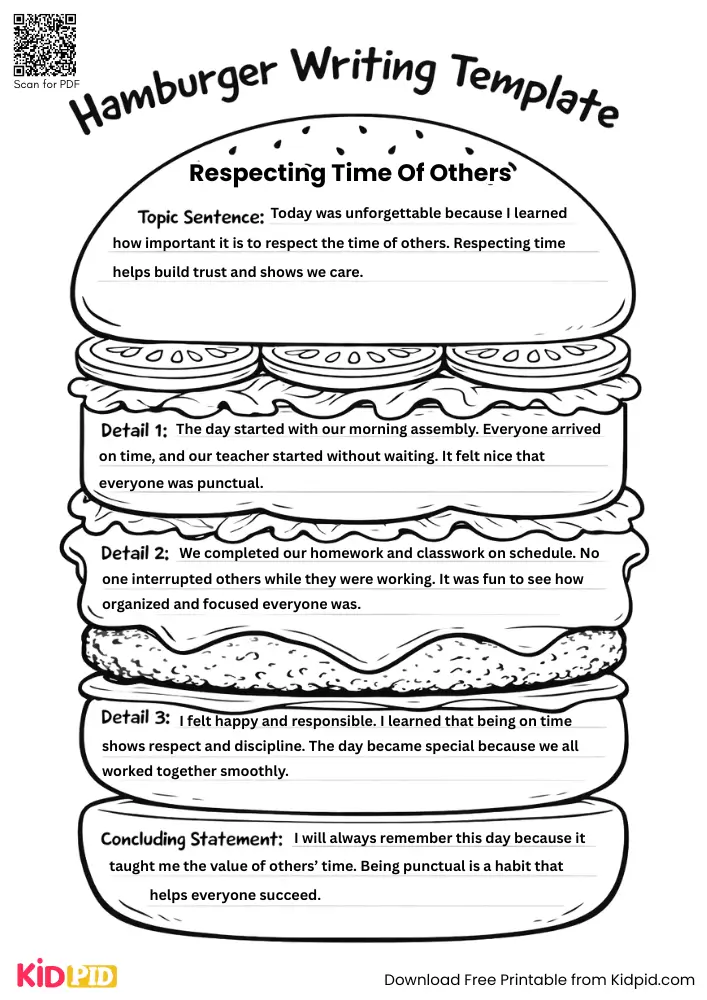
Topic Sentence: Today was unforgettable because I learned how important it is to respect the time of others. Respecting time helps build trust and shows we care.
Details 1: The day started with our morning assembly. Everyone arrived on time, and our teacher started without waiting. It felt nice that everyone was punctual.
Details 2: We completed our homework and classwork on schedule. No one interrupted others while they were working. It was fun to see how organized and focused everyone was.
Details 3: I felt happy and responsible. I learned that being on time shows respect and discipline. The day became special because we all worked together smoothly.
Concluding Statement: I will always remember this day because it taught me the value of others’ time. Being punctual is a habit that helps everyone succeed.
Short Paragraph on ‘Respecting Time of Others’ – 50 Words for Grades 3 to 4
Respecting the time of others means being punctual and responsible. When children come on time and finish work as planned, they show good manners. Not wasting others’ time builds trust and helps everyone work happily together.
Long Paragraph on ‘Respecting Time of Others’ – 100 Words for Grade 5
Respecting the time of others is an important habit for children. Time is valuable, and everyone deserves respect. Being punctual for school, classes, and activities shows good manners. Completing homework and chores on time also shows responsibility. Children should not interrupt others when they are busy. Respecting time helps build trust with parents, teachers, and friends. It also teaches discipline and planning. Children who respect time grow into organized, confident, and caring individuals. This habit helps them succeed in school and everyday life.
‘Respecting Time of Others’ Essay Writing
‘Respecting Time of Others’—150 to 200 Words Essay for Grades 6 to 8 Students
Respecting someone’s time is a powerful way to show you respect them. Time is one thing we can never get back, so how we use our own and honor other people’s is very important. It starts with simple actions.
Being on time is a big one. When you are late to meet a friend or for a team practice, you send a message that your time is more valuable than theirs. A better message is to be punctual, which says, “I care about our plans.” Another key is being present. When a teacher, parent, or friend is talking to you, look at them and listen. Putting away distractions shows their words—and their time—matter to you. Finally, keeping promises is crucial. If you volunteer for a job, do it well and finish it. When you respect other people’s minutes and hours, you build trust, show kindness, and help everything run more smoothly for everyone.
‘Respecting Time of Others’ – 300 Words Essay for Grades 9 to 10 Students
Imagine if you saved up your allowance for a special toy, and a friend carelessly broke it. You’d feel upset because something precious was wasted. Time is even more precious than money—it’s the one treasure we can’t earn more of. Respecting the time of others means understanding that their minutes and hours are valuable, and we must handle them with care.
The most visible sign of this respect is punctuality. Being on time for a class, a rehearsal, or a playdate is a silent promise that says, “Our agreement is important to me.” When we are late, we steal that person’s waiting time, which they could have used for something else. Life happens, so if you are running late, a quick, polite message is a must—it turns a moment of frustration into one of consideration.
Respect continues when we are together. This means being prepared so you don’t waste time searching for a pencil during a study session. More importantly, it means giving the gift of your full attention. Looking someone in the eye, listening without interrupting, and not glancing at a screen tells them, “You have my time right now, and what you are saying is important.” This active listening makes conversations better and faster, honoring both people’s time.
Finally, respecting time means being reliable. When you say you’ll walk the dog, finish your part of a group project, or help set the table, following through shows you understand that others are counting on you. Last-minute cancellations or sloppy work force others to use their precious time to cover for you, which can feel unfair.
In the end, respecting time isn’t about watching the clock. It’s about watching out for each other. It’s a daily practice of kindness that builds stronger friendships, trusted relationships, and a more thoughtful world where everyone’s time—including your own—is treated as the priceless gift it truly is.
Related Essay & Paragraph Topics
- Time Is Precious for Everyone
- Being Punctual Shows Respect
- Learning the Value of Time
- Good Manners Begin with Time
- Why Respecting Time Matters
You May like this:
Handling Criticism Positively
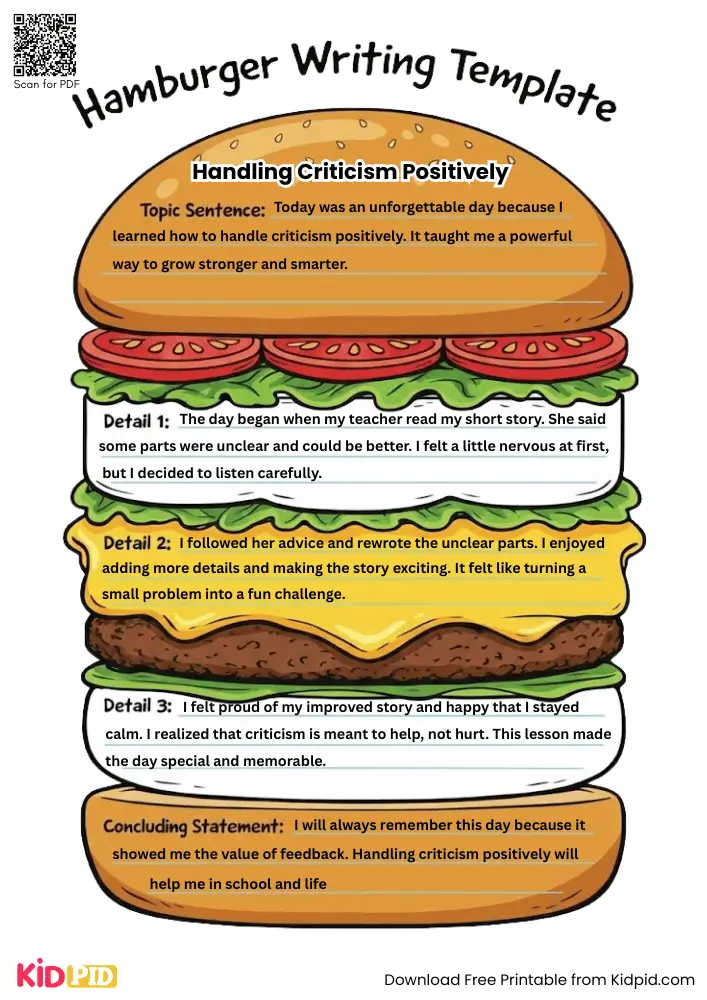
Constructive criticism supports self-improvement, growth mindset, and skill development. Accepting feedback calmly helps build emotional maturity, enhance performance, strengthen resilience, and transform negative comments into opportunities for learning and progress.
Learning Courage Gradually
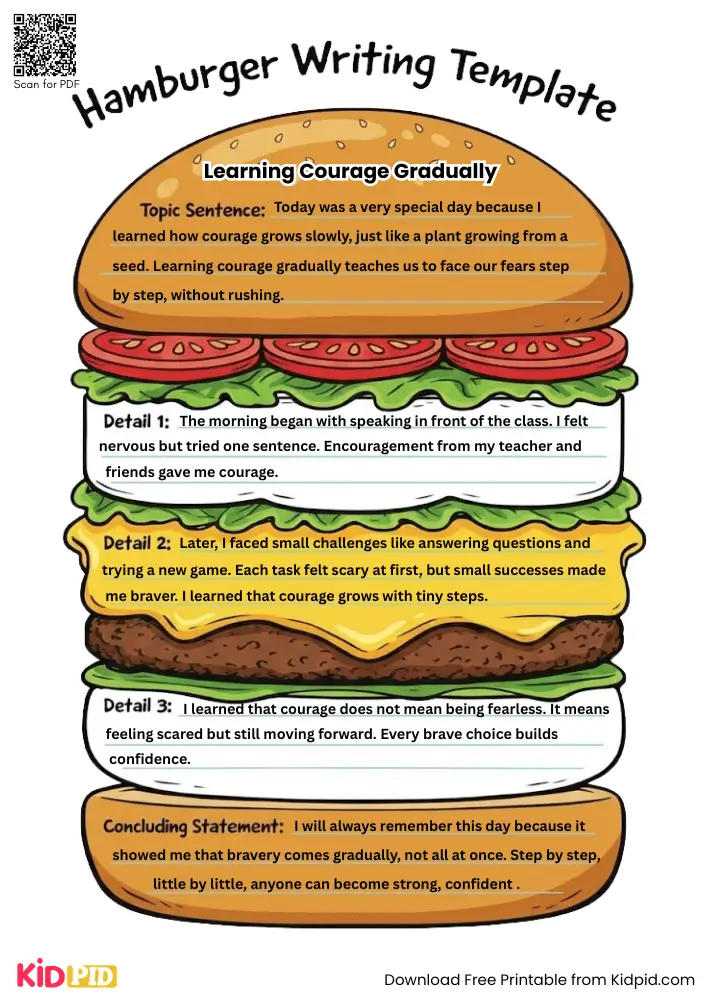
Courage grows through small actions, persistence, and confidence-building experiences. Facing minor challenges regularly strengthens bravery, reduces fear, and encourages personal development, empowering individuals to tackle bigger obstacles with determination and self-belief.
Staying Hopeful In Difficulty
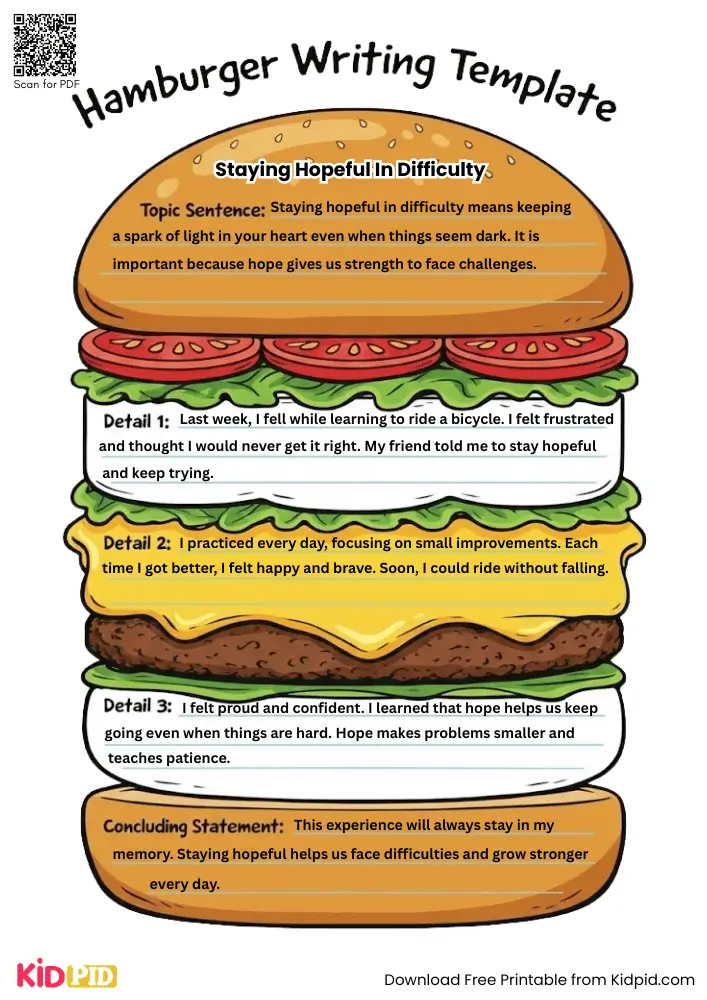
Hope during challenges builds emotional strength, optimism, and perseverance. Maintaining a positive outlook helps reduce stress, inspires solutions, strengthens mental resilience, and encourages individuals to keep moving forward despite setbacks and uncertainties.
Facing Fears Bravely
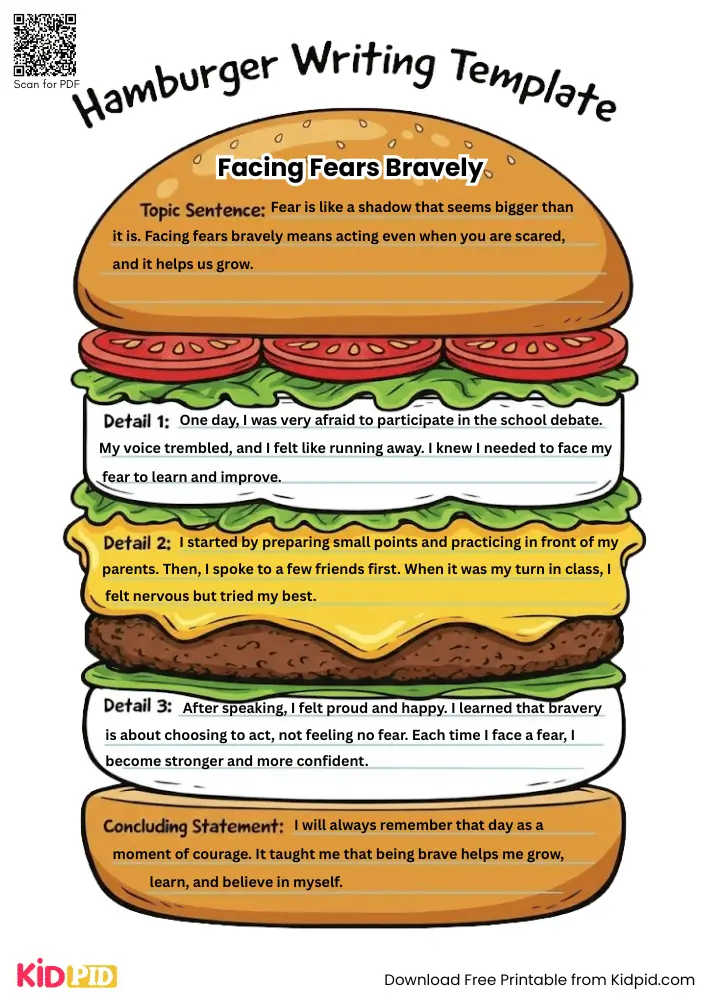
Facing fears develops courage, emotional strength, and self-confidence. Overcoming challenges step by step helps build resilience, reduce anxiety, encourage personal growth, and empower individuals to pursue goals boldly with determination and positive thinking.
Taking Care of Common Spaces

Taking care of common spaces promotes cleanliness, civic responsibility, respect, sustainability, and community well-being.