Respecting differences in opinions helps children learn kindness and understanding. Everyone has unique thoughts, and listening to them builds respect. When we accept different views calmly, we create strong friendships and peaceful surroundings. This habit teaches children to live happily with others.
5 Pointers on ‘Respecting Differences in Opinions’
- Everyone has their own thoughts, ideas, and feelings.
- Respecting opinions means listening without arguing or teasing.
- Different opinions help us learn new things.
- Respect makes friendships peaceful and strong.
- We can disagree politely and still be kind.
‘Respecting Differences in Opinions ‘ Paragraph Writing
Hamburger Paragraph on ‘Respecting Differences in Opinions’ (Free Template)
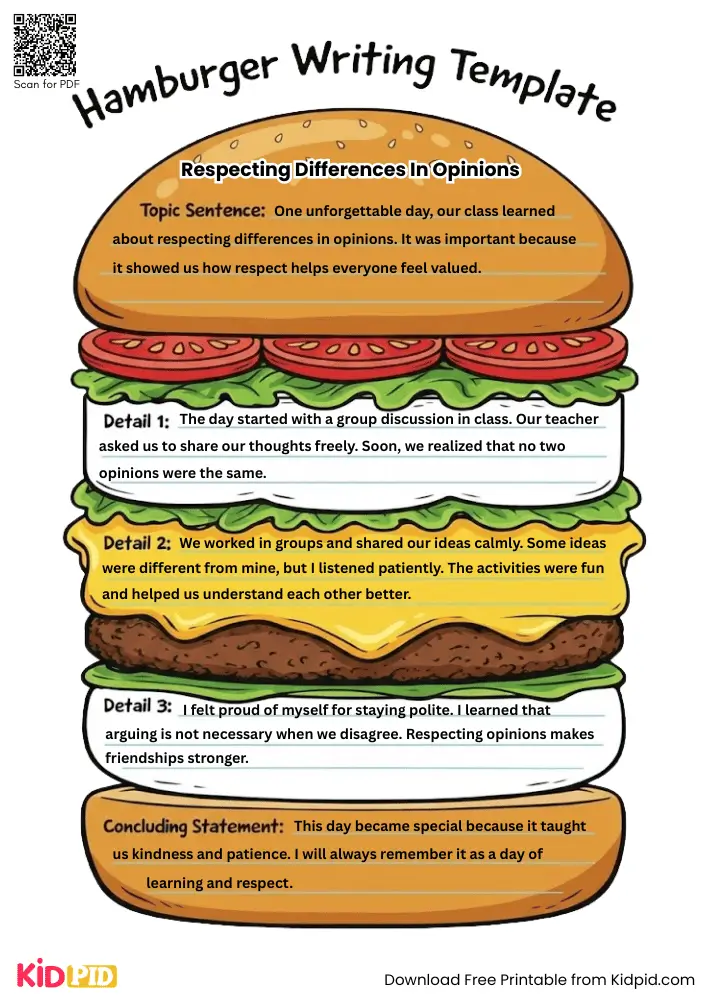
Topic Sentence : One unforgettable day, our class learned about respecting differences in opinions. It was important because it showed us how respect helps everyone feel valued.
Details 1: The day started with a group discussion in class. Our teacher asked us to share our thoughts freely. Soon, we realized that no two opinions were the same.
Details 2: We worked in groups and shared our ideas calmly. Some ideas were different from mine, but I listened patiently. The activities were fun and helped us understand each other better.
Details 3 I felt proud of myself for staying polite. I learned that arguing is not necessary when we disagree. Respecting opinions makes friendships stronger.
Concluding Statement: This day became special because it taught us kindness and patience. I will always remember it as a day of learning and respect.
Short Paragraph on ‘Respecting Differences in Opinions’ – 50 Words for Grade 4
Respecting differences in opinions means listening to others with kindness. Everyone thinks in their own way. We may not always agree, but we should stay polite. Respect helps us make friends, solve problems, and live peacefully with others.
Long Paragraph on ‘Respecting Differences in Opinions ‘ – 100 Words for Grade 5
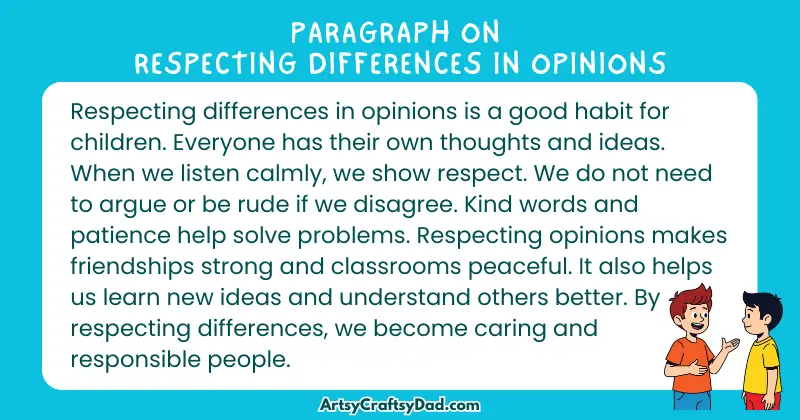
Respecting differences in opinions is a good habit for children. Everyone has their own thoughts and ideas. When we listen calmly, we show respect. We do not need to argue or be rude if we disagree. Kind words and patience help solve problems. Respecting opinions makes friendships strong and classrooms peaceful. It also helps us learn new ideas and understand others better. By respecting differences, we become caring and responsible people.
‘Respecting Differences in Opinions’ Essay Writing
‘Respecting Differences in Opinions’—150 to 200 Words Essay for Grades 6 to 8 Students
Imagine if every ice cream shop only sold chocolate, or every song sounded the same. It would be so dull! Our thoughts and opinions are like flavors and songs—they make life delicious and exciting. Respecting differences in opinions means understanding that people can see the same thing in different ways, and that’s okay.
Maybe your friend loves rainy days while you prefer the sun. Instead of arguing over who is “right,” you can share what you each love: the sound of rain on the roof versus the feel of warm grass. Respecting this difference doesn’t mean you have to change your mind. It means you listen, you learn something new about your friend, and you say, “That’s a cool way to see it!” This makes friendships stronger and classrooms more fun. It shows you value the person, not just their agreement. When we respect different opinions, we build a world where everyone feels brave enough to share their unique ideas, and that’s how the best discoveries and friendships are made.
‘Respecting Differences in Opinions’ – 300 Words Essay for Grades 9 to 10 Students
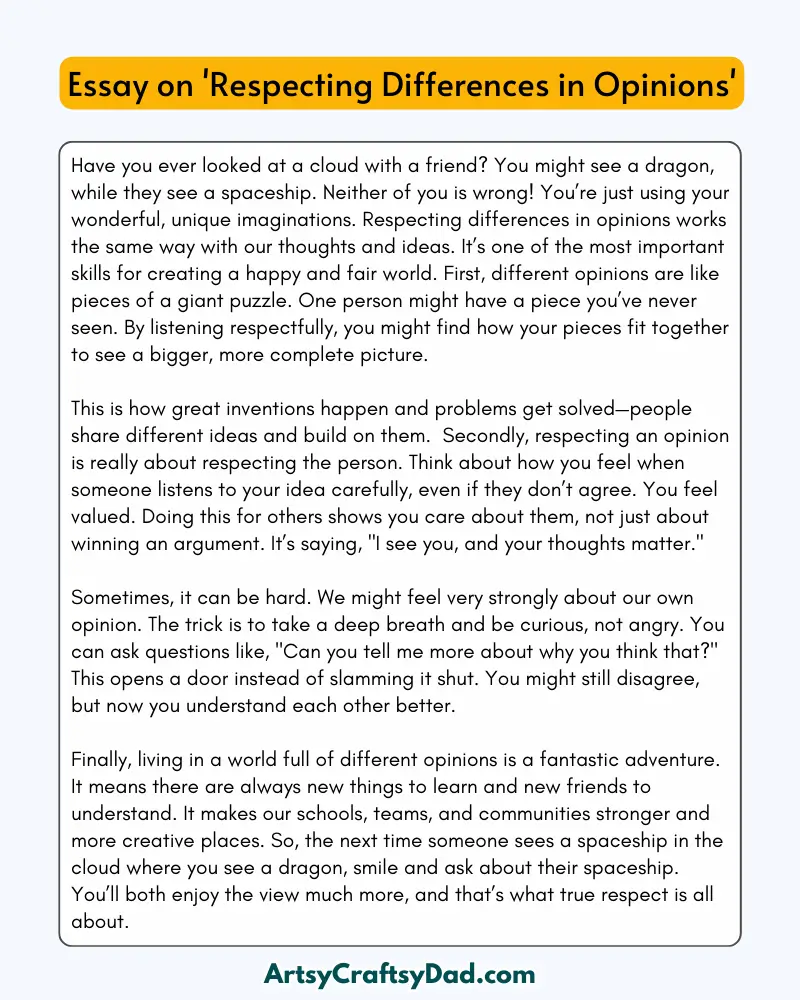
Have you ever looked at a cloud with a friend? You might see a dragon, while they see a spaceship. Neither of you is wrong! You’re just using your wonderful, unique imaginations. Respecting differences in opinions works the same way with our thoughts and ideas. It’s one of the most important skills for creating a happy and fair world.
First, different opinions are like pieces of a giant puzzle. One person might have a piece you’ve never seen. By listening respectfully, you might find how your pieces fit together to see a bigger, more complete picture. This is how great inventions happen and problems get solved—people share different ideas and build on them.
Secondly, respecting an opinion is really about respecting the person. Think about how you feel when someone listens to your idea carefully, even if they don’t agree. You feel valued. Doing this for others shows you care about them, not just about winning an argument. It’s saying, “I see you, and your thoughts matter.”
Sometimes, it can be hard. We might feel very strongly about our own opinion. The trick is to take a deep breath and be curious, not angry. You can ask questions like, “Can you tell me more about why you think that?” This opens a door instead of slamming it shut. You might still disagree, but now you understand each other better.
Finally, living in a world full of different opinions is a fantastic adventure. It means there are always new things to learn and new friends to understand. It makes our schools, teams, and communities stronger and more creative places. So, the next time someone sees a spaceship in the cloud where you see a dragon, smile and ask about their spaceship. You’ll both enjoy the view much more, and that’s what true respect is all about.
Related Essay & Paragraph Topics
- Learning to Accept Different Opinions
- Why Respecting Opinions Matters
- Being Kind While Disagreeing
- The Value of Listening to Others
- Respect Builds Peace and Friendship
You May like this:
Participating In Community Service
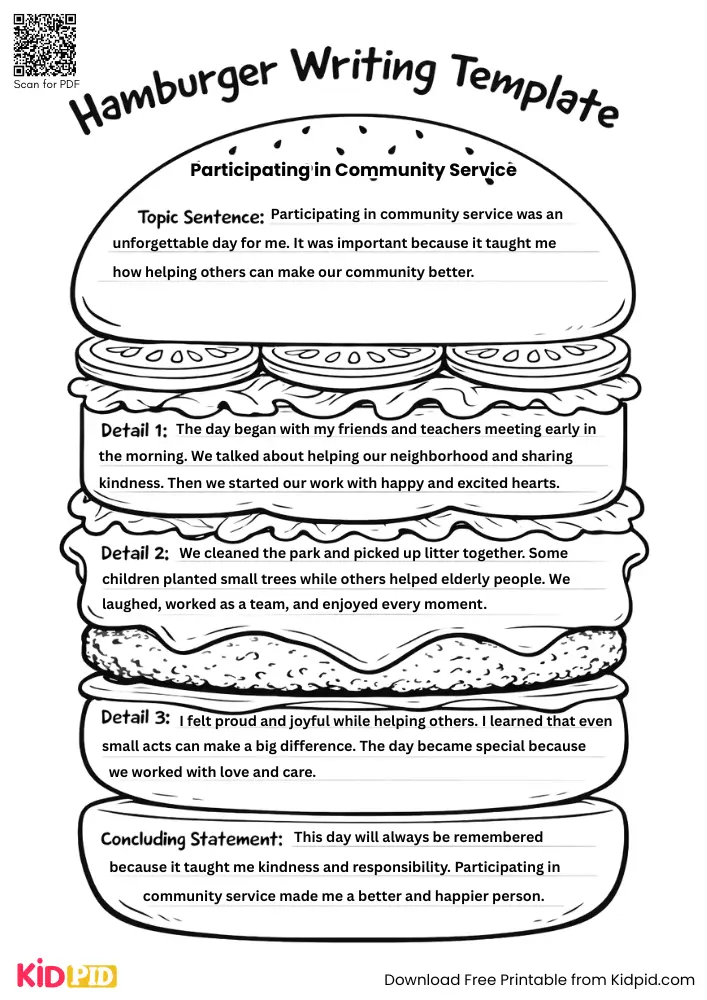
Community service develops empathy, leadership skills, social responsibility, teamwork, compassion, and positive societal impact.
Staying Safe Online

Staying safe online requires strong passwords, privacy settings, cyber awareness, avoiding scams, and responsible digital behavior.
Avoiding Fake Information

Avoiding fake information requires critical thinking, fact-checking, reliable sources, media literacy, and responsible sharing.
Positive Use Of Social Platforms

Positive social platform use encourages meaningful connections, knowledge sharing, creativity, responsible engagement, and digital growth.
Importance Of Problem-Solving Skills

Problem-solving skills enhance critical thinking, creativity, decision-making, adaptability, leadership, and academic success.