Silence during study time helps students focus and learn better. Quiet surroundings allow the mind to think clearly, remember lessons, and complete tasks carefully. Practicing study time in silence improves concentration, reduces mistakes, and creates a peaceful environment. It helps children develop patience, discipline, and confidence while learning.
5 Pointers on ‘Value of Silence During Study Time’
- Silence helps focus on studies without distractions.
- Quiet surroundings make it easier to learn new things.
- Silence allows the brain to think clearly and remember better.
- Studying quietly reduces carelessness and errors.
- Silence keeps the mind peaceful and stress-free during learning.
‘Value of Silence During Study Time’ Paragraph Writing
Hamburger Paragraph on ‘Value of Silence During Study Time’ (Free Template)
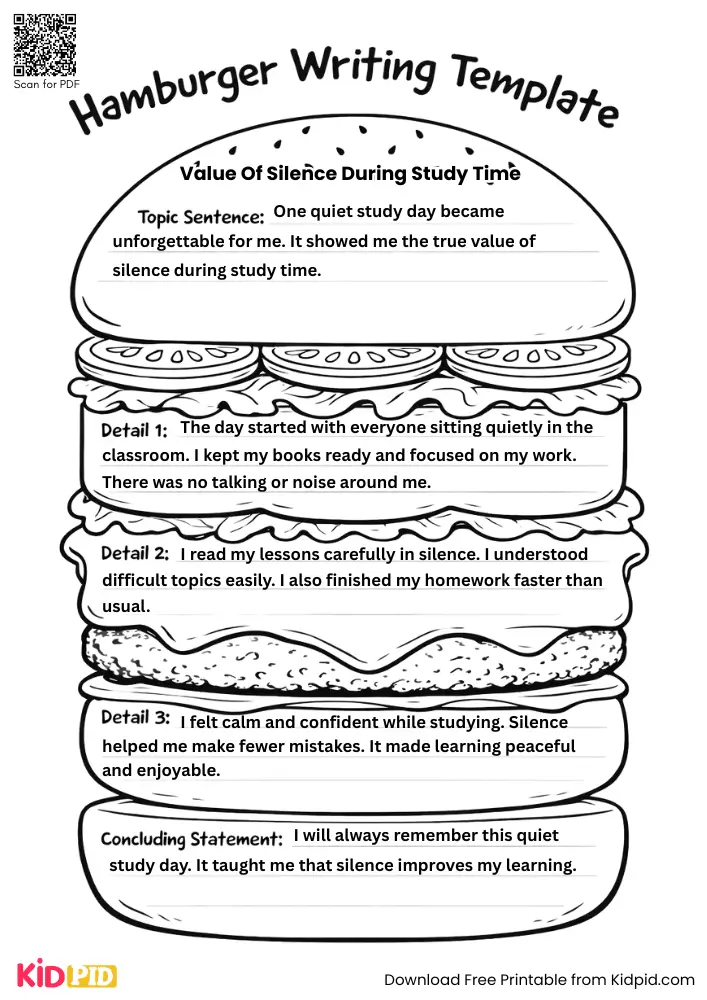
Topic Sentence: One quiet study day became unforgettable for me. It showed me the true value of silence during study time.
Details 1: The day started with everyone sitting quietly in the classroom. I kept my books ready and focused on my work. There was no talking or noise around me.
Details 2: I read my lessons carefully in silence. I understood difficult topics easily. I also finished my homework faster than usual.
Details 3: I felt calm and confident while studying. Silence helped me make fewer mistakes. It made learning peaceful and enjoyable.
Concluding Statement: I will always remember this quiet study day. It taught me that silence improves my learning.
Short Paragraph on ‘Value of Silence During Study Time’ – 50 Words for Grade 2
Silence during study time is very important. When it is quiet, I can concentrate on my lessons. I understand new things better and remember them longer. Studying in silence helps me do my homework carefully and makes learning easier and more enjoyable.
Long Paragraph on ‘Value of Silence During Study Time’ – 100 Words for Grades 3 to 4
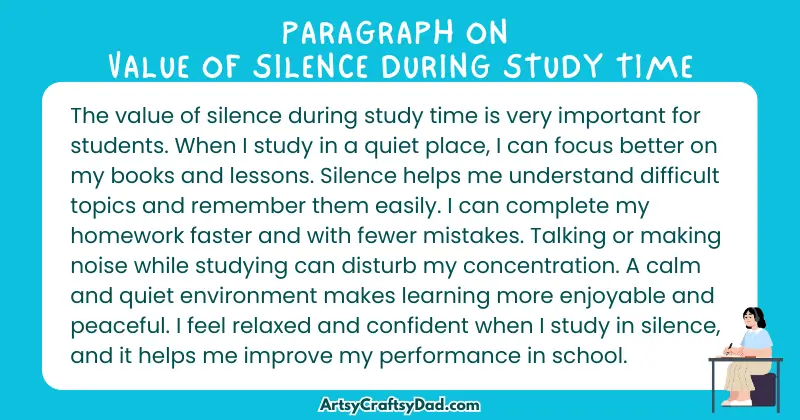
The value of silence during study time is very important for students. When I study in a quiet place, I can focus better on my books and lessons. Silence helps me understand difficult topics and remember them easily. I can complete my homework faster and with fewer mistakes. Talking or making noise while studying can disturb my concentration. A calm and quiet environment makes learning more enjoyable and peaceful. I feel relaxed and confident when I study in silence, and it helps me improve my performance in school.
‘Value of Silence During Study Time’ Essay Writing
‘Value of Silence During Study Time’- 150 to 200 Words Essay for Grades 5 to 6 Students
I discovered the value of silence during study time when I was preparing for a big spelling test. My usual method was to study at the kitchen table with the TV on. I’d read the words, but my mind kept drifting to the show. I felt busy, but I wasn’t really learning. My mom suggested I try studying in my room with the door closed for just 15 minutes of total quiet. I was skeptical, but I tried it. With no distractions, something changed. I could hear myself think. I focused only on the shapes and sounds of the words. I made up little memory tricks in the quiet. Those 15 minutes felt longer and more productive than an hour of distracted studying. On test day, I could picture the quiet page in my mind and remember every word. Silence wasn’t empty; it was powerful. It created a clear space in my head where learning could actually happen. Now, I always start my homework with a few minutes of quiet to let my brain settle in. It’s my secret tool for doing better work in less time.
‘Value of Silence During Study Time’ – 300 Words Essay for Grades 7 to 8 Students
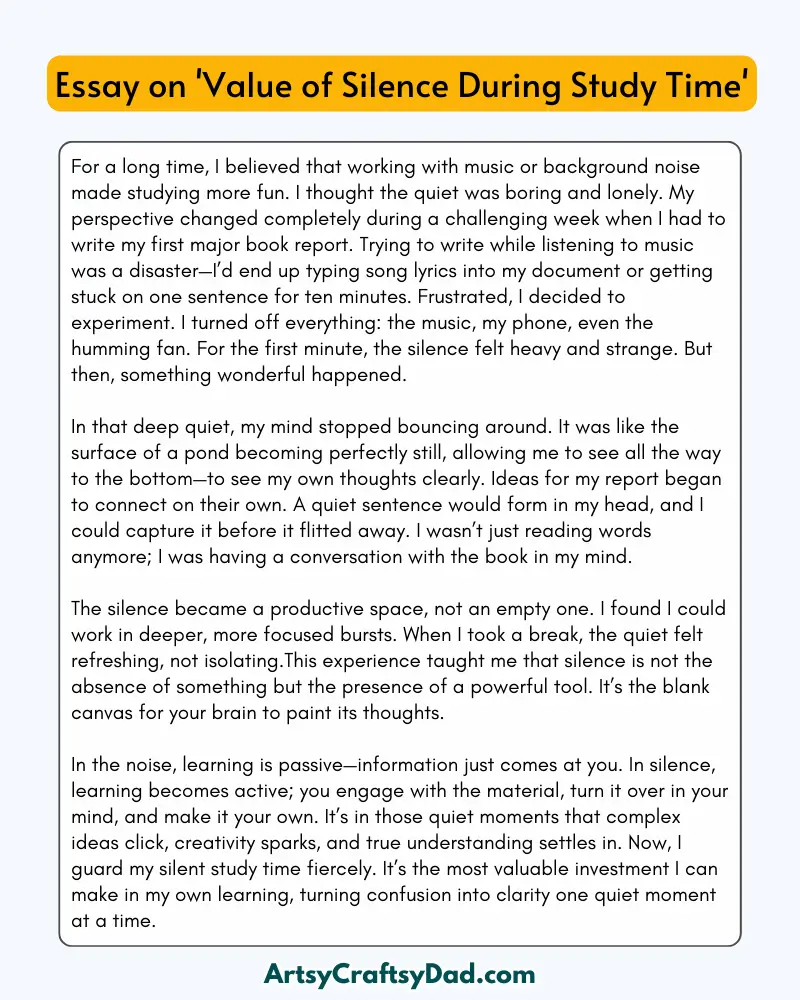
For a long time, I believed that working with music or background noise made studying more fun. I thought the quiet was boring and lonely. My perspective changed completely during a challenging week when I had to write my first major book report. Trying to write while listening to music was a disaster—I’d end up typing song lyrics into my document or getting stuck on one sentence for ten minutes. Frustrated, I decided to experiment. I turned off everything: the music, my phone, even the humming fan. For the first minute, the silence felt heavy and strange. But then, something wonderful happened.
In that deep quiet, my mind stopped bouncing around. It was like the surface of a pond becoming perfectly still, allowing me to see all the way to the bottom—to see my own thoughts clearly. Ideas for my report began to connect on their own. A quiet sentence would form in my head, and I could capture it before it flitted away. I wasn’t just reading words anymore; I was having a conversation with the book in my mind. The silence became a productive space, not an empty one. I found I could work in deeper, more focused bursts. When I took a break, the quiet felt refreshing, not isolating.
This experience taught me that silence is not the absence of something but the presence of a powerful tool. It’s the blank canvas for your brain to paint its thoughts. In the noise, learning is passive—information just comes at you. In silence, learning becomes active; you engage with the material, turn it over in your mind, and make it your own. It’s in those quiet moments that complex ideas click, creativity sparks, and true understanding settles in. Now, I guard my silent study time fiercely. It’s the most valuable investment I can make in my own learning, turning confusion into clarity one quiet moment at a time.
Related Essay & Paragraph Topics
- Why Quiet Helps Me Study Better
- How Silence Improves Concentration
- The Role of a Quiet Room in Learning
- Learning Focus Through Calm Study Time
- How I Improve My Homework with Silence
You May like this:
Being Responsible In Public Places

Being responsible in public places promotes cleanliness, civic sense, respect, safety, discipline, and positive social behavior.
Saving Electricity At Home

Saving electricity reduces energy consumption, lowers bills, conserves natural resources, supports sustainability, and protects the environment.
Being Polite To Strangers

Politeness to strangers builds respect, good manners, positive communication, social harmony, and a welcoming environment.
Respecting Public Property

Respecting public property prevents damage, promotes civic responsibility, community pride, environmental care, and social discipline.
Learning To Stay Calm In Anger
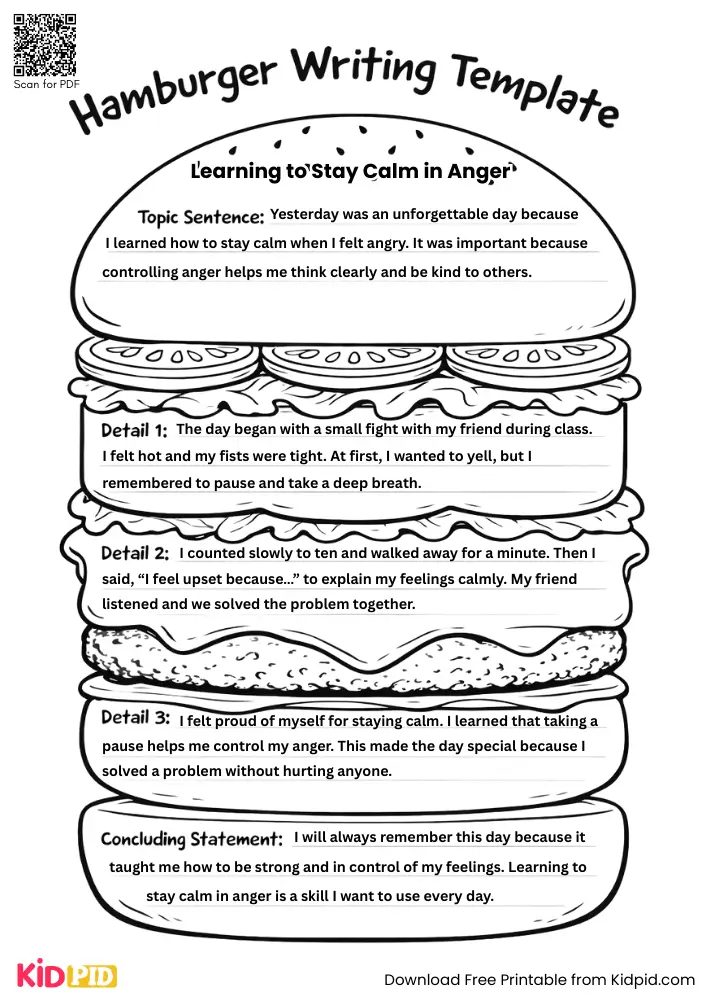
Staying calm in anger improves emotional control, conflict resolution, communication skills, stress management, and healthy relationships.