School is not just about reading books and solving sums. It teaches us important life skills like teamwork, problem-solving, time management, and communication. From group projects to sports and daily routines, every activity helps us learn how to handle real-life situations, making school a place where we grow as people.
5 Pointers on ‘How School Teaches Life Skills’
- School teaches teamwork through group activities and projects.
- Time management is learned by completing homework and meeting deadlines.
- Communication skills develop through presentations, discussions, and debates.
- Problem-solving is practiced in subjects like math, science, and practical activities.
- Responsibility and discipline are learned by following rules and taking care of school tasks.
‘How School Teaches Life Skills’ Paragraph Writing
Hamburger Paragraph on ‘How School Teaches Life Skills’ (Free Template)

Topic Sentence: School is a place where we learn more than just subjects. It helps us gain skills that are important for life.
Details 1: The day starts with lessons and group activities. We begin with reading, writing, and math. Then we play games that teach teamwork.
Details 2: During the day, we do projects and presentations. Solving problems and listening to others helps us think clearly. Sports and group work show us how to cooperate.
Details 3: I feel proud when I complete a task successfully. I learn responsibility, communication, and critical thinking. These lessons make me confident and independent.
Concluding Statement: School helps me grow every day. I will always remember the life skills I learn here.
Short Paragraph on ‘How School Teaches Life Skills’ – 50 Words for Grades 2 & 3
School teaches you important life skills. You learn teamwork by playing sports and doing group projects. You practice time management with homework and schedules. Solving math problems and classroom disagreements builds critical thinking. These everyday lessons prepare you for challenges outside the classroom, helping you grow into a capable person.
Long Paragraph on ‘How School Teaches Life Skills’ – 100 Words for Grade 4
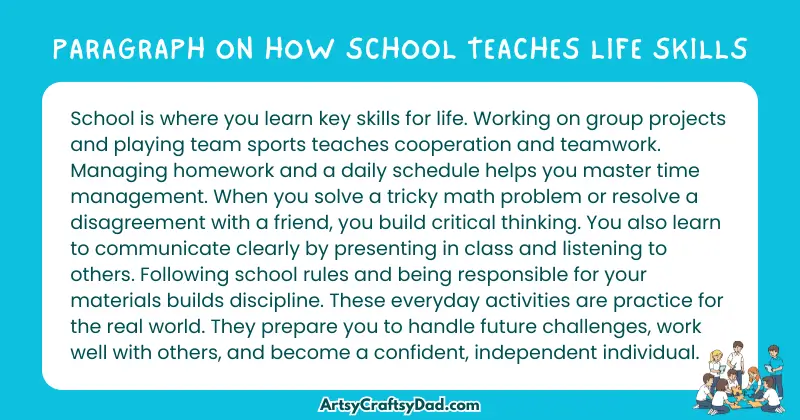
School is where you learn key skills for life. Working on group projects and playing team sports teaches cooperation and teamwork. Managing homework and a daily schedule helps you master time management. When you solve a tricky math problem or resolve a disagreement with a friend, you build critical thinking. You also learn to communicate clearly by presenting in class and listening to others. Following school rules and being responsible for your materials builds discipline. These everyday activities are practice for the real world. They prepare you to handle future challenges, work well with others, and become a confident, independent individual.
‘How School Teaches Life Skills’ Essay Writing
‘How School Teaches Life Skills’—150 to 200 Words Essay for Grade 5 Student
School is about much more than just books and tests! It’s actually a training ground for life. Think about it: when you work on a group poster or play on a soccer team, you’re learning teamwork and how to cooperate with others—skills you’ll use forever. Every homework assignment teaches you to be responsible and manage your time. Have you ever struggled with a tricky science question or a hard spelling word? Figuring it out builds your problem-solving muscles! Plus, school is where you practice talking to all kinds of people, making friends, and standing up for yourself politely. Most importantly, when you make a mistake on a test and then learn from it, you are building resilience. You learn that not giving up is the real key to success. So, every day at school, you’re not just learning subjects; you’re learning how to navigate the world.
‘How School Teaches Life Skills’ – 300 Words Essay for Grades 6 to 10 Students
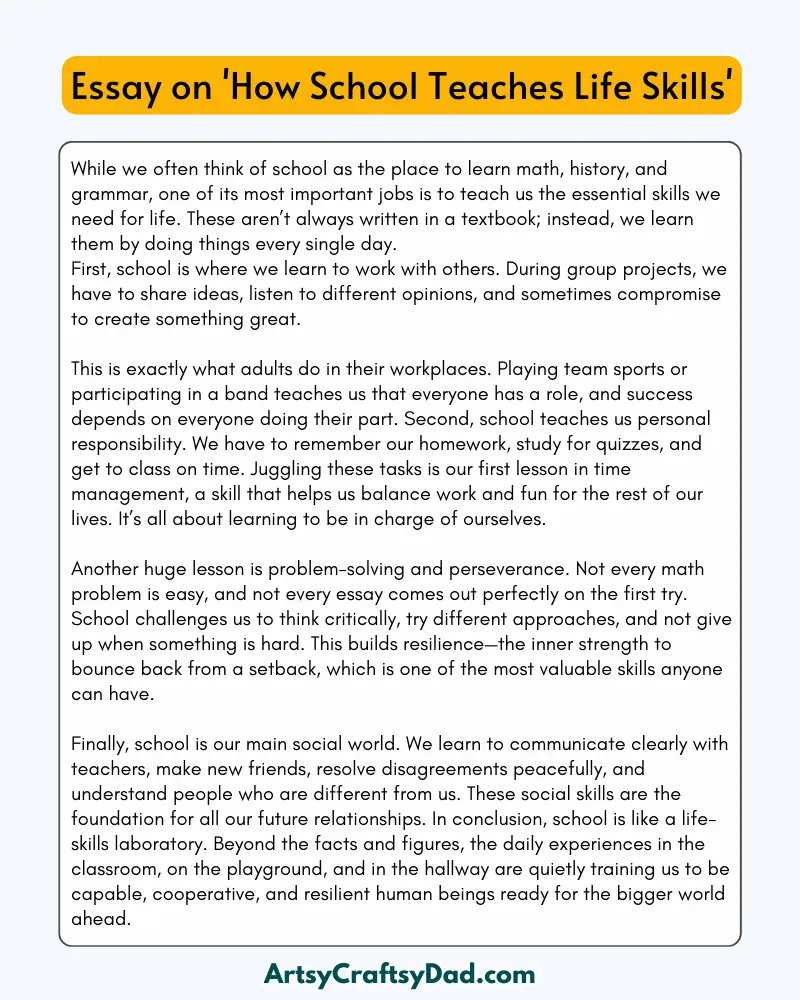
While we often think of school as the place to learn math, history, and grammar, one of its most important jobs is to teach us the essential skills we need for life. These aren’t always written in a textbook; instead, we learn them by doing things every single day.
First, school is where we learn to work with others. During group projects, we have to share ideas, listen to different opinions, and sometimes compromise to create something great. This is exactly what adults do in their workplaces. Playing team sports or participating in a band teaches us that everyone has a role, and success depends on everyone doing their part.
Second, school teaches us personal responsibility. We have to remember our homework, study for quizzes, and get to class on time. Juggling these tasks is our first lesson in time management, a skill that helps us balance work and fun for the rest of our lives. It’s all about learning to be in charge of ourselves.
Another huge lesson is problem-solving and perseverance. Not every math problem is easy, and not every essay comes out perfectly on the first try. School challenges us to think critically, try different approaches, and not give up when something is hard. This builds resilience—the inner strength to bounce back from a setback, which is one of the most valuable skills anyone can have.
Finally, school is our main social world. We learn to communicate clearly with teachers, make new friends, resolve disagreements peacefully, and understand people who are different from us. These social skills are the foundation for all our future relationships.
In conclusion, school is like a life-skills laboratory. Beyond the facts and figures, the daily experiences in the classroom, on the playground, and in the hallway are quietly training us to be capable, cooperative, and resilient human beings ready for the bigger world ahead.
Related Essay & Paragraph Topics
- Life Lessons from the Classroom
- Skills I Learned at School That Help Me Every Day
- How School Shapes My Everyday Life
- Beyond Books: School and Life Skills
- Lessons for Life: What School Taught Me
You May like this:
Trusting Inner Voice

Listening to intuition improves decision-making, self-awareness, and confidence. Trusting inner guidance helps avoid mistakes, promotes authenticity, strengthens emotional intelligence, and supports thoughtful choices aligned with personal values and long-term goals.
Understanding Social Responsibilities

Social responsibility promotes ethical behavior, civic awareness, and community welfare. Respecting rules, helping others, and contributing positively strengthen society, build trust, and encourage responsible citizenship for sustainable development.
Respecting Differences
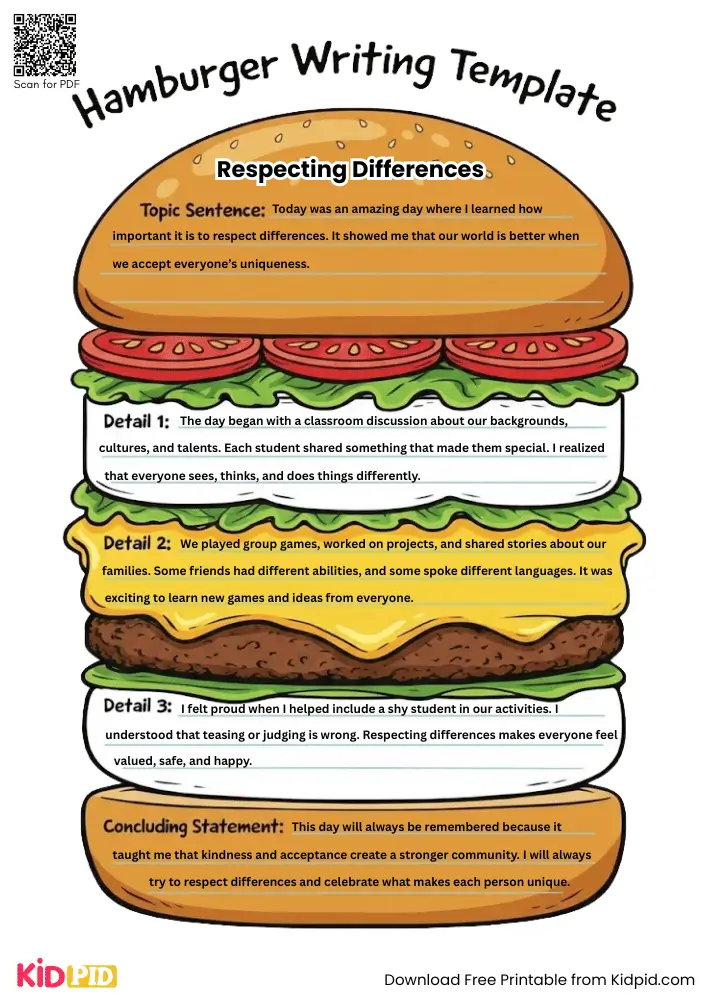
Respecting diversity encourages inclusion, tolerance, and peaceful coexistence. Accepting cultural, social, and personal differences strengthens relationships, promotes equality, reduces conflicts, and builds a harmonious, respectful, and understanding society.
Being Sensitive To Others
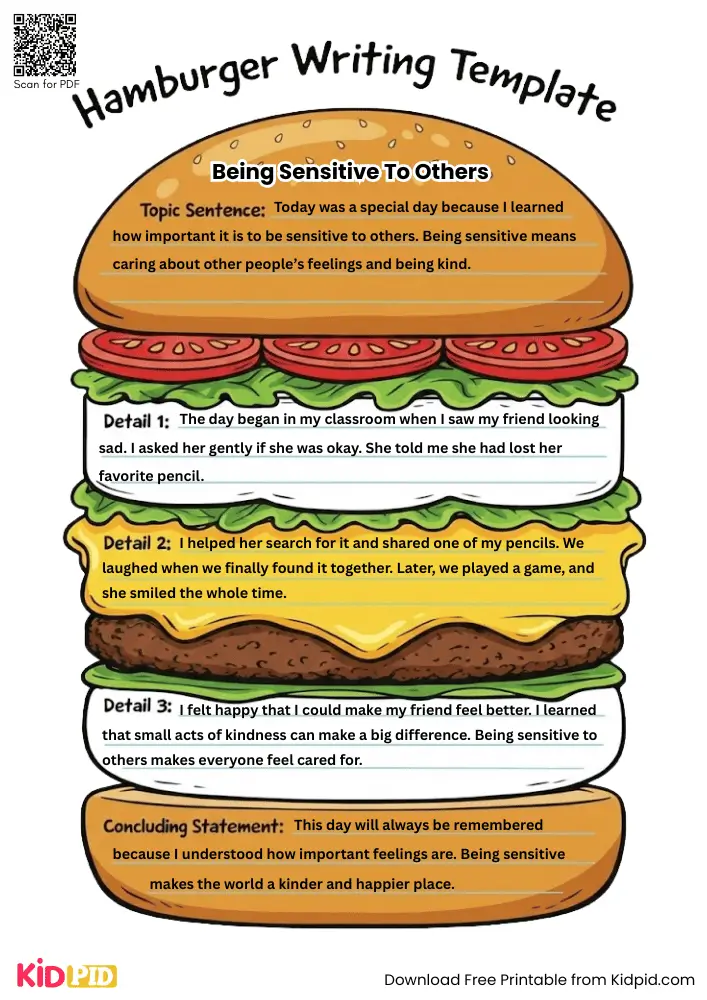
Emotional sensitivity improves empathy, relationships, and communication. Understanding others’ feelings fosters kindness, compassion, and respect, helping create supportive environments that encourage trust, cooperation, and strong social connections.
Standing Against Injustice

Opposing injustice promotes courage, moral responsibility, and social reform. Speaking against unfairness strengthens democratic values, supports human rights, encourages equality, and inspires others to defend truth and fairness.