“Developing emotional balance helps children handle life’s ups and downs with confidence. When we learn to manage our reactions and understand our moods, we stay peaceful even during challenges. Strong emotional balance improves decision-making, relationships, and self-control, guiding students toward a happier, healthier, and more stable life.”
5 Pointers on ‘Developing Emotional Balance’
- Emotional balance means staying calm and happy even in tough situations.
- Understanding and accepting our feelings helps develop balance.
- Practicing self-control keeps emotions steady.
- Talking to family or friends reduces stress and improves balance.
- Emotional balance helps children make good decisions and stay confident.
‘Developing Emotional Balance’ Paragraph Writing
Hamburger Paragraph on ‘Developing Emotional Balance’ (Free Template)
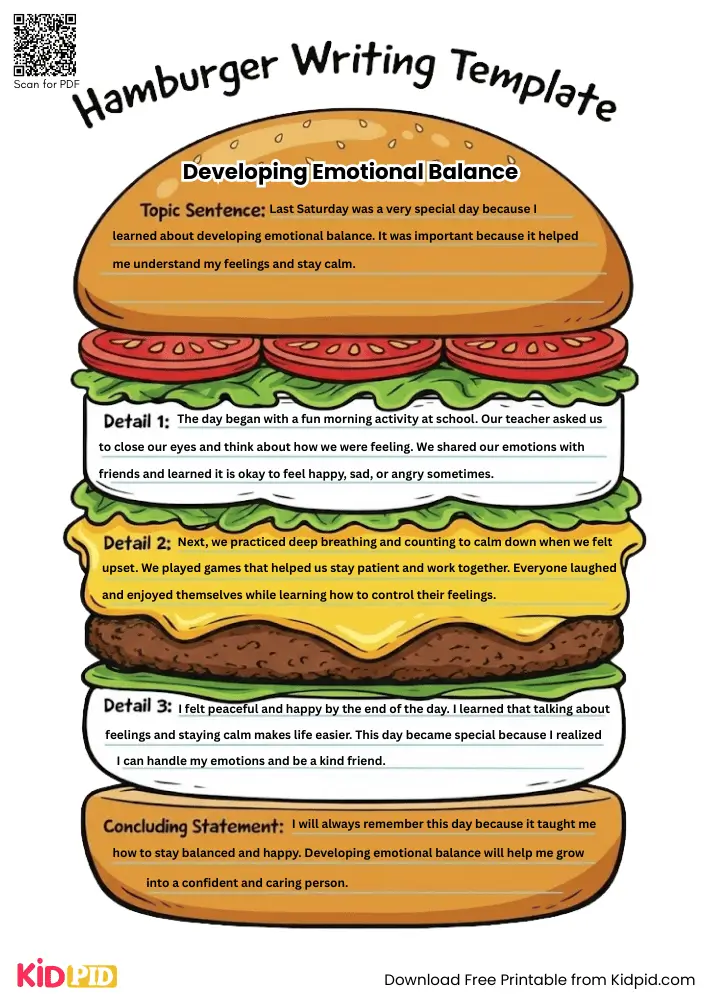
Topic Sentence: Last Saturday was a very special day because I learned about developing emotional balance. It was important because it helped me understand my feelings and stay calm.
Details 1: The day began with a fun morning activity at school. Our teacher asked us to close our eyes and think about how we were feeling. We shared our emotions with friends and learned it is okay to feel happy, sad, or angry sometimes.
Details 2: Next, we practiced deep breathing and counting to calm down when we felt upset. We played games that helped us stay patient and work together. Everyone laughed and enjoyed themselves while learning how to control their feelings.
Details 3: I felt peaceful and happy by the end of the day. I learned that talking about feelings and staying calm makes life easier. This day became special because I realized I can handle my emotions and be a kind friend.
Concluding Statement: I will always remember this day because it taught me how to stay balanced and happy. Developing emotional balance will help me grow into a confident and caring person.
Short Paragraph on ‘Developing Emotional Balance’ – 50 Words for Grade 4
Developing emotional balance means staying calm and happy. Accepting our feelings, talking to family, and controlling anger or fear helps children stay balanced. Expressing emotions positively and practicing self-control builds confidence. Children with emotional balance feel peaceful, make good choices, and maintain strong friendships.
Long Paragraph on ‘Developing Emotional Balance’ – 100 Words for Grade 5

Developing emotional balance is important for children. Emotional balance means understanding and controlling emotions like happiness, sadness, or anger. Accepting feelings and expressing them positively helps children feel better. Talking to parents, teachers, or friends and practicing self-control keeps emotions steady. Simple steps like deep breathing, counting, or walking calm the mind. Children with emotional balance stay confident, make good decisions, and handle challenges calmly. They build strong relationships and stay happy. Learning emotional balance at a young age helps children grow into responsible, kind, and emotionally strong adults.
‘Developing Emotional Balance’ Essay Writing
‘Developing Emotional Balance’ – 150 to 200 Words Essay for Grades 6 to 8 Students
Imagine your emotions are like instruments in an orchestra. If the sadness cello plays too loud for too long, it drowns out everything else. If the excitement trumpet never stops, it gives everyone a headache! Developing emotional balance is about learning to be the conductor of your own orchestra, making sure all the instruments—your different feelings—play together in harmony.
Emotional balance doesn’t mean feeling only “happy.” It means feeling all your feelings without letting one take over the whole show. It’s okay to feel angry, but balance helps you feel the anger without hitting or screaming. It’s okay to feel super excited, but balance helps you channel that energy without crashing later. You develop this skill by noticing your feelings without judgment, taking calming breaths when things get too loud inside, and making sure you have a mix of activities in your day—some for fun, some for work, and some for quiet rest. A balanced heart is a strong, resilient, and peaceful heart.
‘Developing Emotional Balance’ – 300 Words Essay for Grades 9 to 10 Students
Think of yourself as a sailor on the sea of life. Some days are perfectly calm and sunny (joy). Other days bring rolling waves of excitement or sudden squalls of anger. Developing emotional balance is the skill of learning to adjust your sails so you can navigate all kinds of emotional weather without capsizing your boat. It’s not about stopping the waves—it’s about learning to ride them.
A balanced emotional life has room for the full spectrum of feelings. It understands that sadness has its purpose, just like joy. The goal is to avoid the extremes: you don’t want to be lost in a hurricane of anger any more than you want to be stuck in the doldrums of apathy, where no wind of motivation blows. So how do you find that steady, skillful middle? It starts with mindful noticing. Pause throughout your day to simply ask, “What am I feeling right now?” This awareness is your compass.
Next, practice calm-in-the-storm techniques. Your breath is your most reliable anchor. When a big wave of frustration or worry hits, taking five slow, deep breaths can calm your nervous system and give your wise mind a chance to take the helm. Balance also comes from a balanced life. Make sure your daily routine includes not just things you have to do, but things that bring you joy, connection, and peace.
Finally, emotional balance means acceptance. It’s saying, “A storm is here, and that’s okay. I know how to handle this. It will pass.” You stop fighting your feelings and start working with them. By developing this balance, you build an incredible inner strength. You become a sailor who is not afraid of the sea but who respects it, learns from it, and can journey through any weather with courage and grace.
Related Essay & Paragraph Topics
- Importance of Emotional Balance
- How to Stay Calm and Positive
- Understanding and Controlling Emotions
- Building Confidence Through Emotional Balance
- Emotional Balance for Children