Learning to control my reactions is an important part of growing up. It helps me stay calm, think clearly, and handle situations wisely. By understanding my feelings and choosing how to respond, I can build better friendships, avoid problems, and feel proud of my thoughtful actions every day.
5 Pointers on ‘Learning to Control My Reactions’
- Take a deep breath before responding to situations.
- Think about how my words or actions might affect others.
- Practice staying calm even when I feel angry or upset.
- Learn to listen carefully before reacting.
- Remind myself that I can choose how I respond.
‘Learning to Control My Reactions’ Paragraph Writing
Hamburger Paragraph on ‘Learning to Control My Reactions’ (Free Template)
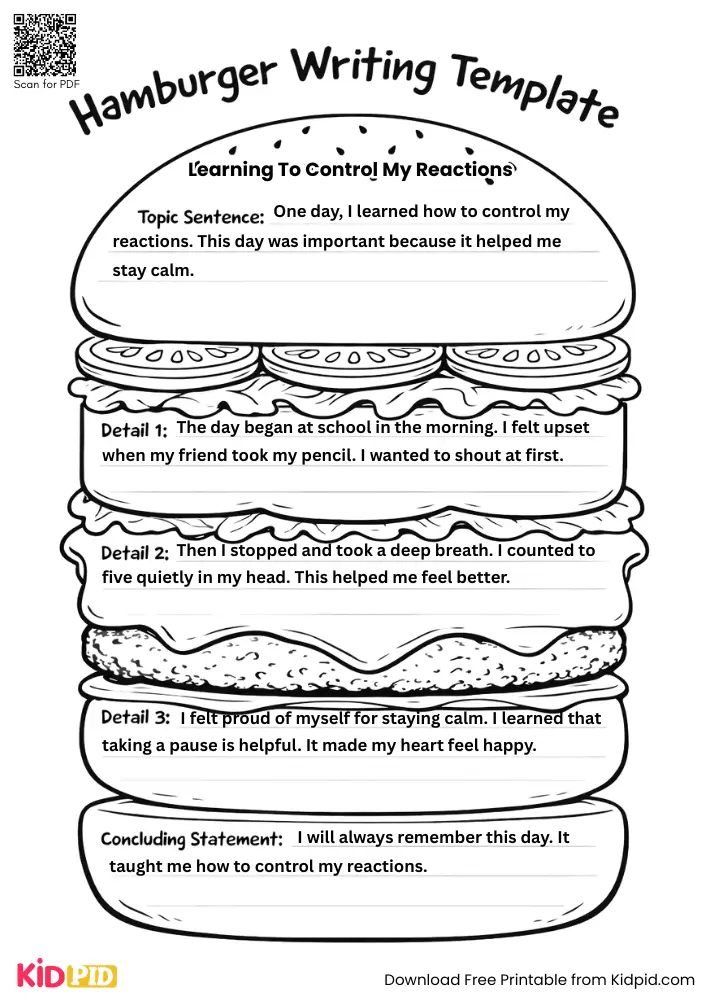
Topic Sentence: One day, I learned how to control my reactions. This day was important because it helped me stay calm.
Details 1: The day began at school in the morning. I felt upset when my friend took my pencil. I wanted to shout at first.
Details 2: Then I stopped and took a deep breath. I counted to five quietly in my head. This helped me feel better.
Details 3: I felt proud of myself for staying calm. I learned that taking a pause is helpful. It made my heart feel happy.
Concluding Statement: I will always remember this day. It taught me how to control my reactions.
Short Paragraph on ‘Learning to Control My Reactions’ – 50 Words for Grade 3
Sometimes things make me feel mad or upset. Now I stop and take a deep breath. I count to five. This helps me calm down. Then I can choose a better way to act. It feels good to be in control.
Long Paragraph on ‘Learning to Control My Reactions’ – 100 Words for Grade 4

Learning to control my reactions is like being the boss of my feelings. When something annoying or unfair happens, my first feeling might be to yell or cry. But I have a secret tool! I pause and take a slow, deep breath. I might count in my head or squeeze my hands. This tiny break lets the big feeling get smaller. Then, I can think. I can use my words to say what’s wrong, ask for help, or just walk away. It’s not always easy, but it makes me feel stronger and keeps my day much happier.
‘Learning to Control My Reactions’ Essay Writing
‘Learning to Control My Reactions’- 150 to 200 Words Essay for Grades 5 to 7 Students
Learning to control my reactions is like being the captain of my own ship, especially when the sea gets stormy with big feelings. It doesn’t mean I won’t ever feel angry, sad, or frustrated. Those feelings are normal! It means I learn how to steer my ship safely through the storm instead of letting the waves toss me around.
The first and most important step is to press the “pause” button. When my brother takes my toy, or I get a hard homework problem, my first reaction might be to yell or give up. But if I stop and take a few deep breaths, I create a tiny space. In that space, I can think. I can name my feeling: “I’m feeling jealous,” or “This is making me mad.” Then, I can choose a better action. Maybe I use my words to ask for my toy back, or I ask an adult for help with my homework. It takes practice, but each time I control my reaction, I feel stronger and prouder. I’m not letting my feelings boss me around—I’m the boss of them!
‘Learning to Control My Reactions’ – 300 Words Essay for Grades 8 to 10 Students
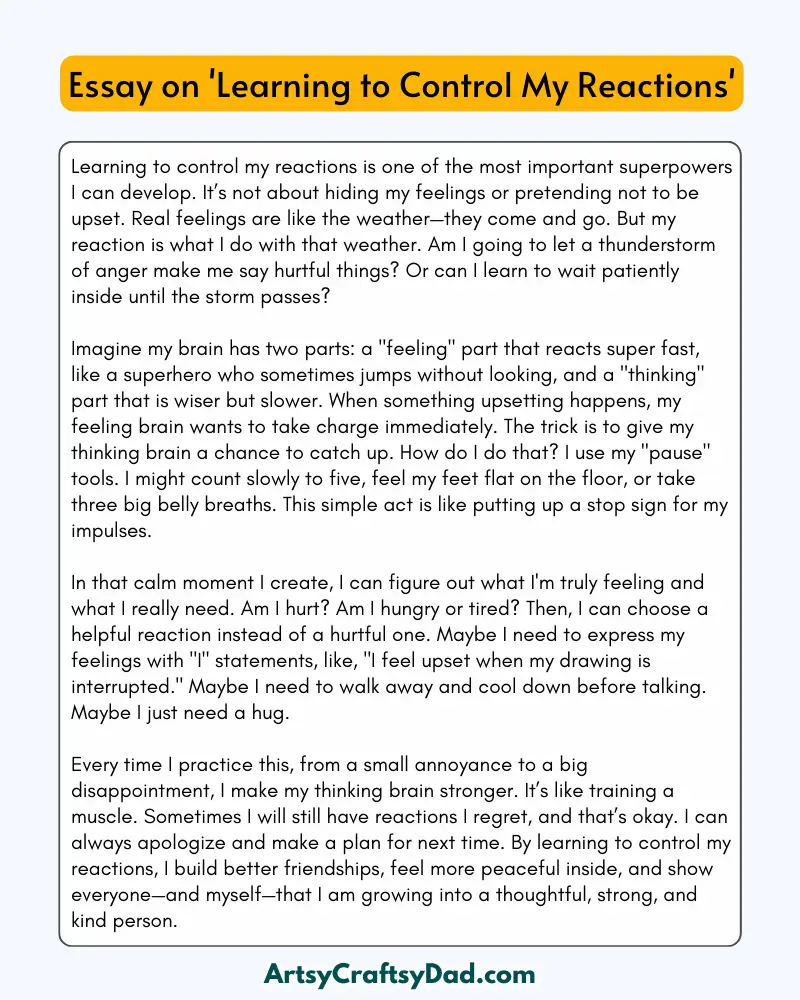
Learning to control my reactions is one of the most important superpowers I can develop. It’s not about hiding my feelings or pretending not to be upset. Real feelings are like the weather—they come and go. But my reaction is what I do with that weather. Am I going to let a thunderstorm of anger make me say hurtful things? Or can I learn to wait patiently inside until the storm passes?
Imagine my brain has two parts: a “feeling” part that reacts super fast, like a superhero who sometimes jumps without looking, and a “thinking” part that is wiser but slower. When something upsetting happens, my feeling brain wants to take charge immediately. The trick is to give my thinking brain a chance to catch up. How do I do that? I use my “pause” tools. I might count slowly to five, feel my feet flat on the floor, or take three big belly breaths. This simple act is like putting up a stop sign for my impulses.
In that calm moment I create, I can figure out what I’m truly feeling and what I really need. Am I hurt? Am I hungry or tired? Then, I can choose a helpful reaction instead of a hurtful one. Maybe I need to express my feelings with “I” statements, like, “I feel upset when my drawing is interrupted.” Maybe I need to walk away and cool down before talking. Maybe I just need a hug.
Every time I practice this, from a small annoyance to a big disappointment, I make my thinking brain stronger. It’s like training a muscle. Sometimes I will still have reactions I regret, and that’s okay. I can always apologize and make a plan for next time. By learning to control my reactions, I build better friendships, feel more peaceful inside, and show everyone—and myself—that I am growing into a thoughtful, strong, and kind person.
Related Essay & Paragraph Topics
- How I Learned to Stay Calm in Tough Situations
- My Journey to Self-Control
- The Day I Reacted Wisely Instead of Quickly
- Learning Patience
- From Impulsive to Thoughtful
You May like this:
Importance Of Balanced Decision-Making

Balanced decision-making considers logic, emotions, and consequences, helping individuals make responsible and fair choices.
Decisions As Life Lessons
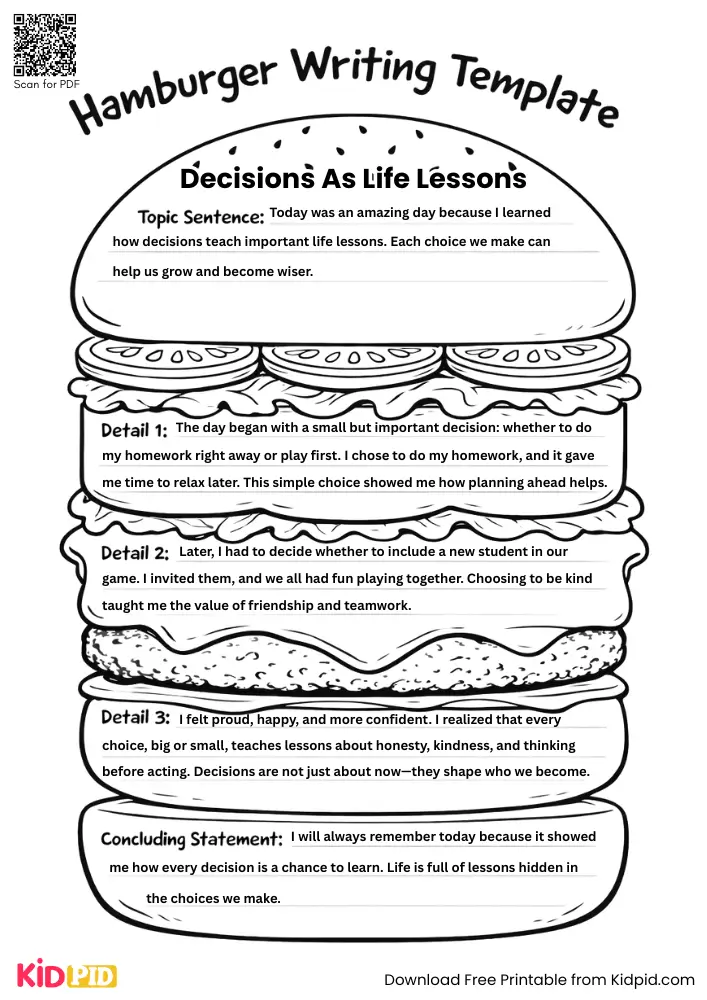
Decisions act as life lessons, teaching responsibility, critical thinking, and personal growth. Each choice provides experience that improves judgment and future decision-making skills.
Importance Of Thoughtful Judgment

Thoughtful judgment improves decision-making, problem-solving, and responsible behavior by carefully evaluating situations before taking action.
Learning Decision-Making Skills Early
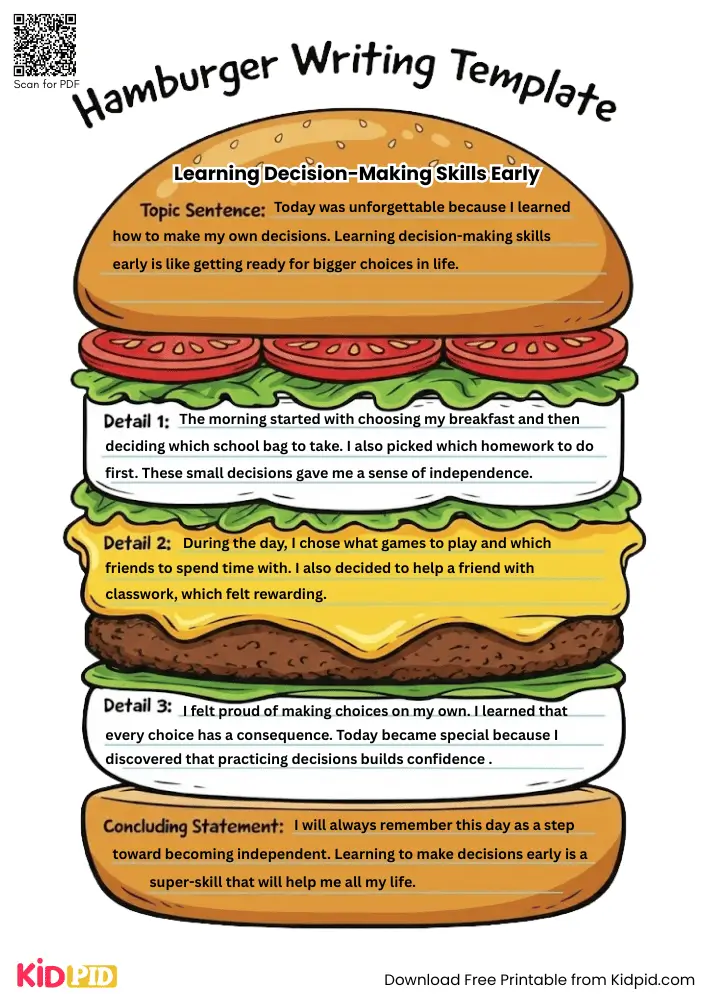
Learning decision-making skills early builds confidence, responsibility, and critical thinking that support personal development and future success.
Importance Of Solving Problems Calmly

Calm problem-solving improves clear thinking, better judgment, and effective solutions during difficult situations.