“Learning from failures means seeing mistakes as lessons, not endings. Every time we fail, we discover new ways to improve and grow. It teaches children patience, courage, and determination. By learning from setbacks, we become stronger, wiser, and more confident, turning challenges into stepping stones toward success.”
5 Pointers on ‘Learning from Failures’
- Failure means not succeeding on the first try.
- Failures teach us important lessons.
- Learning from failures makes us stronger.
- It helps us improve and try again.
- Failures help us grow and become confident.
‘Learning from Failures’ Paragraph Writing
Hamburger Paragraph on ‘Learning from Failures’ (Free Template)
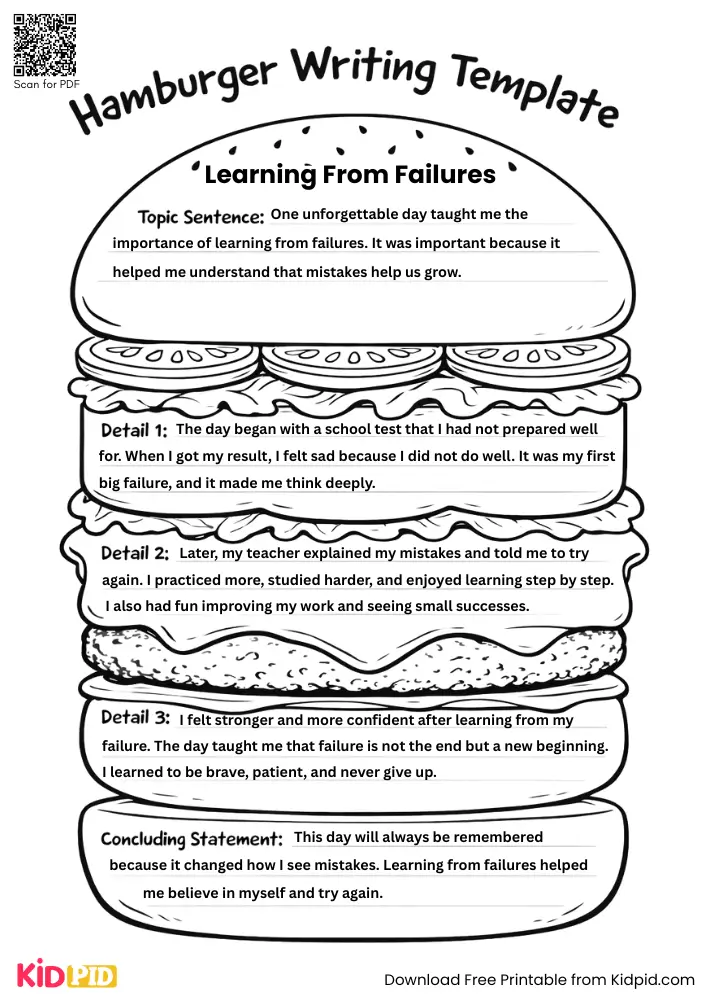
Topic Sentence: One unforgettable day taught me the importance of learning from failures. It was important because it helped me understand that mistakes help us grow.
Details 1: The day began with a school test that I had not prepared well for. When I got my result, I felt sad because I did not do well. It was my first big failure, and it made me think deeply.
Details 2: Later, my teacher explained my mistakes and told me to try again. I practiced more, studied harder, and enjoyed learning step by step. I also had fun improving my work and seeing small successes.
Details 3: I felt stronger and more confident after learning from my failure. The day taught me that failure is not the end but a new beginning. I learned to be brave, patient, and never give up.
Concluding Statement: This day will always be remembered because it changed how I see mistakes. Learning from failures helped me believe in myself and try again.
Short Paragraph on ‘Learning from Failures’ – 50 Words for Grades 2 to 3
Learning from failures helps us grow stronger. Failure teaches us lessons and helps us improve. When we fail, we should try again. Failures help us become brave, confident, and successful in life.
Long Paragraph on ‘Learning from Failures’ – 100 Words for Grade 4
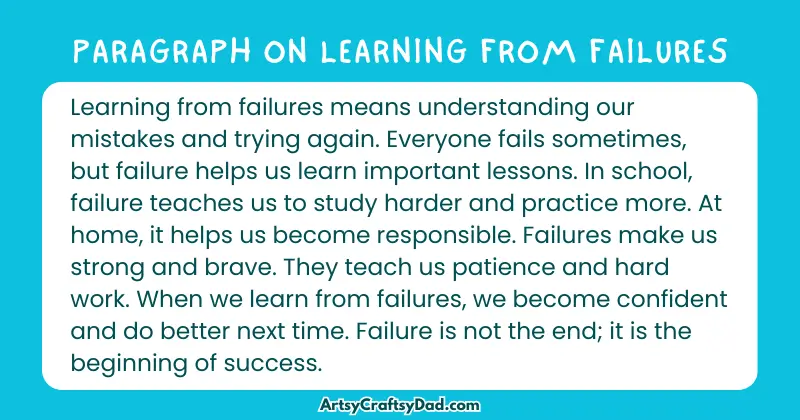
Learning from failures means understanding our mistakes and trying again. Everyone fails sometimes, but failure helps us learn important lessons. In school, failure teaches us to study harder and practice more. At home, it helps us become responsible. Failures make us strong and brave. They teach us patience and hard work. When we learn from failures, we become confident and do better next time. Failure is not the end; it is the beginning of success.
‘Learning from Failures’ Essay Writing
‘Learning from Failures’ – 150 to 200 Words Essay for Grades 5 to 7 Students
Learning from failure is a superpower for your brain and your heart. It means that when you make a mistake or something doesn’t go as planned, you don’t just give up. Instead, you become a detective. You ask, “What went wrong?” and “What can I do better next time?” This is how you grow. Think of learning to ride a bike. You wobble and fall many times. But each fall teaches you how to balance better until, finally, you are zooming down the street! Failure builds resilience, which is the ability to bounce back. It teaches you grit—the courage to keep trying. When you learn from failure, you are not afraid to try new, hard things. You understand that even great inventors and athletes failed many times before they succeeded. So, remember, a fail is just a “First Attempt In Learning.” It’s a necessary and helpful teacher on your path to success.
‘Learning from Failures’ – 300 Words Essay for Grades 8 to 10 Students
Learning from failure is one of the most important skills for a happy and successful life. It is the process of taking a setback, a mistake, or a loss and turning it into a valuable lesson for the future. Failure is not the opposite of success; it is a vital part of it. Think of it like a GPS system that has to recalculate when you make a wrong turn. The “wrong turn” isn’t the end of the trip; it just provides new information to help you find the right road.
Why is this ability so crucial? First, learning from failure builds incredible resilience and emotional strength. It teaches you that you can handle disappointment and try again, which makes you braver in facing new challenges. Second, failure is the world’s most honest feedback. If you fail a quiz, it highlights which topics you need to study more. If you lose a soccer match, it might show where your team needs to practice. This feedback is a gift—it shows you the exact path to improvement. Third, this process fosters grit and perseverance. History is full of stories, from scientists to artists, whose biggest breakthroughs came only after countless failed attempts. They learned, adjusted, and persisted.
When you embrace failure as a teacher, you remove the fear of trying. You start to see challenges as exciting puzzles to solve rather than threats to avoid. Instead of saying “I can’t do this,” you learn to say “I can’t do this yet.” This “growth mindset” turns every experience, good or bad, into a chance to grow smarter and stronger. By learning from failures, you build the courage, wisdom, and determination that will help you achieve your biggest dreams. In short, falling down teaches you how to stand taller.
Related Essay & Paragraph Topics
- Failure Is a Stepping Stone to Success
- Lessons We Learn from Failure
- Why Failure Is Important
- Learning and Growing from Mistakes
- Turning Failure into Success
You May like this:
Why Balance With Nature Is Necessary

Explains why maintaining balance with nature protects ecosystems and supports sustainable living. Encourages environmental harmony, conservation, and responsible resource use.
Importance Of Mindful Use Of Resources

Mindful use of resources like water, electricity, and paper reduces environmental damage. Resource conservation, sustainable living, and responsible consumption help protect natural resources for future generations.
Importance Of Caring For Surroundings

Caring for surroundings keeps communities clean, healthy, and sustainable. Proper waste management, cleanliness, and environmental awareness help protect ecosystems and create a positive and green environment.
Environment Protection Through Discipline
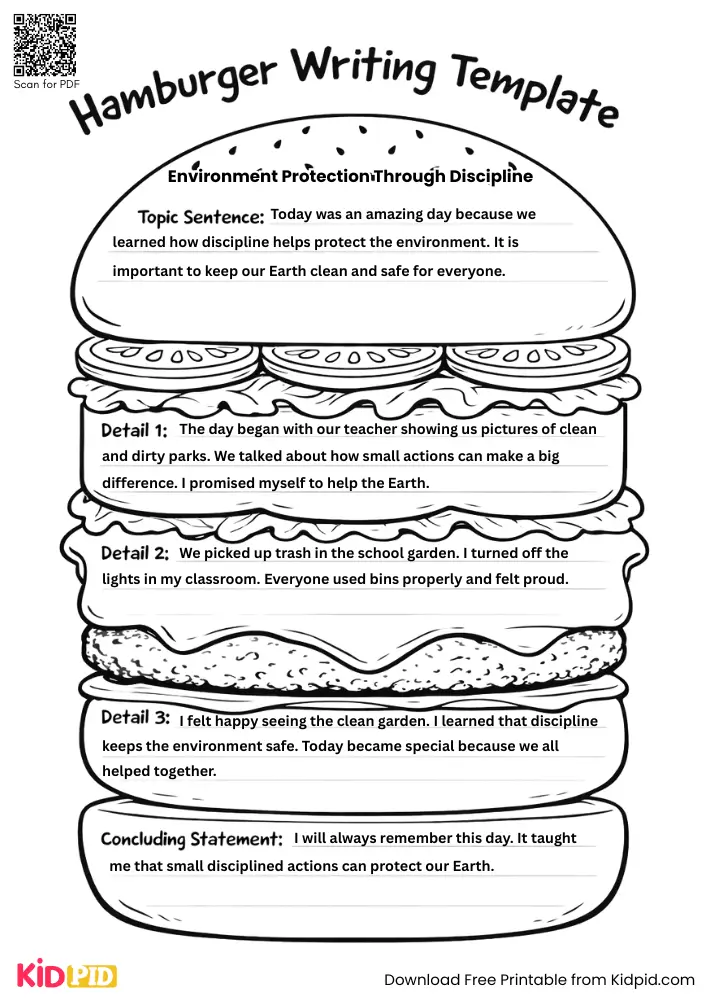
Environmental protection requires discipline such as saving energy, reducing pollution, and maintaining cleanliness. Responsible daily habits help conserve natural resources and support long-term sustainability.
How Cleanliness Supports Nature

Cleanliness supports nature by reducing pollution, protecting wildlife, and maintaining healthy ecosystems. Proper waste disposal, recycling, and sanitation practices contribute to environmental protection and sustainable communities.