Exams can be stressful, but they also teach important life skills. One key lesson is patience. While studying, waiting for results, or solving tricky questions, staying calm helps us think clearly and perform better. Learning patience during exams not only improves grades but also builds confidence and self-control.
5 Pointers on ‘Learning Patience During Exams’
- Stay calm even when the questions seem difficult.
- Take one question at a time instead of rushing through all.
- Avoid comparing your answers with friends; focus on your own work.
- Take short breaks if you feel stressed, and breathe deeply to relax.
- Remember that patience helps you think clearly and perform better.
‘Learning Patience During Exams’ Paragraph Writing
Hamburger Paragraph on ‘Learning Patience During Exams’ (Free Template)
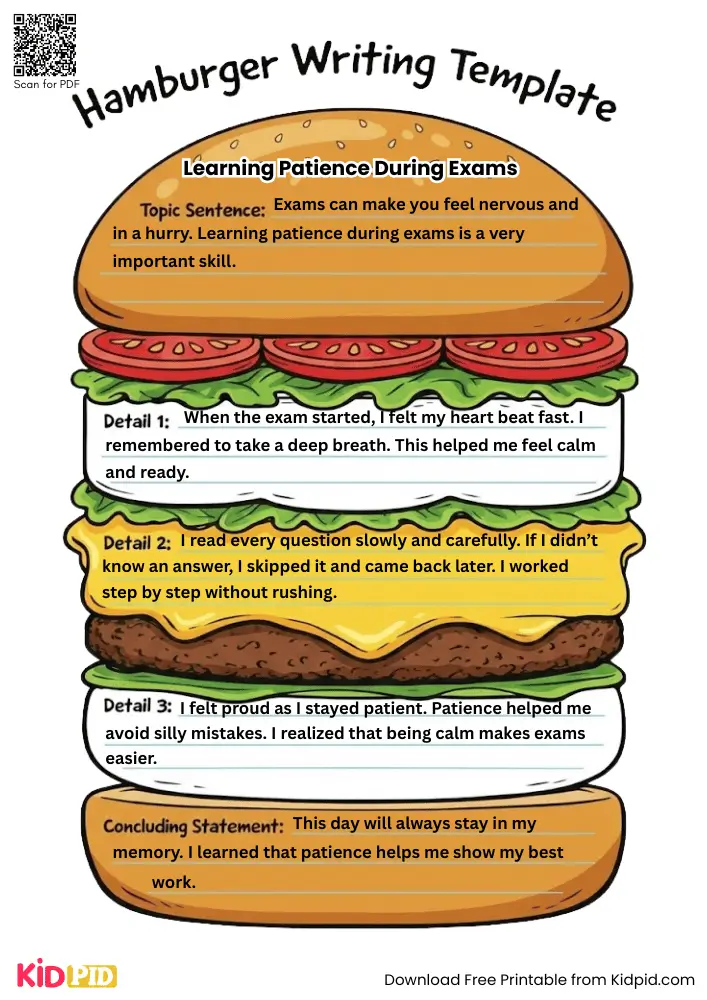
Topic Sentence: Exams can make you feel nervous and in a hurry. Learning patience during exams is a very important skill.
Details 1: When the exam started, I felt my heart beat fast. I remembered to take a deep breath. This helped me feel calm and ready.
Details 2: I read every question slowly and carefully. If I didn’t know an answer, I skipped it and came back later. I worked step by step without rushing.
Details 3: I felt proud as I stayed patient. Patience helped me avoid silly mistakes. I realized that being calm makes exams easier.
Concluding Statement: This day will always stay in my memory. I learned that patience helps me show my best work.
Short Paragraph on ‘Learning Patience During Exams’ – 50 Words for Grade 3
Exams can make you feel rushed. But patience is your secret power! Take deep breaths when stuck. Read each question slowly. Think carefully before answering. Rushing causes mistakes. Patience helps you do your best. Remember, it’s okay to take your time. You can do this!
Long Paragraph on ‘Learning Patience During Exams’ – 100 Words for Grade 4

Exams can be tough and make you want to finish fast. But patience is a super skill for your brain! When you feel worried, stop and take a slow breath. Read every question with care. If you don’t know an answer right away, that’s okay. Skip it and come back later. Patience means giving yourself time to think clearly. Rushing can lead to silly errors. Trust that you have prepared and know the answers. Stay calm, focus on your own paper, and keep going. You are smart and capable. Patience will help you show it!
‘Learning Patience During Exams’ Essay Writing
‘Learning Patience During Exams’- 150 to 200 Words Essay for Grades 5 to 6
Learning patience during exams is like training for a quiet superpower. Exams can feel like a race, but patience reminds us it’s more like a puzzle. The first step is to take a deep breath when you feel nervous. This helps your brain think clearly. Next, read every question slowly and carefully. Sometimes the answer is hiding in the question itself! If you find a tricky question, don’t panic. Be like a detective: break it into smaller parts or skip it for a moment and answer the ones you know first. This builds your confidence. Remember, it’s perfectly okay to not know everything right away. Patience means giving yourself the time to try your best without getting angry or giving up. Every exam is a chance to show what you’ve learned and to practice staying calm and focused, which is a skill you’ll use forever!
‘Learning Patience During Exams’ – 300 Words Essay for Grades 7 to 10

Learning patience during exams is one of the most important lessons you can learn in school. It’s not just about getting the right answers; it’s about training your mind to stay calm and focused under pressure. Think of your brain like a superhero—patience is its special power!
When you first get your exam paper, it’s easy to feel a rush of excitement or worry. This is the moment to use your first patience tool: your breath. Before you even pick up your pencil, take three big, slow breaths. Feel your body relax. This simple act tells your brain, “We can do this.”
Now, you’re ready to begin. Patience means reading each instruction and question twice. Rushing can make you miss important words like “not” or “explain.” If you zoom through, you might solve the wrong puzzle! After reading, start with the questions that seem easiest to you. This is like doing a warm-up before a big game. It gets your mind working and builds a confident rhythm.
But what happens when you meet a really tough question? This is where true patience shines. Instead of getting frustrated, try being a problem-solving detective. Can you break the big, scary question into two smaller, friendlier parts? If it’s still too tricky, use your patience to let it go for now. Put a small mark next to it and move forward. Often, your subconscious mind will work on it while you answer other questions. Coming back later with fresh eyes can make the answer seem clearer.
Finally, remember that exams are a practice in learning, not just a test of it. Being patient with yourself is key. It’s okay if you don’t know everything. What matters is that you tried your best, stayed calm, and didn’t give up. Every time you practice this patience, you’re not just becoming a better student—you’re becoming a stronger, more resilient person who can handle any challenge, inside or outside the classroom.
Related Essay & Paragraph Topics
- How Exams Taught Me Patience
- My Exam Experience
- Staying Patient While Preparing for Tests
- The Lesson of Patience I Learned in Exams
- Managing Stress and Patience During Exams
You May like this:
Building Community Trust
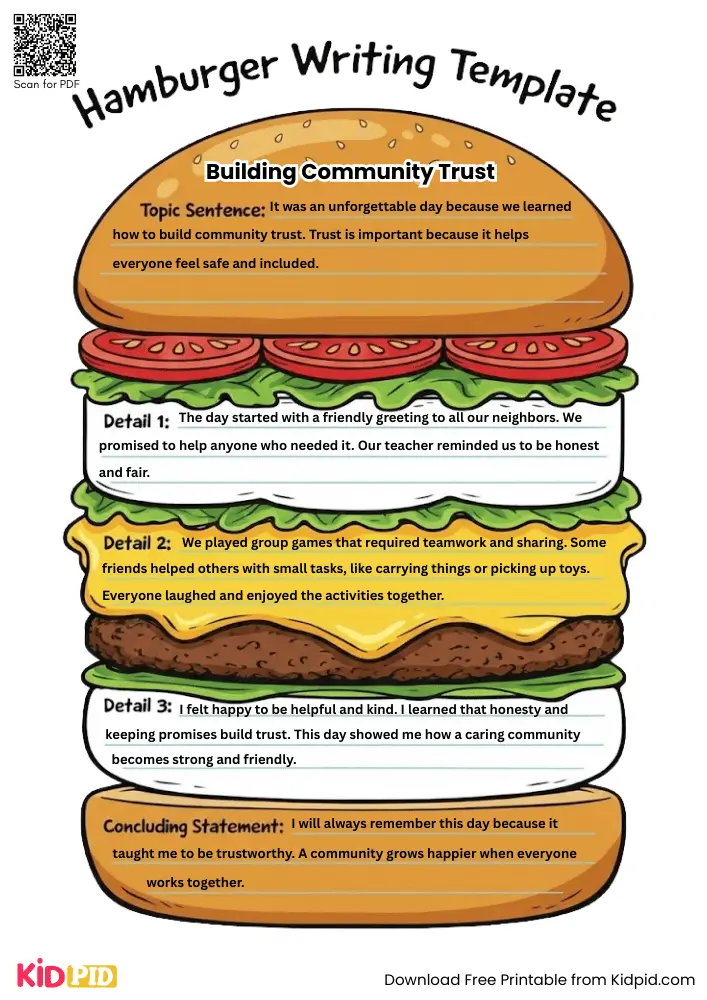
Trust builds safe, united communities. Honesty, reliability, and mutual respect strengthen relationships, encourage cooperation, and create supportive social environments where people feel valued and secure.
Community Cleanliness
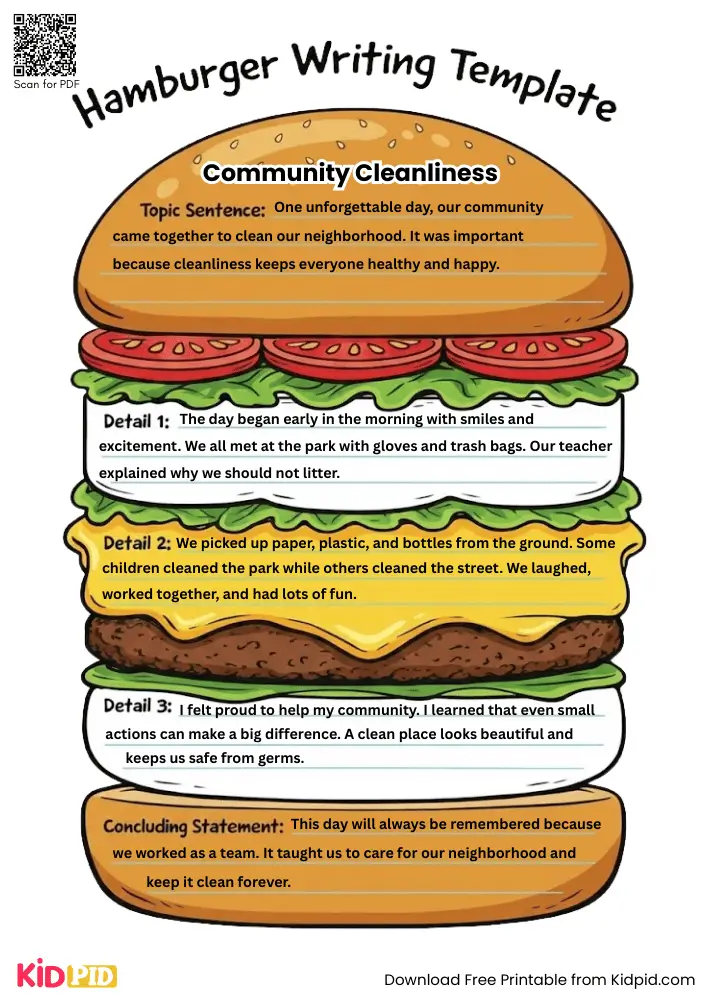
Clean communities promote health, pride, and environmental care. Proper waste disposal, hygiene, and participation in cleanliness drives improve living standards and public health.
Following Daily Routines

Daily routines build discipline, productivity, and stability. Structured habits improve time management, focus, and efficiency while supporting healthy, organized living.
Being Responsible For Actions

Taking responsibility builds integrity, trust, and maturity. Accepting consequences encourages accountability, growth, and stronger relationships.
Building Consistency
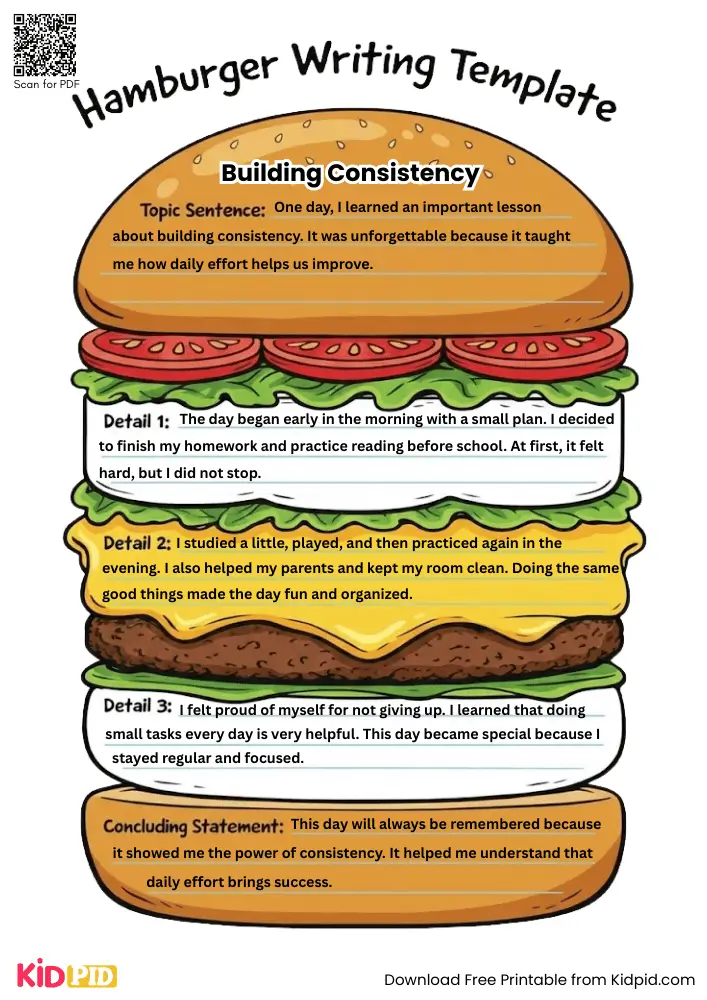
Consistency strengthens habits, discipline, and success. Regular effort improves skills, reliability, and long-term achievements while building confidence and stability.