Learning to lead oneself means understanding our choices, managing our actions, and staying responsible for what we do. It helps children build confidence, make wise decisions, and stay focused on goals. Self-leadership teaches us to guide our thoughts and behavior, even when no one else is watching.
5 Pointers on “Learning to Lead Oneself”
- Learning to lead oneself means making good choices even when no one is watching.
- It helps children understand their feelings, actions, and responsibilities.
- Self-leadership teaches discipline, confidence, and honesty.
- It encourages kids to set goals and try their best to achieve them.
- Leading oneself helps children grow into responsible and kind individuals.
‘Learning to Lead Oneself’ Paragraph Writing
Hamburger Paragraph on ‘Learning to Lead Oneself’ (Free Template)
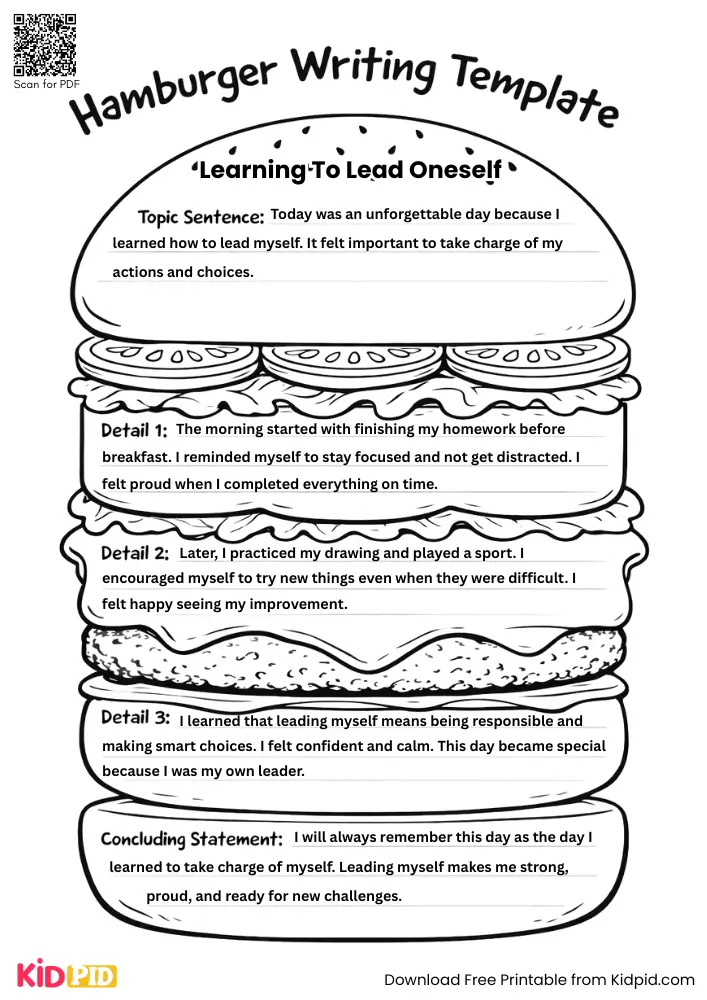
Topic Sentence: Today was an unforgettable day because I learned how to lead myself. It felt important to take charge of my actions and choices.
Details 1: The morning started with finishing my homework before breakfast. I reminded myself to stay focused and not get distracted. I felt proud when I completed everything on time.
Details 2: Later, I practiced my drawing and played a sport. I encouraged myself to try new things even when they were difficult. I felt happy seeing my improvement.
Details 3: I learned that leading myself means being responsible and making smart choices. I felt confident and calm. This day became special because I was my own leader.
Concluding Statement: I will always remember this day as the day I learned to take charge of myself. Leading myself makes me strong, proud, and ready for new challenges.
Short Paragraph on ‘Learning to Lead Oneself’ – 50 Words for Grades 2 & 3
Learning to lead yourself means being in charge of yourself. You decide to do your work first before playing. You choose to be kind, even when you’re upset. You tell yourself, “I can try” when things are hard. It’s about making good choices for yourself all on your own.
Long Paragraph on ‘Learning to Lead Oneself’ – 100 Words for Grade 4

Learning to lead yourself is like being the boss of your own life. It means you are responsible for your actions and choices. You decide to finish your homework before watching TV. You choose to stay calm and use your words when you feel angry. When a task seems difficult, you encourage yourself to keep going instead of giving up. It’s about knowing what is right and having the courage to do it, even when no one is watching. Leading yourself builds strong habits, makes you feel proud, and prepares you to one day lead others, too.
‘Learning to Lead Oneself’ Essay Writing
‘Learning to Lead Oneself’ – 150 to 200 Words Essay for Grades 5 to 7 Students
Learning to lead oneself is like being the captain of your own ship! It doesn’t mean bossing others around. It means being in charge of you. First, you need a map. This means knowing yourself—what are your dreams, what makes you feel brave, and what makes you nervous? Next, you set your course by choosing small, fun goals, like reading a challenging book or practicing a sport. The journey won’t always be smooth. Storms will come, like a difficult math problem or a disagreement with a friend. Here’s where you become your own best cheerleader! You talk to yourself with kindness and remind yourself to keep trying. A good captain also makes smart choices, like finishing chores before watching TV. Most importantly, if you accidentally steer the ship into a bump, you say, “That was my mistake,” and you learn how to avoid it next time. When you learn to lead yourself, you feel strong, proud, and ready for any adventure!
‘Learning to Lead Oneself’ – 300 Words Essay for Grades 8 to 10 Students
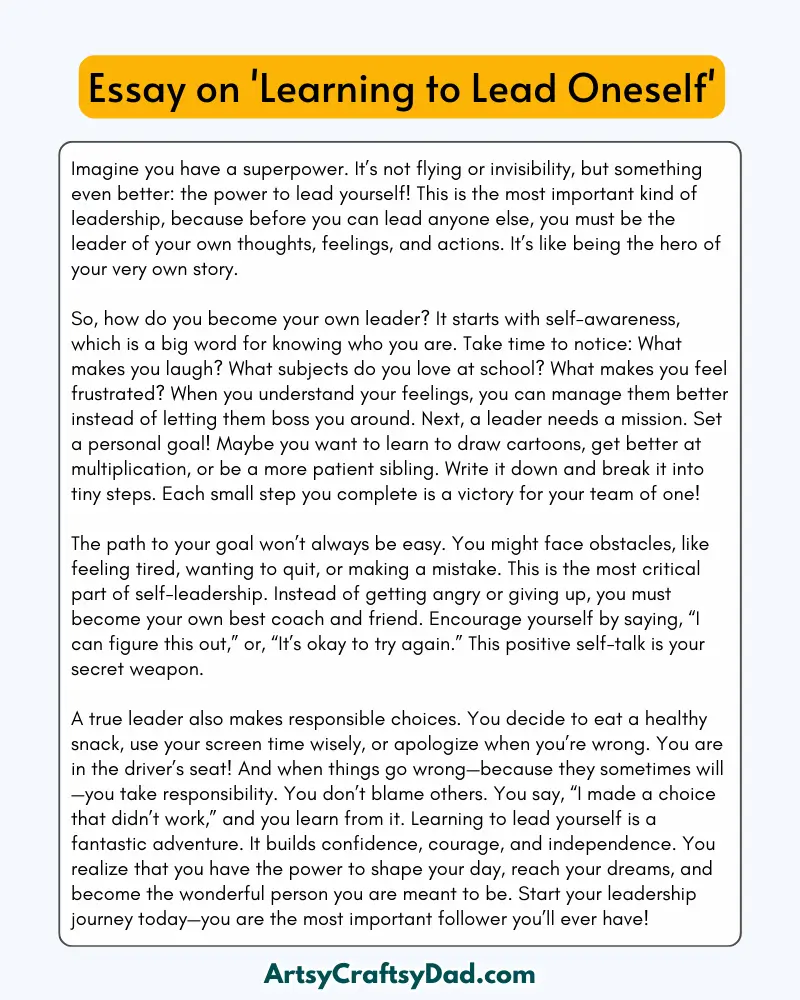
Imagine you have a superpower. It’s not flying or invisibility, but something even better: the power to lead yourself! This is the most important kind of leadership, because before you can lead anyone else, you must be the leader of your own thoughts, feelings, and actions. It’s like being the hero of your very own story.
So, how do you become your own leader? It starts with self-awareness, which is a big word for knowing who you are. Take time to notice: What makes you laugh? What subjects do you love at school? What makes you feel frustrated? When you understand your feelings, you can manage them better instead of letting them boss you around. Next, a leader needs a mission. Set a personal goal! Maybe you want to learn to draw cartoons, get better at multiplication, or be a more patient sibling. Write it down and break it into tiny steps. Each small step you complete is a victory for your team of one!
The path to your goal won’t always be easy. You might face obstacles, like feeling tired, wanting to quit, or making a mistake. This is the most critical part of self-leadership. Instead of getting angry or giving up, you must become your own best coach and friend. Encourage yourself by saying, “I can figure this out,” or, “It’s okay to try again.” This positive self-talk is your secret weapon.
A true leader also makes responsible choices. You decide to eat a healthy snack, use your screen time wisely, or apologize when you’re wrong. You are in the driver’s seat! And when things go wrong—because they sometimes will—you take responsibility. You don’t blame others. You say, “I made a choice that didn’t work,” and you learn from it.
Learning to lead yourself is a fantastic adventure. It builds confidence, courage, and independence. You realize that you have the power to shape your day, reach your dreams, and become the wonderful person you are meant to be. Start your leadership journey today—you are the most important follower you’ll ever have!
Related Essay & Paragraph Topics
- Understanding Self-Leadership in Daily Life
- Why Leading Yourself Comes Before Leading Others
- Building Discipline and Responsibility Through Self-Leadership
- How Self-Leadership Shapes Good Decisions
- Learning to Guide Your Thoughts, Actions, and Goals
You May like this:
Learning Problem-Solving

This essay explains the importance of problem-solving skills for students. Encourages critical thinking, creativity, decision-making, and practical learning to overcome challenges and succeed in school and life.
Preparing For The Future

This essay explains how education, discipline, and good habits prepare students for future success. Encourages planning, goal setting, skill development, and positive mindset for a bright future.
Importance Of Self-Improvement

This essay highlights the importance of self-improvement through learning, reflection, and positive habits. Encourages students to grow daily, develop new skills, and build confidence.
Developing Inner Strength
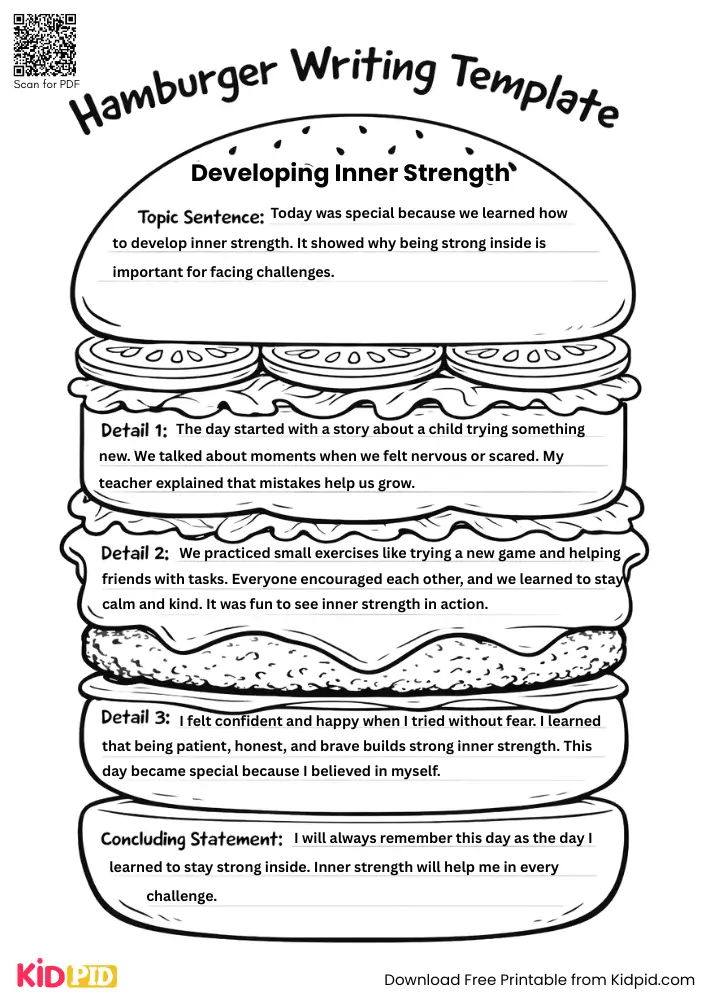
This essay highlights the importance of inner strength to overcome difficulties and stay confident. Encourages courage, resilience, emotional stability, and strong character development.
Learning Accountability

This essay explains the importance of accountability in accepting responsibilities and learning from mistakes. Encourages honesty, responsibility, and strong personal character.