Learning to respond instead of react helps us stay calm and make better choices. When we pause and think before acting, we can handle problems wisely and peacefully. This skill improves friendships, school life, and daily activities. Understanding our emotions makes life smoother and happier for everyone.
5 Pointers on “Learning to Respond Instead of React”
- Reacting happens quickly without thinking, while responding takes time to think.
- Responding helps us stay calm and make better choices.
- Practicing deep breathing or counting before replying can help us respond.
- Listening carefully to others makes responding easier and kinder.
- Learning to respond shows maturity and helps us solve problems peacefully.
‘Learning to Respond Instead of React’ Paragraph Writing
Hamburger Paragraph on ‘Learning to Respond Instead of React’ (Free Template)

Topic Sentence: One unforgettable day, I discovered the secret to staying calm when things go wrong. It taught me how to respond instead of react.
Detail 1: The day started when a friend teased me during recess. I felt a rush of anger and wanted to yell. But I remembered I could choose how to act.
Detail 2: I pressed pause and took a deep breath, letting my brain catch up with my feelings. I thought, “What is the best way to handle this?” Then I calmly explained how I felt to my friend.
Detail 3: I felt proud that I stayed calm. I noticed my friend understood me better. This made the day special because I realized I could control my actions with patience and thought.
Concluding Statement: I will always remember this day because it taught me to be the boss of my feelings. Responding instead of reacting helps me make smart choices.
Short Paragraph on ‘Learning to Respond Instead of React’ – 50 Words for Grade 4
When something upsetting happens, you might feel like reacting right away. But stop first! Take a deep breath. Think about what you feel and what you can do. This is called responding. It helps you make better choices and solve problems.
Long Paragraph on ‘Learning to Respond Instead of React’ – 100 Words for Grade 5
Reacting is when something happens,s and you act fast without thinking, like yelling when you’re angry. Responding is different. You pause and take a breath. You notice your feelings. Then, you choose what to do. This small stop is powerful. It helps you stay calm and find a smarter way to handle things, like using your words or asking for help. Responding makes you feel more in control and helps your friendships. Remember, you can’t always control what happens, but you can always control how you answer it.
‘Learning to Respond Instead of React’ Essay Writing
‘Learning to Respond Instead of React’ – 150 to 200 Words Essay for Grades 5 to 7 Students
Have you ever snapped at a friend or stomped your foot before you even thought about it? That’s reacting. It’s like a sneeze—it just bursts out! Reacting can sometimes make things worse, like turning a small disagreement into a big fight. But what if you could be the boss of your feelings? That’s where responding comes in. Responding means you are in charge.
Learning to respond is like being a superhero who hits a secret pause button. When someone bothers you or something goes wrong, first you STOP. Take a big, deep breath. That breath is your power. It gives your brain a chance to catch up with your feelings. Then, you can think: “What happened? How do I feel? What’s the best thing to do now?” Maybe you calmly explain your side, or walk away to cool down. When you respond, you make smart choices that help fix the problem. It takes practice, but every time you pause and think, you become stronger and wiser!
‘Learning to Respond Instead of React’ – 300 Words Essay for Grades 8 to 10 Students
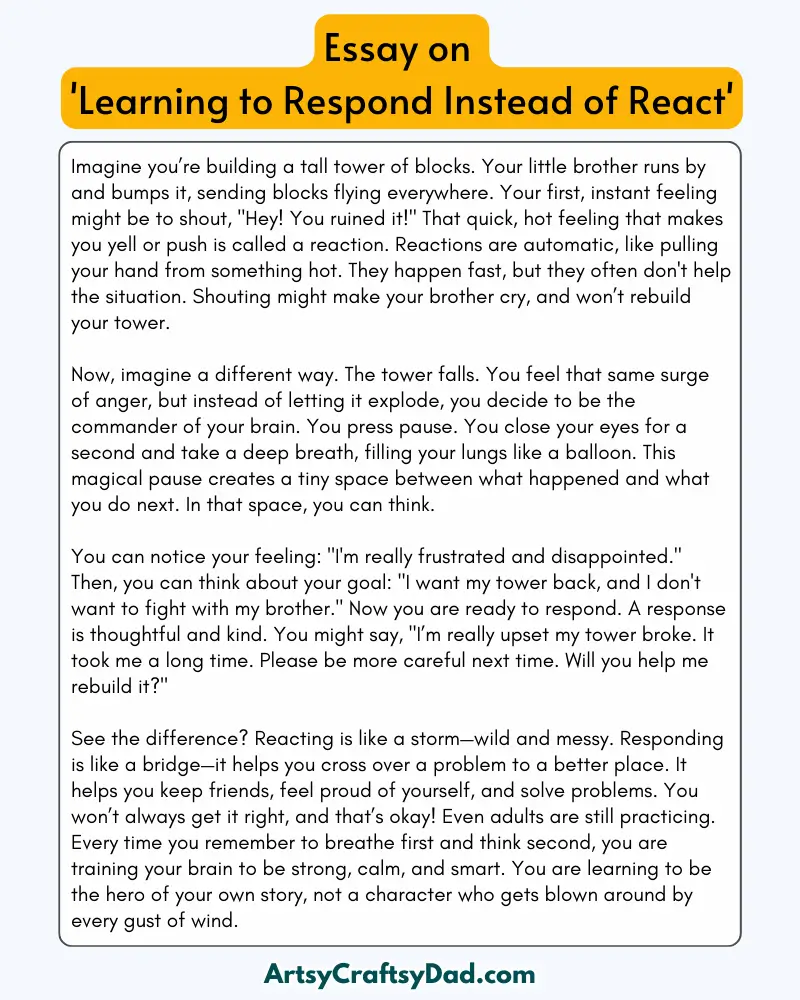
Imagine you’re building a tall tower of blocks. Your little brother runs by and bumps it, sending blocks flying everywhere. Your first, instant feeling might be to shout, “Hey! You ruined it!” That quick, hot feeling that makes you yell or push is called a reaction. Reactions are automatic, like pulling your hand from something hot. They happen fast, but they often don’t help the situation. Shouting might make your brother cry, and won’t rebuild your tower.
Now, imagine a different way. The tower falls. You feel that same surge of anger, but instead of letting it explode, you decide to be the commander of your brain. You press pause. You close your eyes for a second and take a deep breath, filling your lungs like a balloon. This magical pause creates a tiny space between what happened and what you do next. In that space, you can think.
You can notice your feeling: “I’m really frustrated and disappointed.” Then, you can think about your goal: “I want my tower back, and I don’t want to fight with my brother.” Now you are ready to respond. A response is thoughtful and kind. You might say, “I’m really upset my tower broke. It took me a long time. Please be more careful next time. Will you help me rebuild it?”
See the difference? Reacting is like a storm—wild and messy. Responding is like a bridge—it helps you cross over a problem to a better place. It helps you keep friends, feel proud of yourself, and solve problems. You won’t always get it right, and that’s okay! Even adults are still practicing. Every time you remember to breathe first and think second, you are training your brain to be strong, calm, and smart. You are learning to be the hero of your own story, not a character who gets blown around by every gust of wind.
Related Essay & Paragraph Topics
- The Power of Thoughtful Responses
- Choosing Calm Over Impulse
- How Pausing Helps in Difficult Situations
- Reacting Less, Understanding More
- Mastering Patience Through Mindful Actions
You May like this:
Developing Leadership Qualities
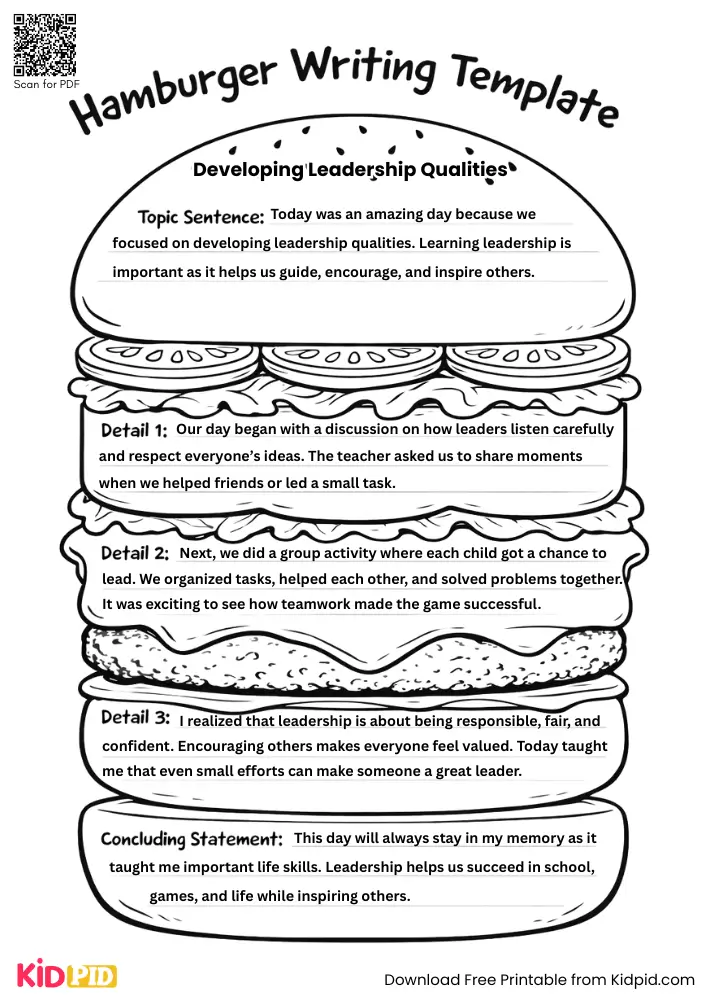
This essay highlights leadership qualities like confidence, responsibility, teamwork, and decision-making. Encourages students to guide others, solve problems, and become positive leaders in school and society.
Importance Of Emotional Control

This essay explains how controlling emotions helps students make wise decisions, maintain healthy relationships, and handle stress. Encourages emotional intelligence, patience, and self-discipline.
Value Of Consistency
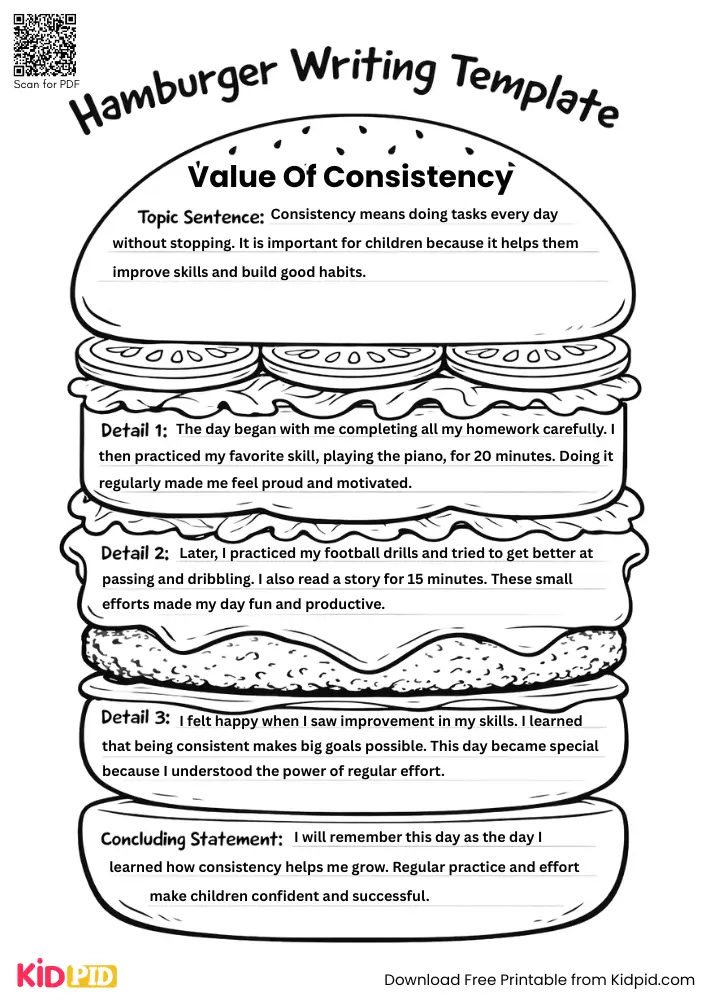
This essay explains how consistency in studies, practice, and habits leads to steady progress and success. Encourages discipline, persistence, and dedication for long-term achievement.
Importance Of Motivation
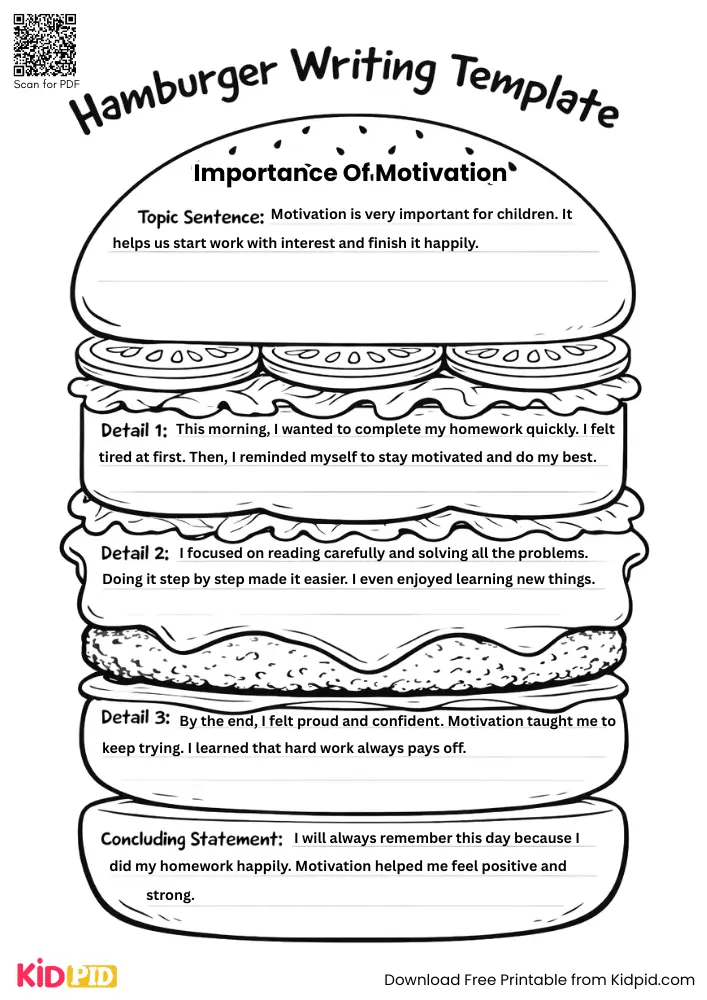
This essay explains how motivation inspires students to set goals, work hard, and achieve success. Encourages positive attitude, determination, and self-belief for personal growth.
Learning From Feedback

This essay highlights how feedback helps students improve skills and performance. Encourages open-minded learning, self-reflection, growth mindset, and continuous improvement.