“Sharing resources at home is a simple way to care for your family and the planet. Using things like water, electricity, food, and toys fairly helps everyone. Turning off taps and lights when not needed shows responsibility. Small acts of sharing make your home happier, fairer, and more cooperative.”
5 Pointers on ‘Sharing Resources at Home’
- Share things like water, electricity, food, and space wisely.
- Turn off taps, lights, and fans when they are not needed.
- Use items carefully so they last longer for everyone.
- Take only what you need and avoid wasting resources.
- Encourage family members to share and care for household resources together
‘Sharing Resources at Home’ Paragraph Writing
Hamburger Paragraph on ‘Sharing Resources at Home’ (Free Template)

Topic Sentence: One day at home taught me how important sharing resources is. It became unforgettable because it helped my family feel happy and fair.
Details 1: The day began in the morning when everyone wanted to use the computer. We decided to take turns so no one felt upset. This was the first step in sharing things at home.
Details 2: Later, we shared snacks, books, and games together. We also turned off lights and taps when not needed. These small actions made the day fun and meaningful.
Details 3: I felt proud because everyone cooperated. I learned that sharing shows care and respect for family members. It made our home calm and joyful.
Concluding Statement: This day will always be remembered because we shared everything happily. It showed me that sharing resources makes home a better place for everyone.
Short Paragraph on ‘Sharing Resources at Home’ – 50 Words for Grade 3
Sharing resources at home helps everyone. Take turns using things like games or the computer. Share snacks and supplies. Use water and electricity carefully so there’s enough for all. Sharing shows you care about your family and makes your home a happier, fairer place.
Long Paragraph on ‘Sharing Resources at Home’ – 100 Words for Grades 4 to 5
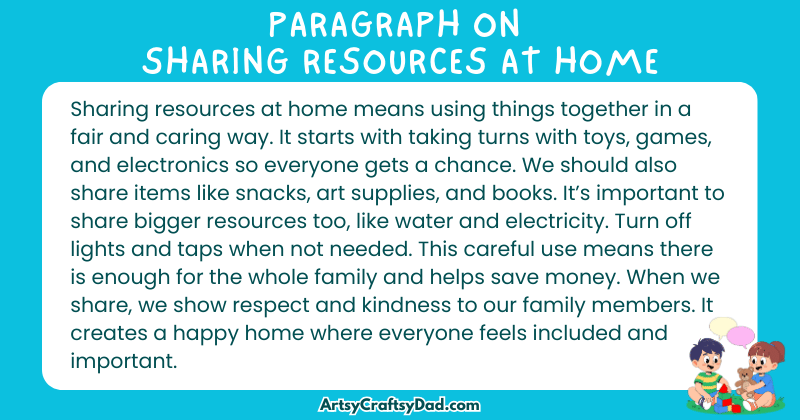
Sharing resources at home means using things together in a fair and caring way. It starts with taking turns with toys, games, and electronics so everyone gets a chance. We should also share items like snacks, art supplies, and books. It’s important to share bigger resources too, like water and electricity. Turn off lights and taps when not needed. This careful use means there is enough for the whole family and helps save money. When we share, we show respect and kindness to our family members. It creates a happy home where everyone feels included and important.
‘Sharing Resources at Home’ Essay Writing
‘Sharing Resources at Home’ – 150 to 200 Words Essay for Grades 6 to 7 Students
Sharing resources at home is about using things together fairly and kindly. Your home is a shared space, and the things in it are for the whole family. This means taking turns with toys, games, and electronics so that everyone gets a chance to enjoy them. It also means sharing common items like snacks, books, and art supplies without using them all up yourself.
Sharing isn’t just about objects. It’s also about bigger resources like water and electricity. Remembering to turn off the tap while brushing your teeth or switching off a light when you leave a room is a way of sharing, too. It saves these important resources and helps your family save money.
When you share, you show your family that you care about their needs and happiness. It makes your home a more peaceful, cooperative, and happy place. Sharing teaches you to be fair, patient, and considerate, which are important qualities for life.
‘Sharing Resources at Home’ – 300 Words Essay for Grades 8 to 9 Students
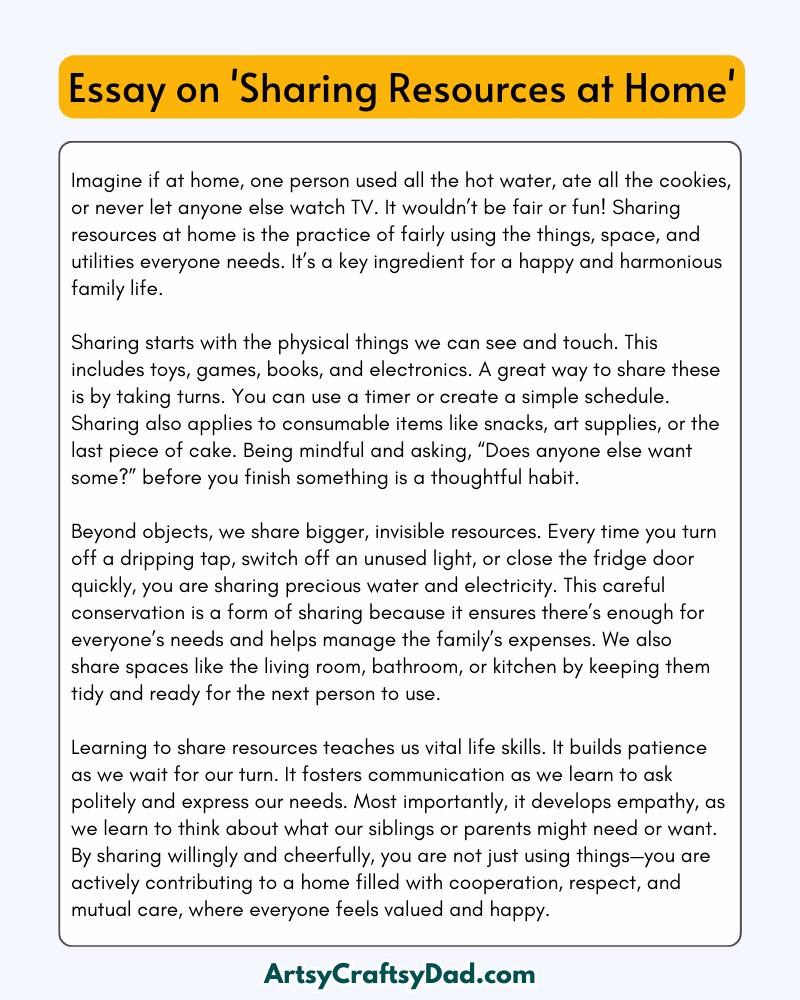
Imagine if at home, one person used all the hot water, ate all the cookies, or never let anyone else watch TV. It wouldn’t be fair or fun! Sharing resources at home is the practice of fairly using the things, space, and utilities everyone needs. It’s a key ingredient for a happy and harmonious family life.
Sharing starts with the physical things we can see and touch. This includes toys, games, books, and electronics. A great way to share these is by taking turns. You can use a timer or create a simple schedule. Sharing also applies to consumable items like snacks, art supplies, or the last piece of cake. Being mindful and asking, “Does anyone else want some?” before you finish something is a thoughtful habit.
Beyond objects, we share bigger, invisible resources. Every time you turn off a dripping tap, switch off an unused light, or close the fridge door quickly, you are sharing precious water and electricity. This careful conservation is a form of sharing because it ensures there’s enough for everyone’s needs and helps manage the family’s expenses. We also share spaces like the living room, bathroom, or kitchen by keeping them tidy and ready for the next person to use.
Learning to share resources teaches us vital life skills. It builds patience as we wait for our turn. It fosters communication as we learn to ask politely and express our needs. Most importantly, it develops empathy, as we learn to think about what our siblings or parents might need or want. By sharing willingly and cheerfully, you are not just using things—you are actively contributing to a home filled with cooperation, respect, and mutual care, where everyone feels valued and happy.
Related Essay & Paragraph Topic
- The Importance of Sharing at Home
- How Sharing Resources Helps Our Family
- Learning to Share Things at Home
- Why Sharing Makes Home a Happy Place
- Using Household Resources Together Wisely
You May like this:
Importance Of Continuous Self-Learning
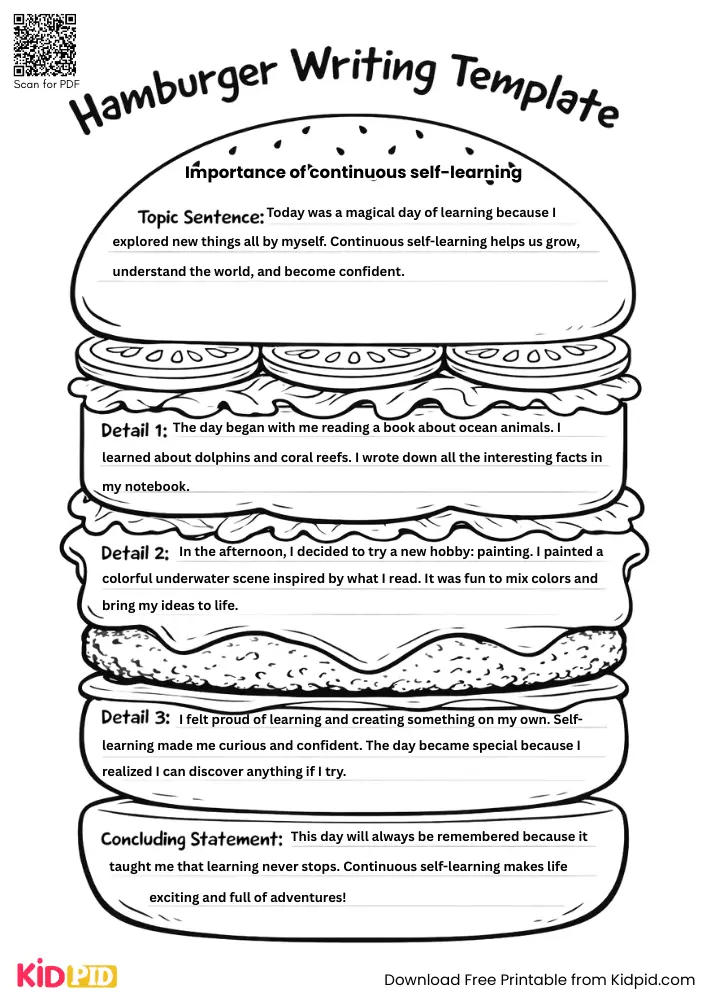
Continuous self-learning promotes knowledge growth, skill development, and adaptability. Lifelong learning supports career success and personal improvement.
Preparing Mindset For Adulthood

Preparing a mindset for adulthood includes developing responsibility, independence, emotional maturity, and life skills needed for future challenges and opportunities.
Learning To Build a Stable Future
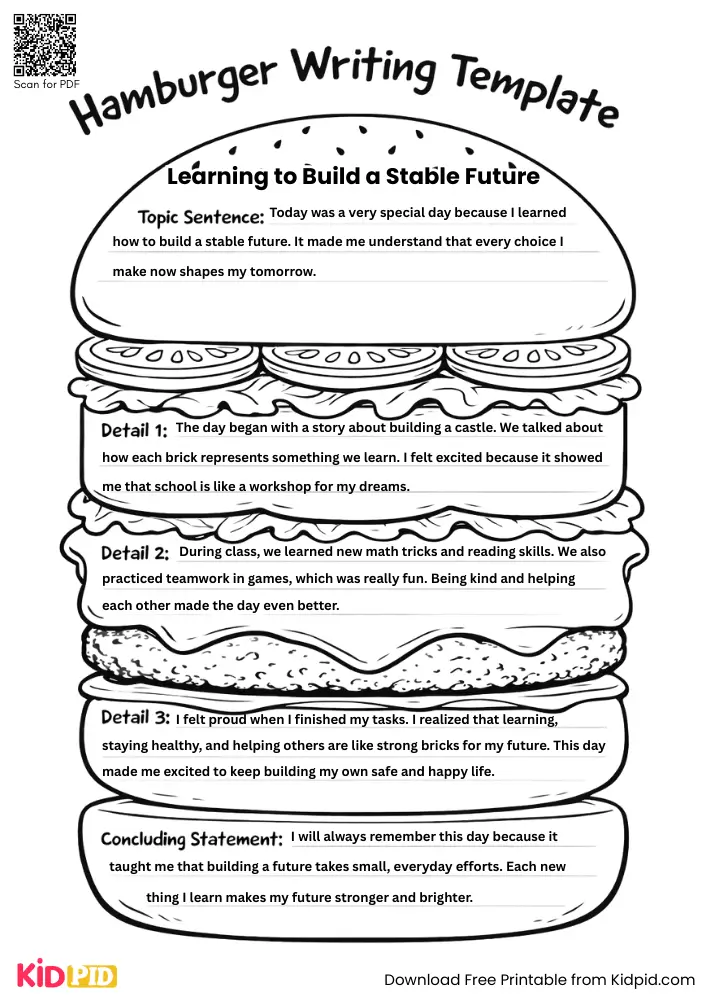
Building a stable future requires discipline, financial awareness, education, and responsible decision-making. Consistent efforts and smart planning help create long-term security and personal success.
Importance Of Thoughtful Life Planning

Thoughtful life planning improves goal setting, time management, and long-term success. Organized planning helps individuals make wise decisions and create a stable future.
Learning Future Readiness Skills

Future readiness skills include problem-solving, adaptability, communication, and critical thinking. Developing these life skills prepares individuals for career growth, challenges, and responsible decision-making in a changing world.