Staying active without gadgets helps children stay healthy, energetic, and happy. Playing outside, moving the body, and enjoying simple activities improve fitness and focus. Learning about the importance of staying active without screens encourages children to develop healthy habits and enjoy a balanced, joyful lifestyle.
5 Pointers on ‘Staying Active Without Gadgets’
- Playing outside keeps our body fit and strong.
- Active games improve health and energy.
- Less screen time helps the mind stay fresh.
- Physical activities build confidence and happiness.
- Staying active improves focus and sleep.
‘Staying Active Without Gadgets’ Paragraph Writing
Hamburger Paragraph on ‘Staying Active Without Gadgets’ (Free Template)
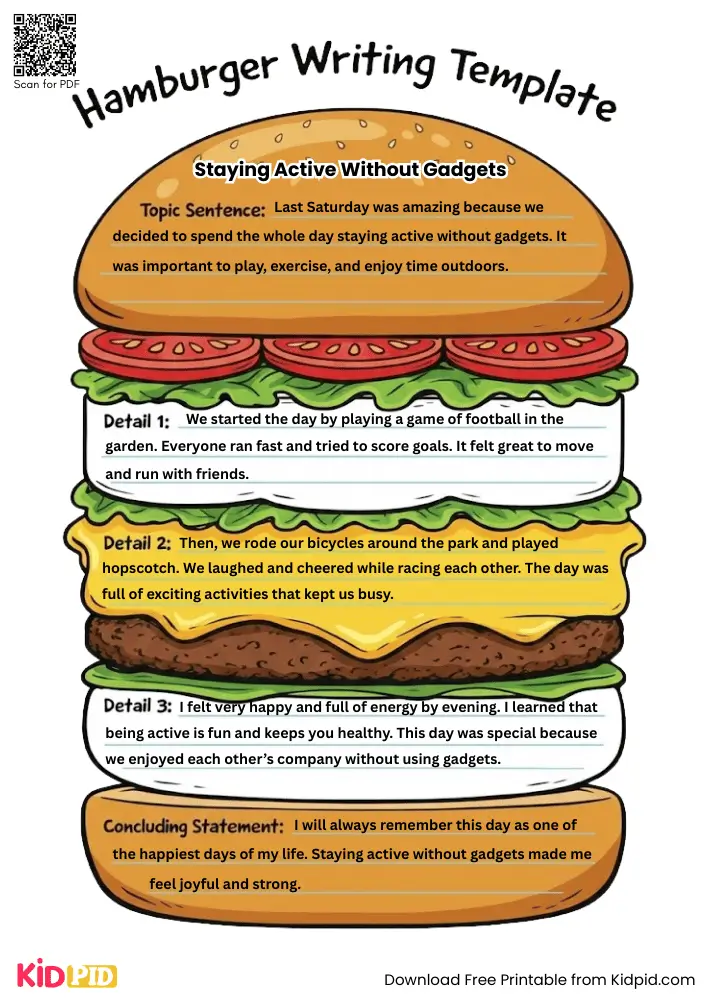
Topic Sentence: Last Saturday was amazing because we decided to spend the whole day staying active without gadgets. It was important to play, exercise, and enjoy time outdoors.
Details 1: We started the day by playing a game of football in the garden. Everyone ran fast and tried to score goals. It felt great to move and run with friends.
Details 2: Then, we rode our bicycles around the park and played hopscotch. We laughed and cheered while racing each other. The day was full of exciting activities that kept us busy.
Details 3: I felt very happy and full of energy by evening. I learned that being active is fun and keeps you healthy. This day was special because we enjoyed each other’s company without using gadgets.
Concluding Statement: I will always remember this day as one of the happiest days of my life. Staying active without gadgets made me feel joyful and strong.
Short Paragraph on ‘Staying Active Without Gadgets’ – 50 Words for Grade 3
Staying active without gadgets is very important for children. Playing outdoor games keeps the body healthy and strong. It also refreshes the mind and reduces stress. When children stay active, they feel happy and energetic. Physical play helps build good habits and keeps children away from screens.
Long Paragraph on ‘ Staying Active Without Gadgets’ – 100 Words for Grades 4 to 5
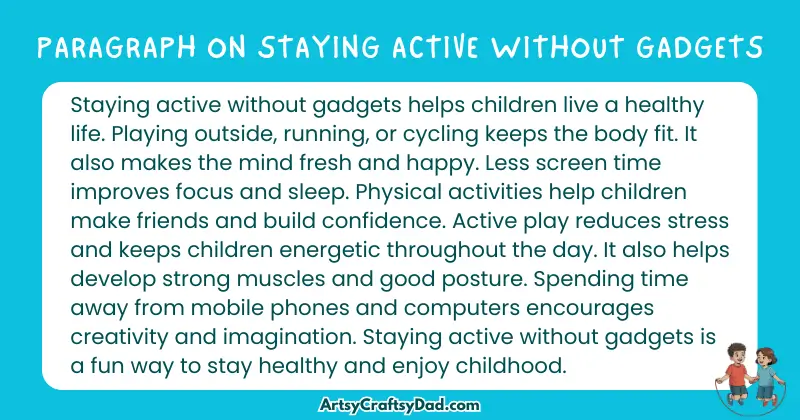
Staying active without gadgets helps children live a healthy life. Playing outside, running, or cycling keeps the body fit. It also makes the mind fresh and happy. Less screen time improves focus and sleep. Physical activities help children make friends and build confidence. Active play reduces stress and keeps children energetic throughout the day. It also helps develop strong muscles and good posture. Spending time away from mobile phones and computers encourages creativity and imagination. Staying active without gadgets is a fun way to stay healthy and enjoy childhood.
‘Staying Active Without Gadgets’ Essay Writing
‘Staying Active Without Gadgets’—150 to 200 Words Essay for Grades 6 to 8 Students
Being a good student is about more than just getting good grades. It’s about developing habits that help you learn, grow, and enjoy school. The most important habit is having a positive attitude. This means coming to class ready to learn, participating with enthusiasm, and not being afraid to make mistakes because that’s how we learn.
Good students are also great listeners. They pay attention to the teacher and to their classmates, which helps them understand lessons and work well in groups. Being organized is another superpower. Writing down assignments, keeping notes neat, and managing your time means you won’t forget important projects and will feel less worried. Finally, a good student is responsible and kind. This means doing your own work, asking for help when you need it, and always treating others with respect. By trying your best every day, you become a better learner and a great friend to everyone in your classroom.
‘Staying Active Without Gadgets’ – 300 Words Essay for Grade 9 to 10 Students
Anyone can learn to be a good student. It’s not about being the smartest person in the room; it’s about having the right habits, attitude, and heart. These qualities work together to make school a more successful and enjoyable place to be.
First, good students are active participants in their learning. They come to class prepared, with their materials and a curious mind. They listen carefully, not just to hear but to understand. When they are confused, they ask questions. They also know that learning continues outside the classroom, so they complete their homework thoughtfully and review their notes regularly.
Second, good students are organized and persistent. They use planners, keep their notes tidy, and break big projects into small, manageable steps. This helps them avoid last-minute panic. Most importantly, they understand that some subjects will be harder than others. Instead of giving up, they show perseverance. They try different ways to understand a problem, ask for extra help, and know that effort is just as important as the final result.
Finally, and perhaps most importantly, good students have strong character. They are responsible for their own actions and learning. They work well with others, sharing ideas and cooperating during group projects. They show respect to their teachers, classmates, and the school environment. They are also kind, offering help to a friend who is struggling and celebrating the successes of others.
Being a good student builds a foundation for life. The skills you learn—like curiosity, organization, perseverance, and respect—will help you long after you’ve left the classroom. It’s a journey of becoming your best self, one day and one lesson at a time.
Related Essay & Paragraph Topics
- Importance of Physical Activity Without Screens
- Life Beyond Mobile Phones and Games
- Benefits of Active Play for Children
- Healthy Habits Without Gadgets
- Why Children Should Reduce Screen Time
You May like this:
Respecting Natural Resources

Understand why conserving water, forests, energy, and minerals is essential for sustainable development. Promotes environmental responsibility, wise resource use, and awareness about protecting natural resources.
Importance Of Biodiversity

Learn why biodiversity supports healthy ecosystems, wildlife survival, and environmental balance. This topic promotes conservation awareness, protection of plants and animals, and understanding nature’s interconnected systems.
Caring For Pets Responsibly
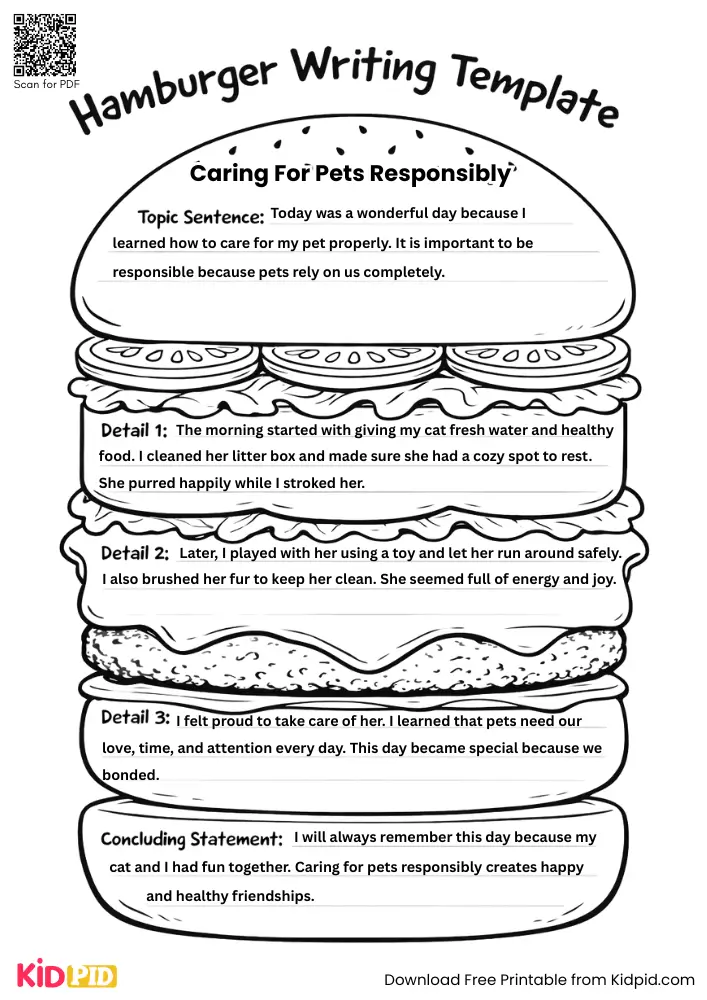
Learn responsible pet care, including feeding, hygiene, exercise, and kindness. This topic promotes animal welfare, compassion, pet responsibility, and teaches children the importance of caring for animals properly.
How Animals Help Humans
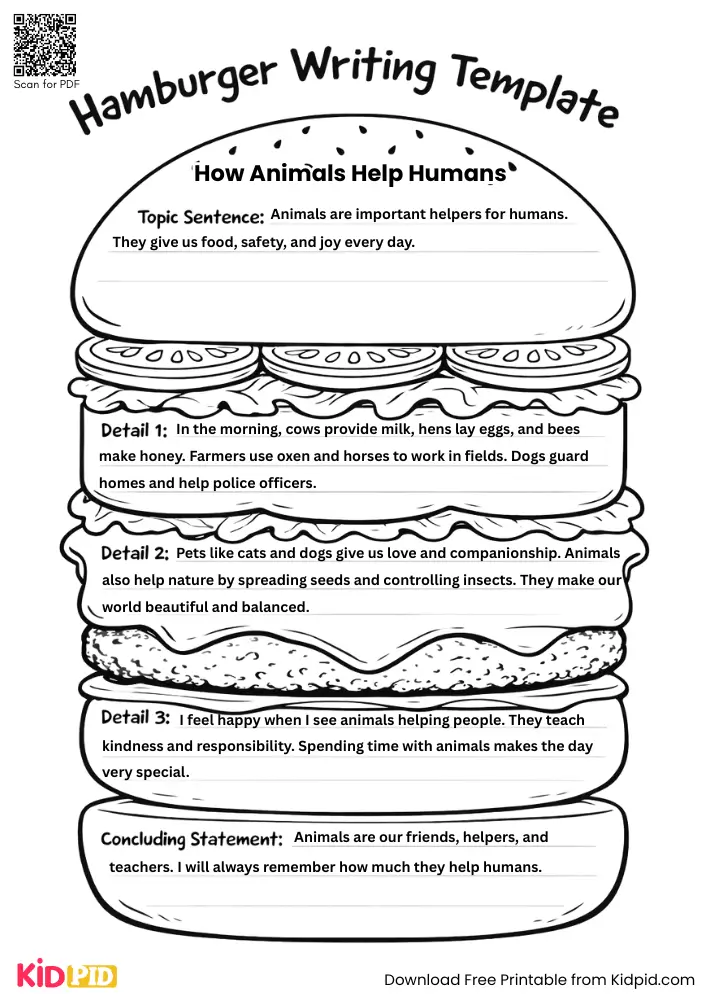
Animals support humans through farming, companionship, transport, food, and ecosystem balance. Protecting animals ensures biodiversity, agriculture productivity, and emotional wellbeing, highlighting their vital role in human survival and sustainability.
Living In Harmony With Nature
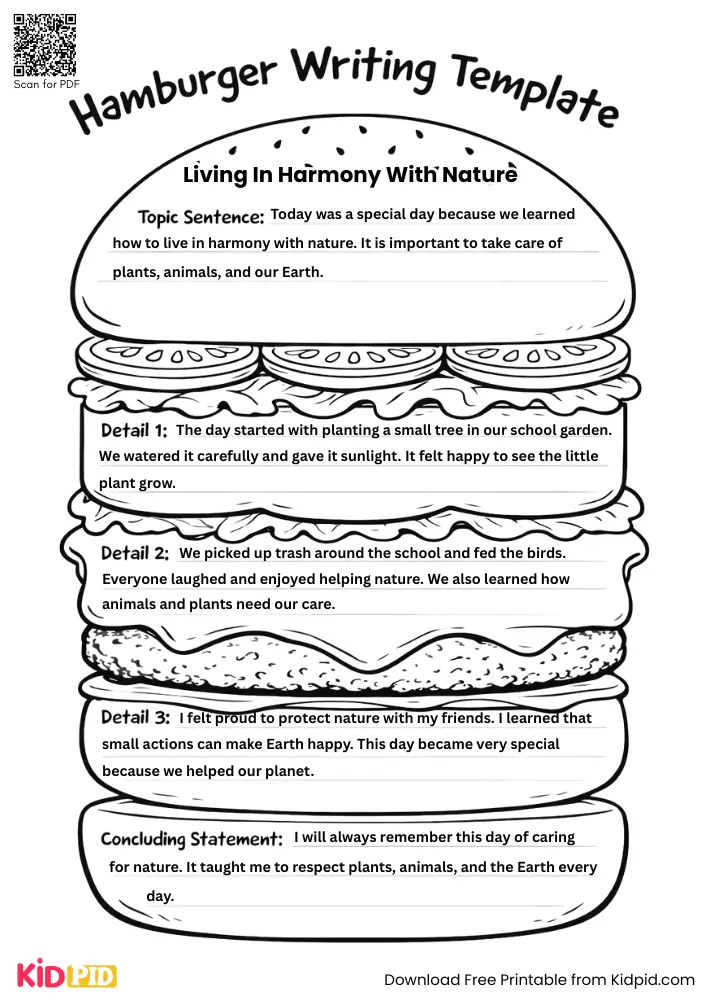
Living sustainably by conserving resources, respecting wildlife, and reducing waste supports ecological balance, climate stability, and human wellbeing, encouraging environmentally responsible lifestyles that ensure a healthy planet for future generations.