Planning ahead helps children stay organized and confident every day. It teaches them how to manage time, complete tasks smoothly, and prepare for challenges. When children learn to plan early, they build strong habits that guide them toward success, happiness, and a well-balanced future.
5 Pointers on ‘Why Planning Ahead Matters’
- Planning ahead helps children use time wisely.
- It makes work easier and less stressful.
- Planning helps children reach goals step by step.
- It teaches responsibility and smart choices.
- Planning ahead prepares children for success.
‘Why Planning Ahead Matters’ Paragraph Writing
Hamburger Paragraph on ‘Why Planning Ahead Matters’ (Free Template)

Topic Sentence: Yesterday was a very special day because I decided to plan my homework, chores, and playtime. Planning ahead made everything run smoothly and helped me feel happy and confident.
Details 1: I began the morning by making a list of what to do first. I wrote down homework for math, science, and reading. Then I checked my supplies and started with math, just as I had planned.
Details 2: After finishing math, I followed my plan for science and reading. I even had time to practice drawing and play outside. Each activity was more fun because I wasn’t rushing or forgetting anything.
Details 3: I felt proud and relaxed because planning made me organized. I learned that thinking ahead helps solve problems easily. This day became unforgettable because I managed time wisely and enjoyed every task.
Concluding Statement: I will always remember this day because planning ahead made it successful and joyful. Now I know that planning is like having a secret superpower for school and play.
Short Paragraph on ‘Why Planning Ahead Matters’- 50 Words for Grade 4
Planning ahead helps children stay organized and calm. It teaches them to manage time and finish work on time. When children plan their tasks, they feel confident and happy. Planning ahead makes learning easy and helps children succeed in school and life.
Long Paragraph on ‘Why Planning Ahead Matters’- 100 Words for Grade 5
Planning ahead is very important for children. It helps them know what to do and when to do it. When children plan their homework and daily activities, they feel less stressed. Planning teaches time management and responsibility. Children learn to finish work on time and still enjoy playtime. Planning ahead also builds confidence and focus. It helps children prepare for tests and school activities. These habits help children grow into responsible and successful individuals.
‘Why Planning Ahead Matters’ Essay Writing
‘Why Planning Ahead Matters’- 150 to 200 Words Essay for Grades 6 to 7 Students
Imagine you’re about to build the world’s greatest Lego castle. If you just dump all the pieces on the floor and start snapping, you might end up with a wobbly tower. But if you plan ahead—look at the instructions, sort your pieces, and think about your design—you’ll build something amazing! Planning ahead works the same way for your day, your homework, or your big dreams. It means thinking about what you need to do before you start. By taking five minutes to make a plan, you save yourself from forgetting important things and from feeling rushed. You become the boss of your time instead of time bossing you. Whether it’s laying out your clothes for Field Day or deciding what to study first for a test, a simple plan is your secret weapon for a smoother, more successful day.
‘Why Planning Ahead Matters’ – 300 Words Essay for Grades 8 to 10 Students
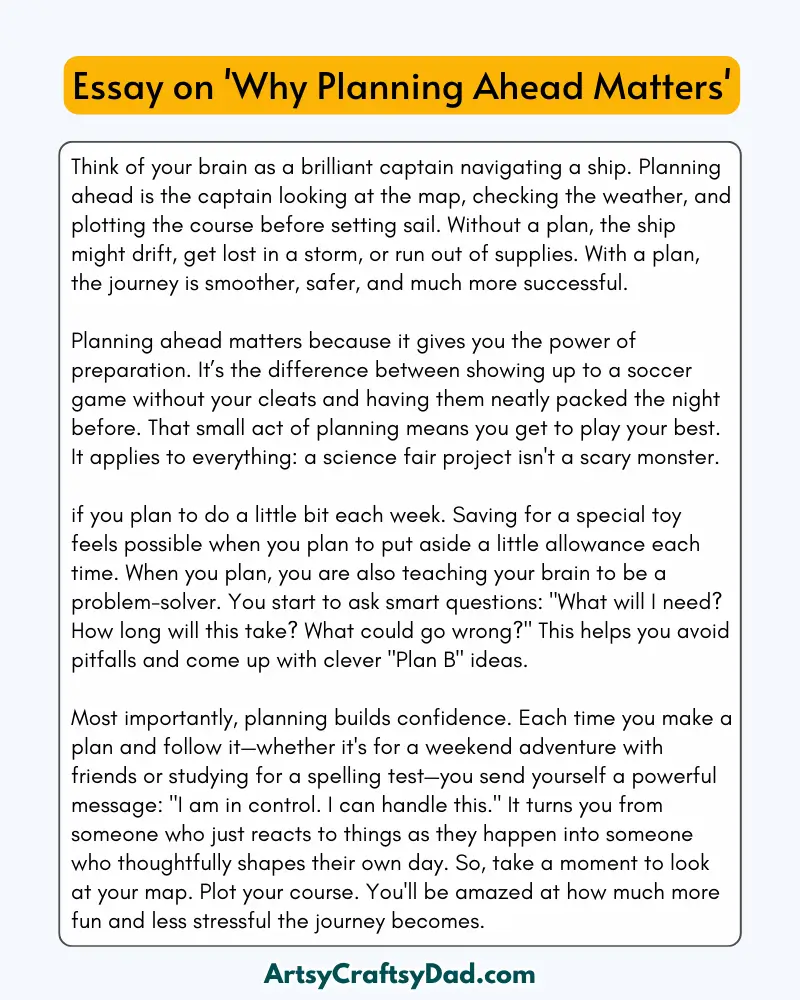
Think of your brain as a brilliant captain navigating a ship. Planning ahead is the captain looking at the map, checking the weather, and plotting the course before setting sail. Without a plan, the ship might drift, get lost in a storm, or run out of supplies. With a plan, the journey is smoother, safer, and much more successful.
Planning ahead matters because it gives you the power of preparation. It’s the difference between showing up to a soccer game without your cleats and having them neatly packed the night before. That small act of planning means you get to play your best. It applies to everything: a science fair project isn’t a scary monster if you plan to do a little bit each week. Saving for a special toy feels possible when you plan to put aside a little allowance each time.
When you plan, you are also teaching your brain to be a problem-solver. You start to ask smart questions: “What will I need? How long will this take? What could go wrong?” This helps you avoid pitfalls and come up with clever “Plan B” ideas. Most importantly, planning builds confidence. Each time you make a plan and follow it—whether it’s for a weekend adventure with friends or studying for a spelling test—you send yourself a powerful message: “I am in control. I can handle this.” It turns you from someone who just reacts to things as they happen into someone who thoughtfully shapes their own day. So, take a moment to look at your map. Plot your course. You’ll be amazed at how much more fun and less stressful the journey becomes.
Related Essay & Paragraph Topics
- The Importance of Planning Ahead
- How Planning Helps Us Succeed
- Why Children Should Plan Their Work
- Planning Ahead for a Better Future
- Smart Planning for Smart Kids
You May like this:
Is Reading Still Important
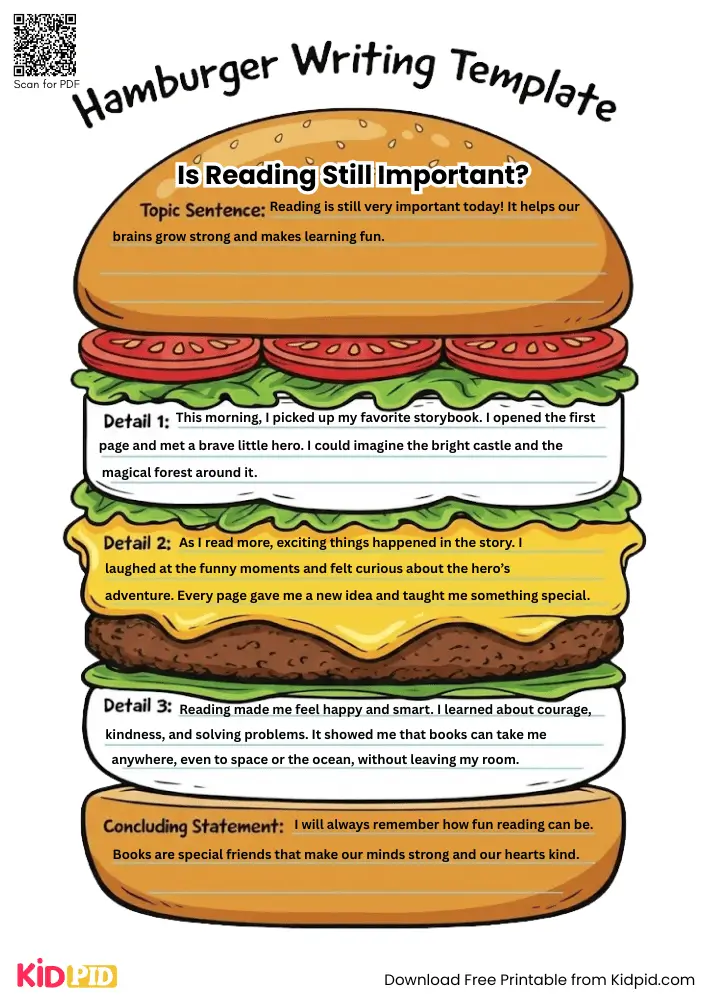
Reading improves vocabulary, critical thinking, imagination, knowledge expansion, academic performance, focus, and lifelong learning skills.
How to Handle Peer Pressure
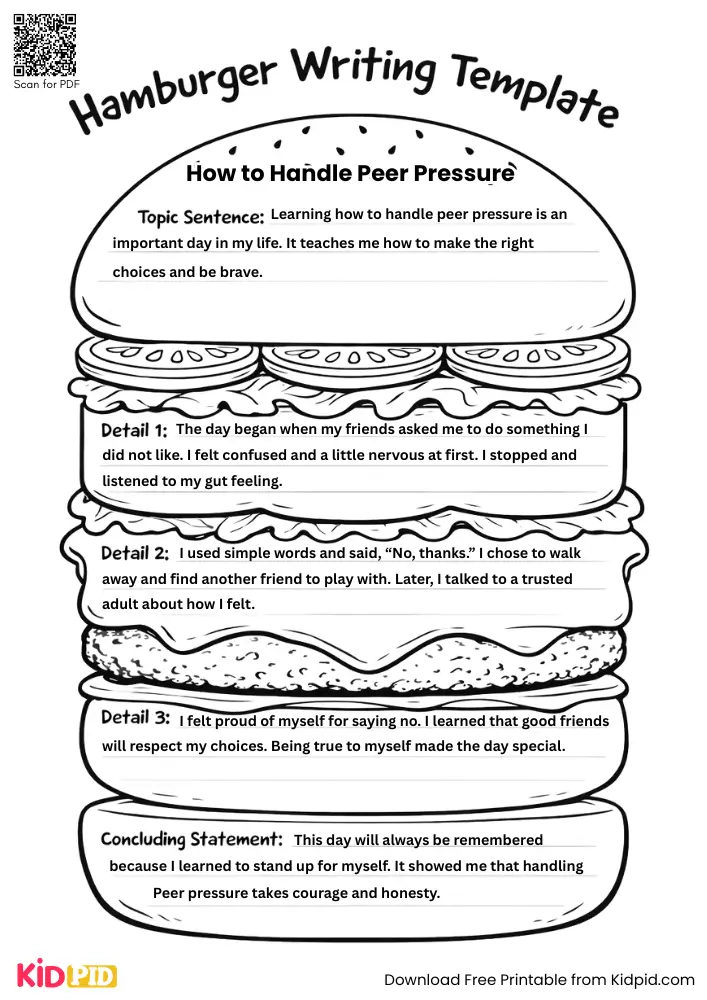
Handling peer pressure requires confidence, decision-making skills, strong values, assertiveness, emotional intelligence, and positive friendships.
The Importance Of Kindness

Kindness spreads positivity, strengthens relationships, improves mental well-being, builds empathy, encourages compassion, and creates supportive communities.
Is technology Making Life Better?

Technology improves communication, healthcare, education, productivity, innovation, and global connectivity, but excessive dependence may reduce social interaction and physical activity.
Should Social Media Be Limited For Kids?
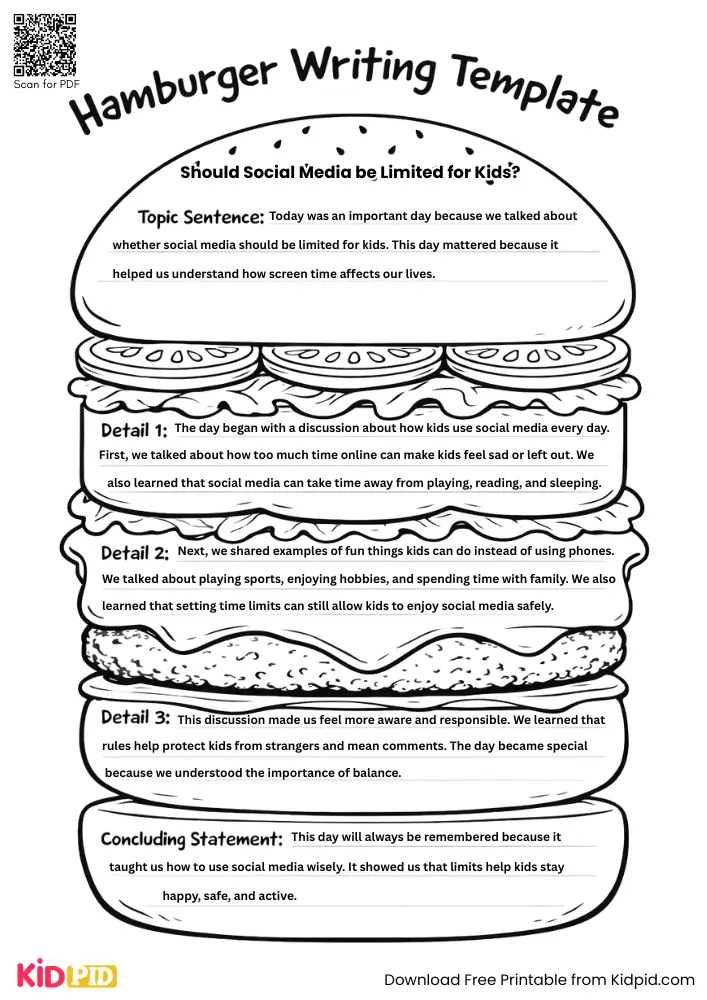
Limiting social media for kids protects mental health, reduces cyberbullying, improves focus, encourages healthy habits, strengthens real-life relationships, and promotes balanced digital usage.