Digital safety teaches children how to use the internet wisely and safely. It helps protect personal information and keeps kids away from online dangers. Learning simple safety rules builds confidence and responsibility. When children stay alert online, they can enjoy technology in a safe and positive way.
5 Pointers on ‘Importance of Digital Safety’
- Keep personal information private while using the internet.
- Use strong passwords and never share them with others.
- Talk only to people you know online.
- Avoid clicking on unknown links or messages.
- Tell a trusted adult if something feels unsafe online.
‘Importance of Digital Safety’ Paragraph Writing
Hamburger Paragraph on ‘Importance of Digital Safety’ (Free Template)
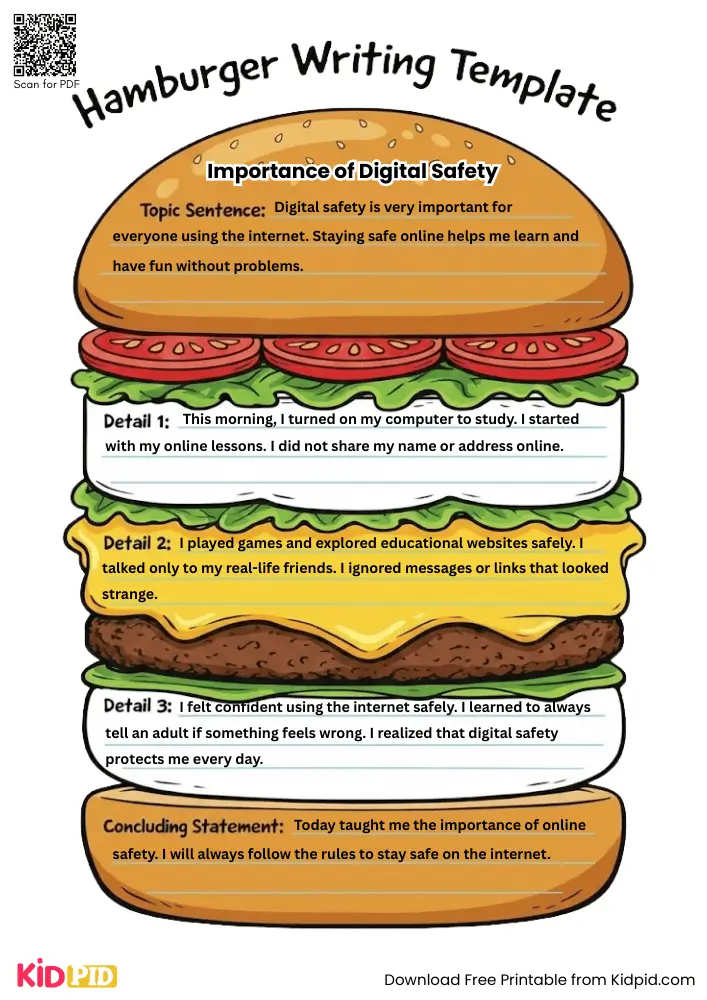
Topic Sentence: Digital safety is very important for everyone using the internet. Staying safe online helps me learn and have fun without problems.
Details 1: This morning, I turned on my computer to study. I started with my online lessons. I did not share my name or address online.
Details 2: I played games and explored educational websites safely. I talked only to my real-life friends. I ignored messages or links that looked strange.
Details 3: I felt confident using the internet safely. I learned to always tell an adult if something feels wrong. I realized that digital safety protects me every day.
Concluding Statement: Today taught me the importance of online safety. I will always follow the rules to stay safe on the internet.
Short Paragraph on ‘Importance of Digital Safety’ – 50 Words for Grade 4
Digital safety is very important for everyone. I do not share my personal details online. I use strong passwords to stay safe. I talk only to people I know. If something feels wrong, I tell my parents or teachers. Staying safe online helps protect me every day.
Long Paragraph on ‘Importance of Digital Safety’ – 100 Words for Grade 5

The importance of digital safety is growing every day. I use the internet for learning and fun, but I stay careful. I never share my name, address, or passwords online. I talk only to people I know in real life. I avoid clicking on strange links or messages. If I see something that makes me uncomfortable, I tell a trusted adult. Digital safety helps protect my information and keeps me safe while using devices. When we follow safety rules, the internet becomes a better and safer place for everyone.
‘Importance of Digital Safety’ Essay Writing
‘Importance of Digital Safety’ – 150 to 200 Words Essay for Grades 6 to 7 Students
Digital safety is about learning to be smart, strong, and kind while using the internet, just like you learn to be safe when crossing the street. The online world is amazing for learning and playing, but it’s important to know some simple rules to stay protected.
First, keep your private information private. Your full name, address, and school are special details just for you and your family. Don’t share them with strangers online. Second, always be careful about what you click or download, as some links can lead to bad places or give your device a virus. Third, remember that kindness counts everywhere. Be a good friend online by using positive words and telling an adult if you see someone being cyberbullied. Finally, always talk to a parent or guardian if something online feels weird or wrong. By following these rules, you can explore the digital world with confidence and have fun while staying safe!
‘Importance of Digital Safety’ – 300 Words Essay for Grades 8 to 10 Students

Imagine the internet is a vast, exciting city. It has incredible libraries, fun playgrounds, and ways to connect with friends. But just like in a real city, you need to know some safety rules to explore it wisely. This is what digital safety is all about—being a smart explorer in the online world.
One of the most important rules is to protect your personal information. Think of details like your full name, home address, school name, and birthday as the keys to your house. You wouldn’t give those keys to a stranger, so don’t give them out online. Always use a nickname instead of your real name in games and chat rooms. Another key rule is to be a critical thinker. Not everything you see online is true, and not everyone is who they say they are. If a pop-up promises a free prize or a stranger asks to be your friend, be skeptical. Always ask a parent or teacher if you’re unsure.
Digital safety also means being a responsible and kind citizen. The words you type have real power. Use them to encourage others, not to hurt them. If you see someone being bullied or treated meanly online, don’t join in. Save the evidence and tell a trusted adult right away. Finally, make an agreement with your parents about your online time. Talk about which websites and apps are okay to use and for how long. Most importantly, promise to go to them immediately if you ever feel scared, pressured, or confused by something you see online.
By learning these digital safety habits, you build a strong shield for yourself. You get to enjoy all the wonderful parts of the internet—the videos, the games, the learning—while confidently avoiding the dangers. It’s your passport to a safe and positive online adventure!
Related Essay & Paragraph Topics
- Staying Safe Online
- Smart Use of the Internet
- Protecting Ourselves in the Digital World
- Online Safety for Children
- Safe Internet Habits
You May like this:
How To End Food Waste

Ending food waste requires meal planning, proper storage, portion control, food donation, awareness campaigns, and sustainable consumption habits.
Why Volunteering Is Important

Volunteering builds compassion, social responsibility, leadership skills, community support, empathy, and positive social impact.
How To Build Peaceful Communities

Building peaceful communities requires respect, tolerance, communication, cooperation, social harmony, conflict resolution, and active community participation.
Patience While Standing In A Queue

Practicing patience in a queue builds self-control, emotional intelligence, discipline, respect for others, stress management, and social responsibility.
Being Responsible In Public Places

Being responsible in public places promotes cleanliness, civic sense, respect, safety, discipline, and positive social behavior.