Using the internet responsibly helps children learn safely and grow wisely. It teaches good online habits, kindness, and self-control. When kids use the internet for learning and limit screen time, technology becomes helpful instead of harmful. Responsible use keeps children safe, healthy, and confident in the digital world.
5 Pointers on ‘Using Internet Responsibly’
- Use the internet mainly for learning and useful activities.
- Do not share personal information online.
- Be polite and kind while talking to others online.
- Avoid spending too much time on screens.
- Tell a trusted adult if something online feels wrong.
‘Using Internet Responsibly’ Paragraph Writing
Hamburger Paragraph on ‘Using Internet Responsibly’ (Free Template)
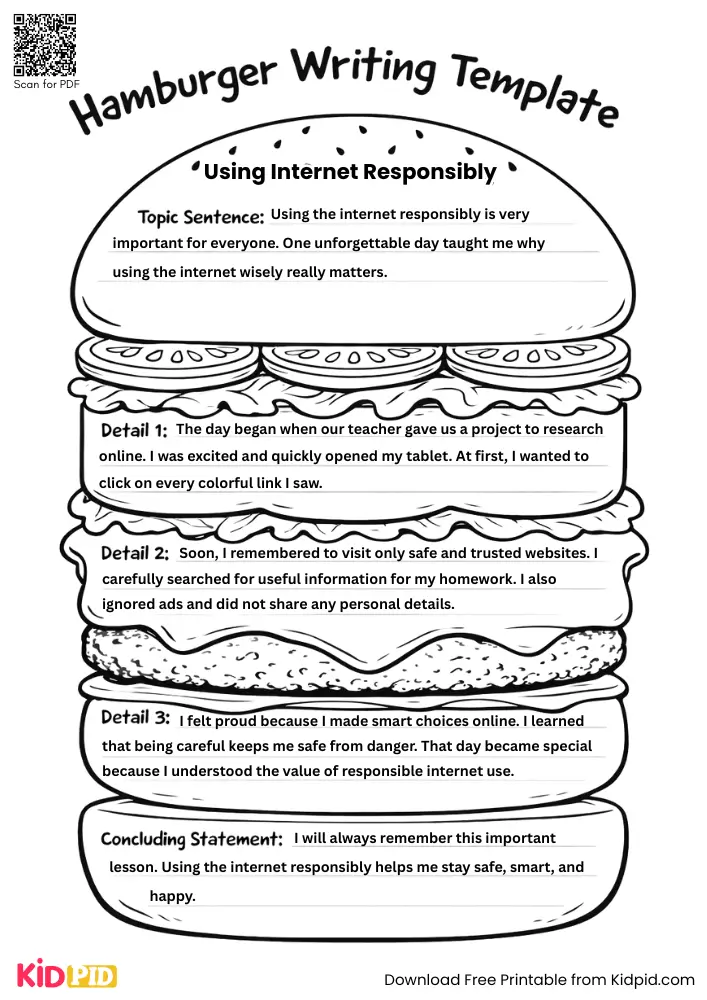
Topic Sentence: Using the internet responsibly is very important for everyone. One unforgettable day taught me why using the internet wisely really matters.
Details 1: The day began when our teacher gave us a project to research online. I was excited and quickly opened my tablet. At first, I wanted to click on every colorful link I saw.
Details 2: Soon, I remembered to visit only safe and trusted websites. I carefully searched for useful information for my homework. I also ignored ads and did not share any personal details.
Details 3: I felt proud because I made smart choices online. I learned that being careful keeps me safe from danger. That day became special because I understood the value of responsible internet use.
Concluding Statement: I will always remember this important lesson. Using the internet responsibly helps me stay safe, smart, and happy.
Short Paragraph on ‘Using Internet Responsibly’ – 50 Words for Grade 4
Using the internet responsibly is very important. I use it for studying and learning new things. I do not share my personal details online. I talk politely with others. I limit my screen time. Responsible use helps keep me safe and healthy.
Long Paragraph on ‘Using Internet Responsibly’ – 100 Words for Grade 5

Using the internet responsibly helps children stay safe and smart. I use the internet for homework, learning, and fun. I never share my name, address, or passwords online. I speak kindly and respectfully to others. I avoid watching harmful content and do not spend too much time on screens. If I see something strange or scary, I tell my parents or teachers. Responsible internet use helps me learn good habits. It protects my health, my safety, and my happiness.
‘Using Internet Responsibly’ Essay Writing
‘Using Internet Responsibly’—150 to 200 Words Essay for Grades 6 to 7 Students
Using the internet responsibly means being the boss of your own online time and actions. It’s a powerful tool, and with a little wisdom, you can use it to do amazing things without letting it cause problems. First, it’s important to balance your screen time with the real world. Make sure you still play outside, do your homework, and spend time with family face-to-face.
When you are online, be a detective! Don’t believe everything you read or see in a video. Ask yourself, “Who made this? Is it trying to sell me something?” and talk to an adult if you’re unsure. Also, use the internet to create, not just watch. Follow a tutorial to build a model, start a blog about your hobby, or learn to code. Finally, always remember to be kind and respectful in your comments and messages, just as you would be in person. By being responsible, you turn the internet into a helpful friend, not a noisy distraction.
‘Using Internet Responsibly’ – 300 Words Essay for Grades 8 to 10 Students
The internet is like a super-powered library, playground, and workshop all rolled into one. Using it responsibly is the key to unlocking its benefits while avoiding its pitfalls. It’s about making smart choices that help you learn, create, and connect in positive ways.
A major part of being responsible is managing your time wisely. It’s easy to lose track of time watching videos or playing games. A good rule is to decide with your parents how much screen time is fair and to set timers. This ensures you have plenty of time for other important parts of life, like sports, reading, and hanging out with friends in person. Next, be a critical thinker. The internet is full of information but also misinformation. If you read a surprising fact or see a shocking story, don’t share it right away. Check it on a trusted news site or ask a teacher or parent. Being responsible means not spreading rumors.
Responsible use also means being a creator, not just a consumer. Instead of only scrolling, use the internet’s tools. You could design a comic strip, start a nature photo journal, learn the chords to a song on the guitar, or even begin a small blog about book reviews. This turns your online time into a productive adventure. Finally, remember that your digital footprint is permanent. Every comment you post, picture you share, and game you play online adds to your digital story. Make sure that story is one you’re proud of. Ask yourself, “Is this post kind? Is it true? Would I want my grandma to see it?”
By following these responsible habits, you take control. You ensure the internet is a place that helps you grow smarter, more creative, and more connected to the real world in a healthy way. You learn to use the tool without letting the tool use you.
Related Essay & Paragraph Topics
- Smart Ways to Use the Internet
- Internet Habits for Children
- Learning and Safety Online
- Responsible Digital Behavior
- Using Technology Wisely
You May like this:
Using Dustbins Properly
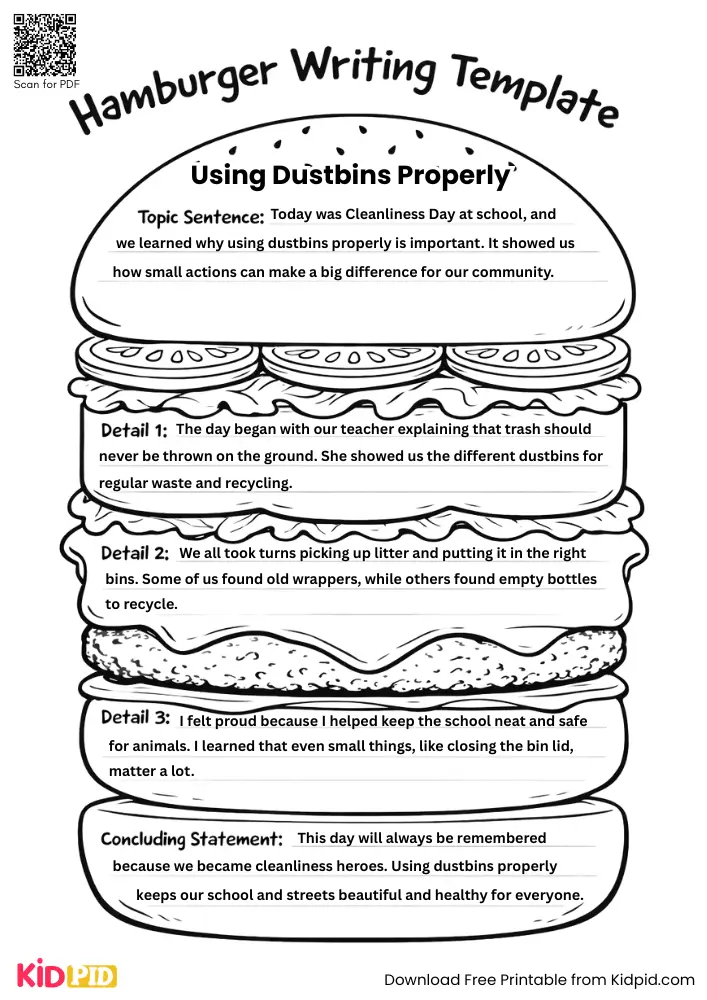
Using dustbins properly supports waste management, environmental cleanliness, hygiene, public health, pollution reduction, and community awareness.
Helping Someone Without Being Asked
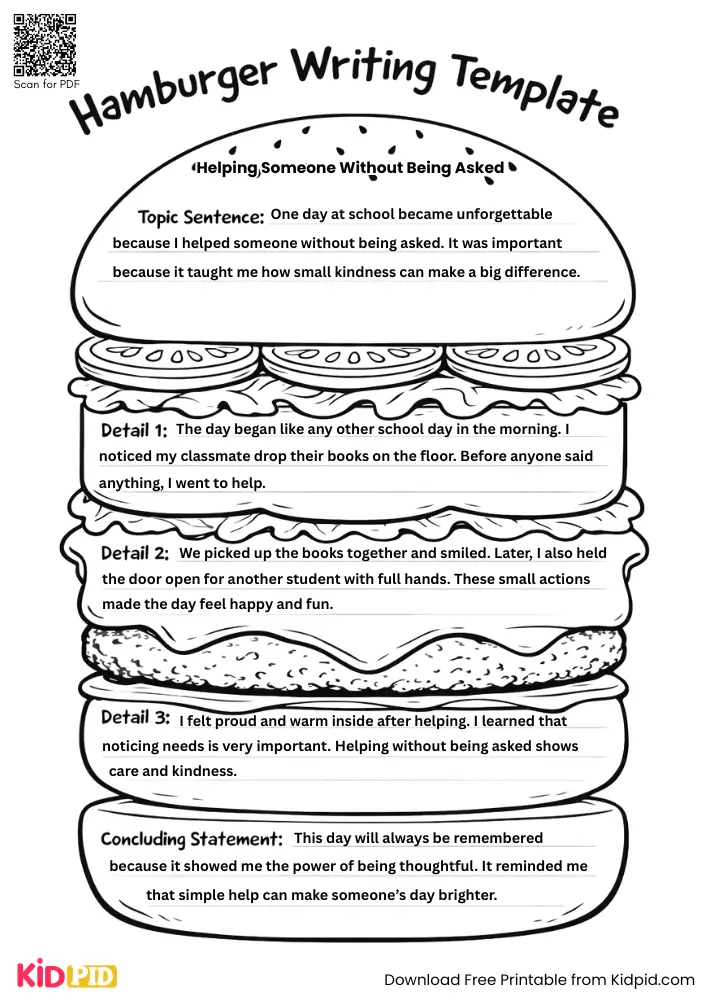
Helping others voluntarily promotes kindness, empathy, compassion, generosity, community bonding, and positive social values.
Sharing Resources At Home

Sharing resources encourages cooperation, fairness, family bonding, responsibility, gratitude, and mutual understanding.
Understanding My Own Emotions
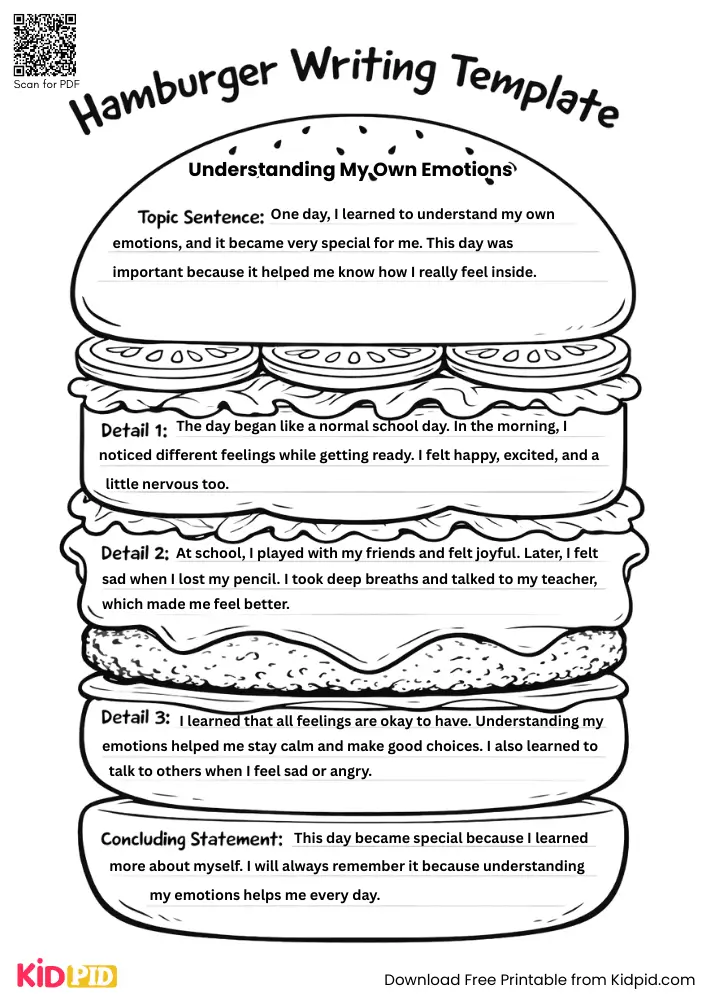
Understanding emotions enhances self-awareness, emotional intelligence, mental health, decision-making skills, and personal growth.
Why Empathy Is Important
Empathy strengthens relationships, promotes compassion, improves communication, reduces conflict, and builds supportive communities.