Digital responsibility teaches students to use technology safely, wisely, and politely. By protecting personal information, avoiding harmful messages, and using devices for learning, students can stay safe and confident. Practicing digital responsibility builds focus, self-control, and smart habits, making the online world safe and productive for every child.
5 Pointers on ‘Digital Responsibility for Students’
- Use the internet and devices safely and respectfully.
- Protect personal information like passwords and addresses.
- Avoid bullying, rude messages, or harmful comments online.
- Use technology mainly for learning and positive activities.
- Think before sharing or posting anything on the internet.
‘Digital Responsibility for Students’ Paragraph Writing
Hamburger Paragraph on ‘Digital Responsibility for Students’ (Free Template)

Topic Sentence: Today was an exciting day about digital responsibility for students. Learning how to use technology safely is very important for school and fun.
Details 1: We started by learning about keeping personal information private. Our teacher explained why passwords and addresses must never be shared. We also learned to avoid rude or harmful messages online.
Details 2: Next, we used tablets to explore educational apps and creative activities safely. It was fun to play games while being careful online. Everyone learned how to think before sharing anything.
Details 3: I felt happy because I can stay safe online now. I learned that being polite and responsible matters. Today taught me good habits like focus and self-control.
Concluding Statement: This day will always be remembered because it showed me how to enjoy technology safely. Digital responsibility makes me a smart and confident student.
Short Paragraph on ‘Digital Responsibility for Students’ – 50 Words for Grade 4
Digital responsibility is important for students. I use the internet safely and politely. I protect my personal information and avoid harmful messages. I use devices for learning and fun in a safe way. Being responsible online helps me stay safe, smart, and focused every day.
Long Paragraph on ‘Digital Responsibility for Students’ – 100 Words for Grade 5

Digital responsibility teaches students how to use technology safely and wisely. I use computers, tablets, and the internet mainly for learning and creative activities. I keep my personal information private and avoid sharing passwords or addresses. I am polite and kind online and never post rude or hurtful messages. Thinking before sharing anything helps me stay safe and responsible. Digital responsibility also teaches good habits like focus, self-control, and time management. Using technology responsibly helps me enjoy learning, stay protected, and become a smart and confident student.
‘Digital Responsibility for Students’ Essay Writing
‘Digital Responsibility for Students’—150 to 200 Words Essay for Grades 6 to 8 Students
Digital responsibility means using technology, like phones and computers, in a smart, safe, and kind way. For students, it’s about being a good citizen both online and offline. A key part is protecting your privacy. You should never share personal information, like where you live or your school schedule, with people you don’t know in the real world. It’s also crucial to remember that everything you post online leaves a “digital footprint.” This footprint can last forever, so it’s important to post things that are positive and respectful.
Being digitally responsible also means standing against bullying. If you see someone being mean online, don’t join in. Instead, tell a trusted adult. Finally, use your tech time wisely. Balance fun, like games and videos, with using technology to learn new skills, create art, or work on school projects with classmates. By being responsible, you make the internet a safer and better place for everyone.
‘Digital Responsibility for Students’ – 300 Words Essay for Grades 9 to 10 Students
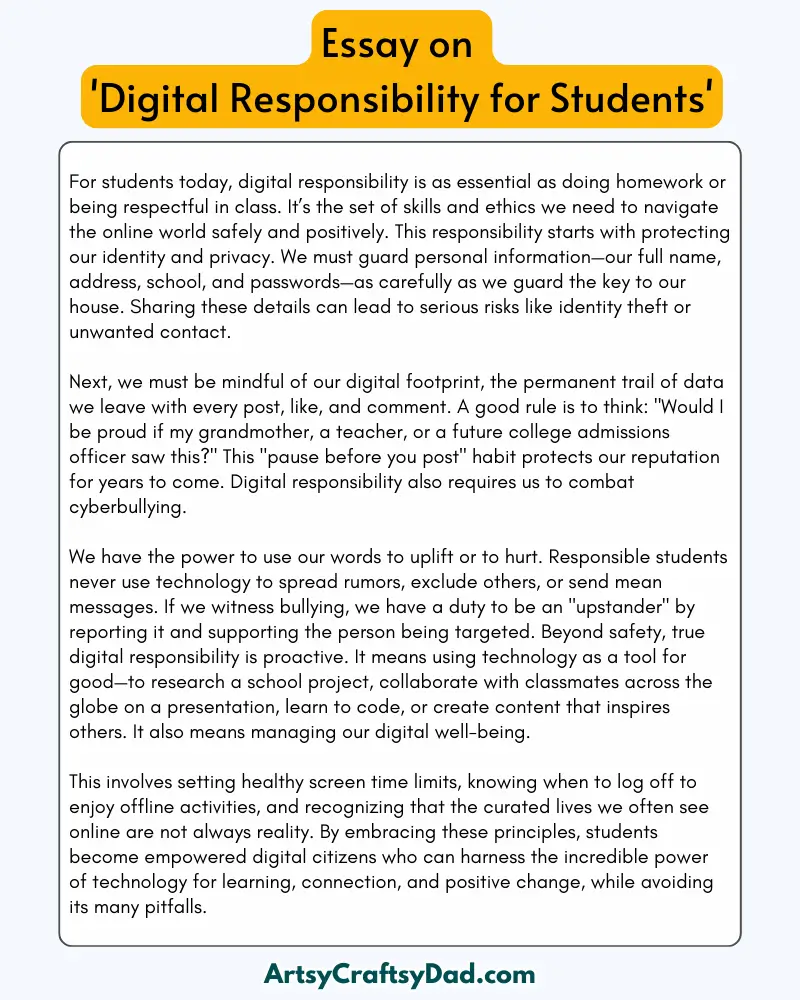
For students today, digital responsibility is as essential as doing homework or being respectful in class. It’s the set of skills and ethics we need to navigate the online world safely and positively. This responsibility starts with protecting our identity and privacy. We must guard personal information—our full name, address, school, and passwords—as carefully as we guard the key to our house. Sharing these details can lead to serious risks like identity theft or unwanted contact.
Next, we must be mindful of our digital footprint, the permanent trail of data we leave with every post, like, and comment. A good rule is to think: “Would I be proud if my grandmother, a teacher, or a future college admissions officer saw this?” This “pause before you post” habit protects our reputation for years to come. Digital responsibility also requires us to combat cyberbullying. We have the power to use our words to uplift or to hurt. Responsible students never use technology to spread rumors, exclude others, or send mean messages. If we witness bullying, we have a duty to be an “upstander” by reporting it and supporting the person being targeted.
Beyond safety, true digital responsibility is proactive. It means using technology as a tool for good—to research a school project, collaborate with classmates across the globe on a presentation, learn to code, or create content that inspires others. It also means managing our digital well-being. This involves setting healthy screen time limits, knowing when to log off to enjoy offline activities, and recognizing that the curated lives we often see online are not always reality. By embracing these principles, students become empowered digital citizens who can harness the incredible power of technology for learning, connection, and positive change, while avoiding its many pitfalls.
Related Essay & Paragraph Topics
- Using Technology Safely as a Student
- Being Responsible Online for Kids
- Learning and Playing Safely with Technology
- Protecting Personal Information Online
- Smart Habits for Digital Learning
You May like this:
Growing Through Challenges
Growing through challenges builds resilience, emotional strength, confidence, perseverance, adaptability, and success.
Becoming A Better Version Of Myself

Becoming better involves self-improvement, discipline, continuous learning, positive habits, resilience, and meaningful personal development.
Standing In Line Patiently

Standing in line patiently shows discipline, respect, self-control, social responsibility, and emotional intelligence.
Keeping Surroundings Tidy

Keeping surroundings tidy improves hygiene, organization, mental clarity, environmental cleanliness, and responsible living.
Sharing Limited Resources
Sharing limited resources promotes fairness, cooperation, empathy, teamwork, gratitude, and social harmony.