“Standing in line patiently teaches children how to be fair and respectful. Waiting calmly for a turn shows self-control and kindness to others. This essay explains why patience while standing in line is important, how it helps everyone get a turn, and how it builds polite and responsible habits.”
5 Pointers on ‘Standing in Line Patiently’
- in line patiently shows respect for others.
- It helps everyone get a turn in order.
- Patience while waiting is an important skill.
- Pushing or cutting in line is rude and unfair.
- Children who stand patiently are polite and responsible.
‘Standing in Line Patiently’ Paragraph Writing
Hamburger Paragraph on ‘Standing in Line Patiently’ (Free Template)

Topic Sentence: Standing in line patiently is more than just waiting; it teaches respect, fairness, and self-discipline. This small act is an important life skill that everyone should practice.
Detail 1: One day, we went on a school trip to a museum. Everyone lined up to buy tickets. The line was long, but everyone waited without pushing or arguing.
Detail 2: While waiting, some students discussed the exhibits they wanted to see. Others observed the museum surroundings quietly. By waiting calmly, the line moved smoothly and safely.
Detail 3: I felt proud of my patience. I realized that waiting helps me control my emotions. Standing in line patiently made me responsible and respectful.
Concluding Statement: This day will always be remembered because it taught me fairness and self-control. Practicing patience in line is a simple way to create a polite and happy environment for everyone.
Short Paragraph on ‘Standing in Line Patiently’ – 50 Words for Grades 2 to 3
Standing in line patiently means waiting for your turn without pushing or rushing. It shows respect for others and teaches patience. In school, at home, or in public places, standing calmly helps everyone get a fair turn. Children who wait patiently are polite, responsible, and respected.
Long Paragraph on ‘Standing in Line Patiently’ – 100 Words for Grade 4
Standing in line patiently means waiting calmly for your turn without pushing or cutting ahead. It shows respect, fairness, and patience. In school, children stand in line for lunch, games, or buses. At home, waiting for toys or activities teaches self-control and fairness. Pushing or rushing in line is rude and can upset others. Children who stand patiently learn to control their emotions and follow rules. Patience in waiting also helps in everyday life. Children who practice standing patiently in line grow into polite, responsible, and respected adults who understand fairness and kindness.
‘Standing in Line Patiently’ Essay Writing
‘Standing in Line Patiently’ – 150 to 200 Words Essay for Grades 5 to 7 Students
Standing in line patiently is a simple but important skill that shows good character. A line is a promise of fairness—it means everyone will get their turn in the order they arrived. When you wait your turn without pushing, complaining, or trying to cut, you are showing respect for others. You are also helping to keep the area safe and calm for everyone. It can be hard to wait, especially when you’re excited or hungry, but that’s where patience becomes your superpower! Instead of focusing on the wait, you can find a positive way to pass the time. Look around, plan what you’ll do next, or have a quiet conversation. By choosing to be patient, you make the experience better for yourself and for those around you. You become a person who helps create a polite and orderly community, whether you’re at school, a store, or a park.
‘Standing in Line Patiently’ – 300 Words Essay for Grades 7 to 8 Students
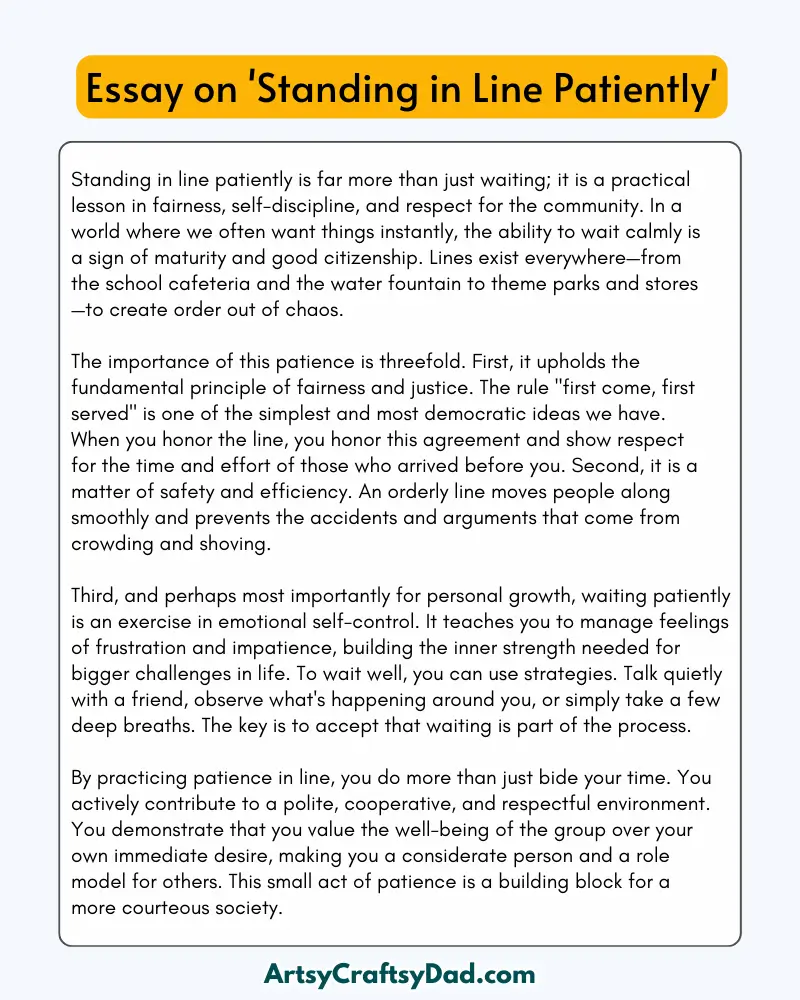
Standing in line patiently is far more than just waiting; it is a practical lesson in fairness, self-discipline, and respect for the community. In a world where we often want things instantly, the ability to wait calmly is a sign of maturity and good citizenship. Lines exist everywhere—from the school cafeteria and the water fountain to theme parks and stores—to create order out of chaos.
The importance of this patience is threefold. First, it upholds the fundamental principle of fairness and justice. The rule “first come, first served” is one of the simplest and most democratic ideas we have. When you honor the line, you honor this agreement and show respect for the time and effort of those who arrived before you. Second, it is a matter of safety and efficiency. An orderly line moves people along smoothly and prevents the accidents and arguments that come from crowding and shoving. Third, and perhaps most importantly for personal growth, waiting patiently is an exercise in emotional self-control. It teaches you to manage feelings of frustration and impatience, building the inner strength needed for bigger challenges in life.
To wait well, you can use strategies. Talk quietly with a friend, observe what’s happening around you, or simply take a few deep breaths. The key is to accept that waiting is part of the process. By practicing patience in line, you do more than just bide your time. You actively contribute to a polite, cooperative, and respectful environment. You demonstrate that you value the well-being of the group over your own immediate desire, making you a considerate person and a role model for others. This small act of patience is a building block for a more courteous society.
Related Essay & Paragraph Topics
- Learning to Wait Calmly
- Patience in Daily Life
- Importance of Taking Turns
- Being Polite and Respectful
- Waiting Your Turn the Right Way
You May like this:
Why Character Matters More Than Talent

Character reflects honesty, integrity, and responsibility. Strong character builds trust, leadership, and respect, proving that values and ethical behavior matter more than natural talent alone.
Importance Of Inner Stability

Inner stability builds emotional strength, calm thinking, and balanced decision-making. A stable mindset helps handle challenges and supports mental well-being.
Learning Independence Responsibly
Responsible independence encourages self-confidence, accountability, and decision-making skills. Learning to manage responsibilities builds maturity and personal growth.
Learning Resilience Slowly

Resilience develops gradually through challenges, patience, and experience. Learning to recover from difficulties builds emotional strength and confidence.
Why Habits Define Success

Daily habits shape productivity, discipline, and personal growth. Positive habits like consistency, learning, and responsibility lead to long-term success.