Extracurricular activities play an important role in a student’s overall growth. They include sports, clubs, and creative workshops done outside regular classes. These activities help children discover new interests, build confidence, learn teamwork, and enjoy a refreshing break from daily school routines while developing useful life skills.
5 Pointers on “The Value of Extracurricular Activities”
- Workshops help you discover new passions, like painting, coding, or music.
- Activities like soccer, chess, and debate build teamwork, patience, and confidence.
- Clubs with shared interests, like robotics or drama, help you make friends.
- Balancing homework and practice teaches planning, prioritising, and responsibility.
- Doing what you enjoy gives a fun, refreshing break from routine.
‘The Value of Extracurricular Activities’ Paragraph Writing
Hamburger Paragraph on ‘The Value of Extracurricular Activities’ (Free Template)
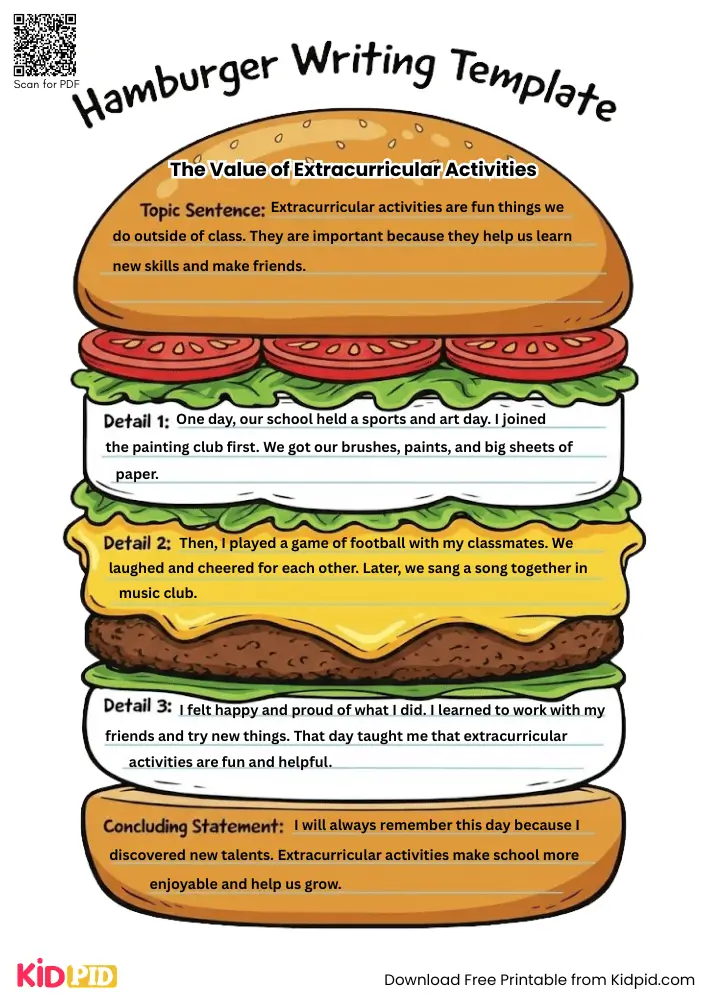
Topic Sentence: Extracurricular activities are fun things we do outside of class. They are important because they help us learn new skills and make friends.
Details 1: One day, our school held a sports and art day. I joined the painting club first. We got our brushes, paints, and big sheets of paper.
Details 2: Then, I played a game of football with my classmates. We laughed and cheered for each other. Later, we sang a song together in the music club.
Details 3: I felt happy and proud of what I did. I learned to work with my friends and try new things. That day taught me that extracurricular activities are fun and helpful.
Concluding Statement:
I will always remember this day because I discovered new talents. Extracurricular activities make school more enjoyable and help us grow.
Short Paragraph on ‘The Value of Extracurricular Activities’ – 50 Words for Grades 2 & 3
Extracurricular activities are fun clubs and sports outside of class. They help you find new talents. You learn teamwork, patience, and confidence. They are also a great way to make new friends and take a happy break from schoolwork. Trying new activities helps you grow in amazing ways.
Long Paragraph on ‘The Value of Extracurricular Activities’ – 100 Words for Grade 4
Extracurricular activities are the fun things you do after school, like sports, art, or a music club. They are super important because they help you discover what you love. You might find out you’re a great painter, a fast runner, or a science whiz! These activities also teach you real-life skills. On a team, you learn cooperation. In a play, you build courage. They are a perfect place to make friends who like the same things you do. Plus, they give your brain a joyful break, making you happier and even better at your regular schoolwork. Always try something new!
‘The Value of Extracurricular Activities’ Essay Writing
‘The Value of Extracurricular Activities’ – 150 to 200 Words Essay for Grades 5 to 7 Students
Have you ever felt that school is about more than just books and tests? Extracurricular activities are the exciting answer! They are the clubs, sports, and hobbies you choose to do for fun. Think of them as a special playground for your talents. Maybe you’ll discover you’re a brilliant artist in painting class, a strategic thinker in chess club, or a great teammate on the basketball court.
These activities teach you amazing things that aren’t always in textbooks. When you work on a group project for a science fair, you learn teamwork. Practising a song for the school choir teaches you dedication and patience. Even learning a new skateboard trick builds your confidence to try hard things. Plus, they’re a fantastic way to make new friends who love the same things you do.
So, whether it’s coding, dancing, gardening, or debating, getting involved adds colour, joy, and important skills to your life. It’s all about growing into a happier, more well-rounded you!
‘The Value of Extracurricular Activities’ – 300 Words Essay for Grades 8 to 10 Students
Imagine your mind and body are like a big, wonderful house. School fills most of the rooms with important knowledge like math, history, and languages. But what about the other rooms, like the music room, the art studio, or the gym? Extracurricular activities are the keys that unlock these special spaces, helping you become a truly well-rounded and happy person.
Firstly, these activities are your personal talent discovery zone. Sitting in class, you might not know you have a powerful singing voice, a knack for building robots, or the speed to be a great swimmer. Joining a club or a team is like going on a treasure hunt where the treasure is your own hidden potential. You get to explore what makes you unique and brings you joy.
Secondly, the lessons you learn here are for life. On the soccer field, you learn about teamwork and fair play. In drama club, you build the courage to speak in front of an audience. If you join a debate team, you learn to think quickly and express your ideas clearly. These are called “soft skills,” and they are just as important as academic grades. They teach you discipline, how to manage your time between homework and practice, and how to bounce back from a lost game or a mistake.
Finally, extracurriculars are great for your happiness and social life. They provide a healthy break from routine, letting your brain relax and have fun. This actually helps you focus better when you return to your studies. They also connect you with a new group of friends who share your interests, giving you a wonderful sense of belonging.
In short, extracurricular activities are not just “extra.” They are essential. They add colour, friendship, and vital skills to your school journey, helping you build a stronger, more confident, and more complete version of yourself. So go ahead, try something new—you might just find your favourite part of the day!
Related Essay & Paragraph Topics
- How Extracurricular Activities Help Students Grow
- The Importance of Sports, Arts, and Clubs in School Life
- Learning Beyond the Classroom Through Activities
- How Extracurricular Activities Build Confidence and Skills
- The Role of Hobbies and Activities in Student Development