“Plants are tiny chefs that make their own food every day! Using sunlight, water, and air, they cook inside their green leaves through a process called photosynthesis. This amazing trick gives them energy to grow and produce fruits while also creating fresh oxygen for us to breathe and enjoy.”
5 Pointers on ‘How Plants Make Food’
- Plants make their own food by a process called photosynthesis.
- They use sunlight, water, and air to prepare food.
- Leaves play a crucial role in producing food.
- Chlorophyll in leaves helps plants absorb sunlight.
- This process helps plants grow and gives us oxygen
‘How Plants Make Food’ Paragraph Writing
Hamburger Paragraph on ‘How Plants Make Food’ (Free Template)
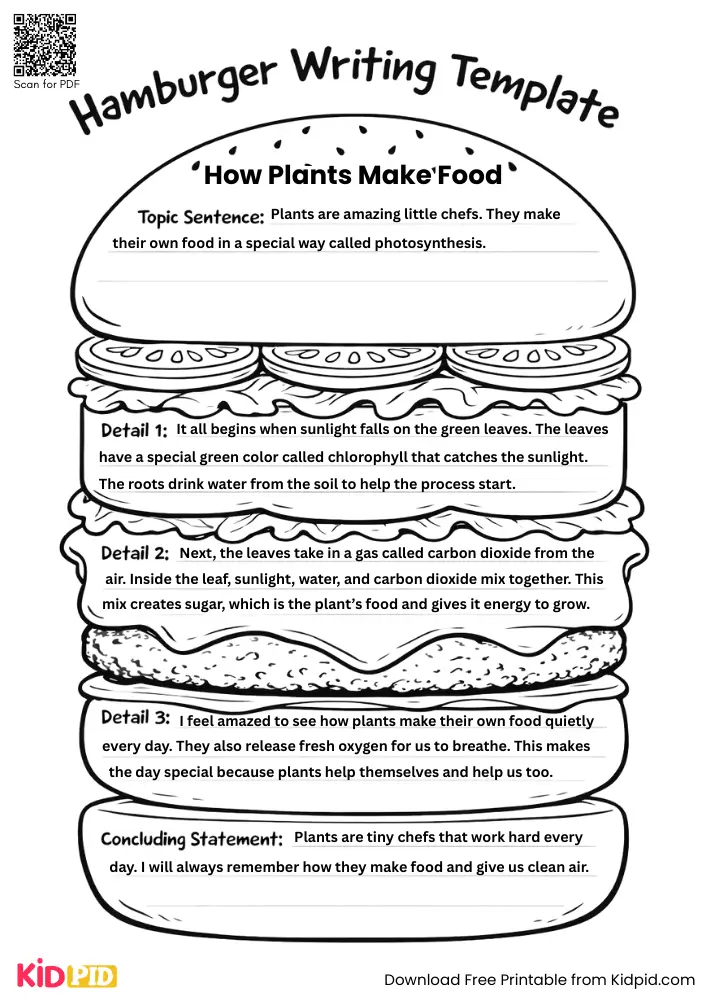
Topic Sentence : Plants are amazing little chefs. They make their own food in a special way called photosynthesis.
Details 1 : It all begins when sunlight falls on the green leaves. The leaves have a special green color called chlorophyll that catches the sunlight. The roots drink water from the soil to help the process start.
Details 2 : Next, the leaves take in a gas called carbon dioxide from the air. Inside the leaf, sunlight, water, and carbon dioxide mix together. This mix creates sugar, which is the plant’s food and gives it energy to grow.
Details 3 : I feel amazed to see how plants make their own food quietly every day. They also release fresh oxygen for us to breathe. This makes the day special because plants help themselves and help us too.
Concluding Statement : Plants are tiny chefs that work hard every day. I will always remember how they make food and give us clean air.
Short Paragraph on ‘How Plants Make Food’ – 50 Words for Grade 3
Plants are amazing chefs. They make their own food in their leaves. They use sunlight, water, and air. A green part called chlorophyll catches the sun. They mix these things to make sugar for energy. This is called photosynthesis. They also make fresh oxygen for us to breathe.
Long Paragraph on ‘How Plants Make Food’ – 100 Words for Grades 4 to 5

The goal was for plants to cook their own food through a process called photosynthesis. This happens in their green leaves. First, they use sunlight. A special green ingredient called chlorophyll catches the sun’s energy. Their roots drink water from the soil. Their leaves take in a gas called carbon dioxide from the air. Inside the leaf, they mix the sunlight, water, and air together. This mix makes sugar. The sugar is the plant’s food. It gives the plant energy to grow and make flowers. A wonderful bonus is that plants also release clean oxygen into the air. This oxygen is what we need to breathe.
‘How Plants Make Food’ Essay Writing
‘How Plants Make Food’ – 150 to 200 Words Essay for Grades 6 to 7 Students
Did you know that plants are amazing chefs? They cook their own food right inside their leaves! This special recipe is called “photosynthesis,” which means “putting together with light.”
To make their food, plants need three simple ingredients. First, they need sunlight. Their leaves have a green pigment called chlorophyll that soaks up the sun’s energy like a tiny solar panel. Second, they need water, which their roots drink from the soil. Third, they need air. They take in a gas called carbon dioxide from the air through tiny holes in their leaves.
Inside the leaf’s kitchen, a magical change happens. Using the sun’s energy, the plant mixes the water and carbon dioxide together. This mixture creates sugar, which is the plant’s food. This sugar gives the plant energy to grow, make flowers, and produce fruits. There’s a wonderful bonus to this recipe. When the plant makes its food, it also releases fresh oxygen into the air—the same oxygen we need to breathe! So, every time you see a green plant, remember it’s a busy, quiet kitchen helping itself and helping us, too.
‘How Plants Make Food’ – 300 Words Essay for Grades 8 to 9 Students

Plants are the only living things on Earth that can make their own food from sunlight, air, and water. This incredible process is called photosynthesis, and it’s like a silent, non-stop magic show happening in every green leaf around us.
Think of a leaf as a plant’s own kitchen and power factory. The first thing it needs is fuel: sunlight. Leaves are covered in a green chemical called chlorophyll. This chlorophyll acts like millions of tiny sun catchers. It absorbs the energy from sunlight and gets the whole process started. The second ingredient is water. The plant’s roots act like straws, sucking up water and minerals from the soil. This water travels through thin tubes in the stem all the way up to the leaves. The third ingredient comes from the air. Through tiny pores on the underside of the leaves called stomata, the plant breathes in a gas called carbon dioxide.
Now, the real magic begins inside the leaf’s cells. Using the captured sunlight as power, the plant performs a fantastic chemical recipe. It breaks apart the water and combines it with the carbon dioxide. This reaction creates a simple sugar called glucose. Glucose is the plant’s perfect food—it’s the energy that helps the plant grow roots, sprout new leaves, bloom into flowers, and produce delicious fruits and nuts.
But the plant’s kitchen gives us a wonderful gift, too. During photosynthesis, the plant doesn’t just make food; it also makes oxygen. As a byproduct, it releases this fresh, clean oxygen back into the air through the same stomata. This is the oxygen that all animals, including humans, need to breathe and stay alive. So, the next time you eat a vegetable, bite into an apple, or take a deep breath of fresh air, thank a plant! Through the quiet, everyday miracle of photosynthesis, plants feed themselves and help keep our entire planet alive and healthy.
Related Essay & Paragraph Topic
- The Process of Photosynthesis
- How Green Plants Prepare Their Food
- The Role of Leaves in Making Food
- How Sunlight Helps Plants Grow
- Food Making in a Plant
You May like this:
How Habits Affect The Environment
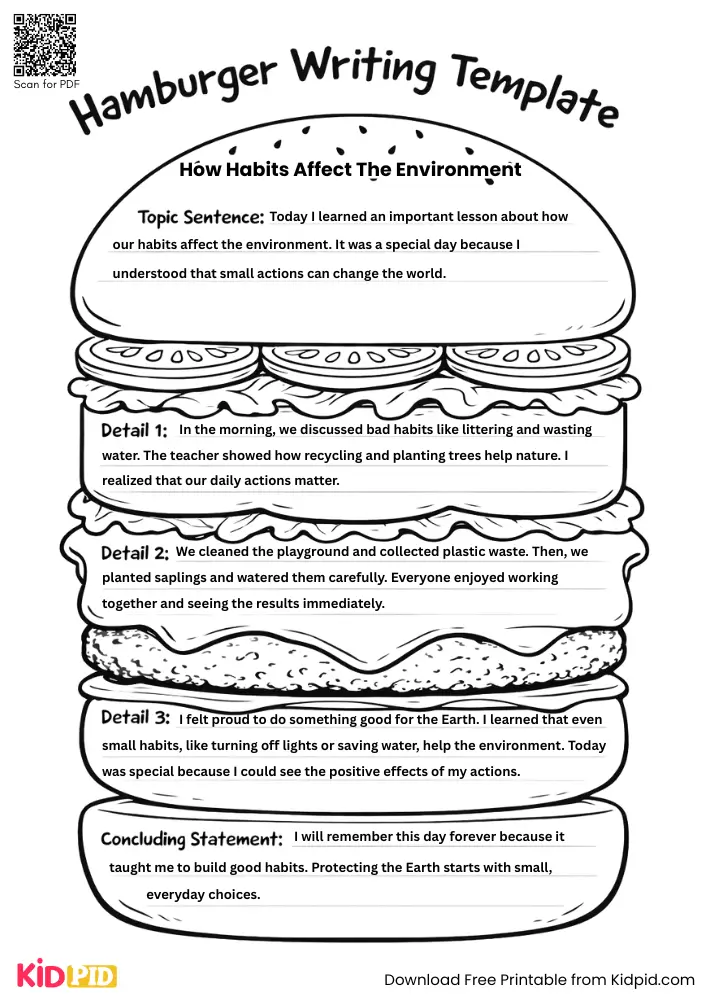
Discusses how daily habits like recycling, saving energy, and reducing waste impact the environment. Promotes sustainable living and environmental awareness.
Role Of Discipline In Environmental Care

Explains how disciplined habits like saving water, reducing waste, and keeping surroundings clean support environmental protection. Encourages responsible behavior, sustainable living, and eco-friendly practices.
How Daily Actions Impact Nature

Explains how everyday actions like waste disposal, energy use, and water conservation affect the environment. Encourages mindful habits and sustainable practices.
Importance Of Reducing Unnecessary Consumption

Discusses how reducing unnecessary consumption helps conserve resources and reduce pollution. Encourages mindful spending, sustainable living, and environmental responsibility.
Respecting Nature In Daily Life

Highlights how respecting nature through eco-friendly habits supports environmental balance. Promotes sustainability, conservation awareness, and responsible living.