“Writing a good paragraph is simple and fun! It starts with a clear topic sentence that tells your main idea. Then, you add a few sentences with examples or facts to explain it. Finally, you finish with a closing sentence. A well-written paragraph is easy to read and understand.”
5 Pointers on ‘How to Write a Good Paragraph’
- A good paragraph starts with a clear topic sentence that tells what the paragraph is about.
- All the sentences in the paragraph should be related to the main idea.
- Simple and clear words should be used so the reader can understand easily.
- The sentences should be in a proper order to make the paragraph smooth.
- A good paragraph ends with a concluding sentence that finishes the idea nicely.
‘How to Write a Good Paragraph’ Paragraph Writing
Hamburger Paragraph on ‘How to Write a Good Paragraph’ (Free Template)

Topic Sentence : Writing a good paragraph is fun and important. It helps your ideas stay clear and easy to read.
Details 1 : First, start with a topic sentence. This tells the reader what your paragraph is about. It is like the top bun of a hamburger.
Details 2 : Next, add supporting sentences. These sentences give examples, facts, or reasons about your main idea. They are like the juicy part of the burger that makes it interesting.
Details 3 : Finally, write a closing sentence. This wraps up your paragraph neatly. It shows the reader that your idea is complete, just like the bottom bun finishing the burger.
Concluding Statement : Remember, a good paragraph has one main idea and all sentences must match it. Follow the burger method, and your writing will always be strong and tasty to read!
Short Paragraph on ‘How to Write a Good Paragraph’ – 50 Words for Grade 4
A good paragraph has one main idea. Start with a topic sentence to tell your idea. Add a few sentences with facts or examples. All sentences should be about your main idea. End with a closing sentence that wraps it up. It’s like an idea sandwich!
Long Paragraph on How to Write a Good Paragraph’ – 100 Words for Grade 5
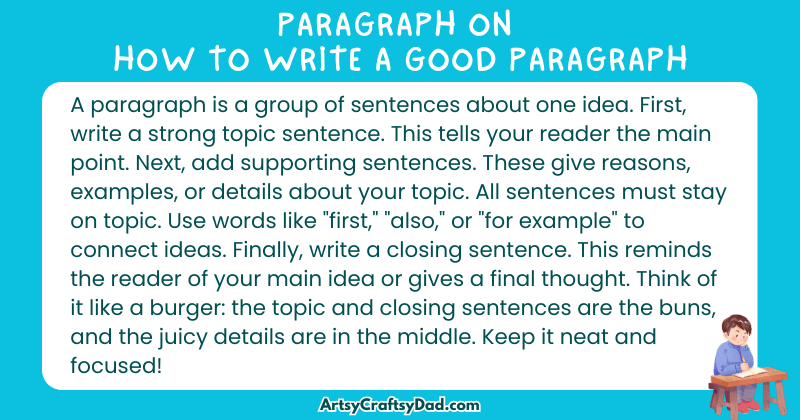
A paragraph is a group of sentences about one idea. First, write a strong topic sentence. This tells your reader the main point. Next, add supporting sentences. These give reasons, examples, or details about your topic. All sentences must stay on topic. Use words like “first,” “also,” or “for example” to connect ideas. Finally, write a closing sentence. This reminds the reader of your main idea or gives a final thought. Think of it like a burger: the topic and closing sentences are the buns, and the juicy details are in the middle. Keep it neat and focused!
‘How to Write a Good Paragraph’ Essay Writing
‘How to Write a Good Paragraph’ – 150 to 200 Words Essay for Grades 6 to 8 Students
Writing a good paragraph is like building a perfect hamburger! The top bun is your topic sentence. It holds everything together and tells everyone the main idea, like “My dog, Sparky, is the best pet.” Next comes the juicy middle—the supporting details. These sentences are the lettuce, tomato, and burger. They give facts and examples: “He has soft, brown fur and a wagging tail. He plays fetch with me every afternoon and makes me laugh.” All these details must be about Sparky being a great pet, not about what you ate for lunch. That’s called staying focused. Use words like “also” and “for example” to connect your ideas smoothly, like ketchup holding things together. Finally, you need the bottom bun—the closing sentence. It wraps everything up neatly: “That’s why Sparky is my favorite friend.” Remember this burger method, and your paragraphs will be delicious to read!
‘How to Write a Good Paragraph’ – 300 Words Essay for Grades 9 to 10 Students
Imagine your paragraph is a cozy, well-organized bedroom. Everything in it belongs there and has a special spot, making the room feel just right. Writing a strong paragraph works the same way! To build this organized “room” for your ideas, you just need to follow a few simple steps.
First, you need a sign on the door that tells everyone what the room is about. This is your topic sentence, the first sentence of your paragraph. It must be clear and strong. For example, “Learning to ride a bike was an adventure I will never forget.” Now your reader knows exactly what to expect inside.
Next, you fill the room with the right furniture—your supporting sentences. These 3 to 5 sentences provide the details, reasons, and examples that explain your topic sentence. You might write, “At first, I wobbled and fell onto the soft grass. My dad held the seat and ran beside me, encouraging me. After many tries, I finally found my balance.” Notice how every piece of “furniture” is about the bike-riding adventure. You wouldn’t suddenly talk about your math homework! This is called staying focused on one main idea.
To make the room flow nicely, you need to arrange the furniture so it’s easy to walk around. Use transition words like “first,” “then,” “however,” and “because” to connect your sentences smoothly. They are like paths between your ideas, helping the reader move from one thought to the next without getting confused.
Finally, you need to turn off the light and close the door neatly. Your closing sentence is the last sentence, and it wraps up the main idea. It might remind the reader of the topic, like, “That feeling of freedom when I rode on my own was incredible.
Related Essay & Paragraph Topic
- Steps to Write a Good Paragraph
- My Guide to Writing a Perfect Paragraph
- Easy Ways to Write a Good Paragraph
- Learning How to Write a Paragraph
- Tips for Writing a Clear and Good Paragraph
You May like this:
Why Balance With Nature Is Necessary

Explains why maintaining balance with nature protects ecosystems and supports sustainable living. Encourages environmental harmony, conservation, and responsible resource use.
Importance Of Mindful Use Of Resources

Mindful use of resources like water, electricity, and paper reduces environmental damage. Resource conservation, sustainable living, and responsible consumption help protect natural resources for future generations.
Importance Of Caring For Surroundings

Caring for surroundings keeps communities clean, healthy, and sustainable. Proper waste management, cleanliness, and environmental awareness help protect ecosystems and create a positive and green environment.
Environment Protection Through Discipline
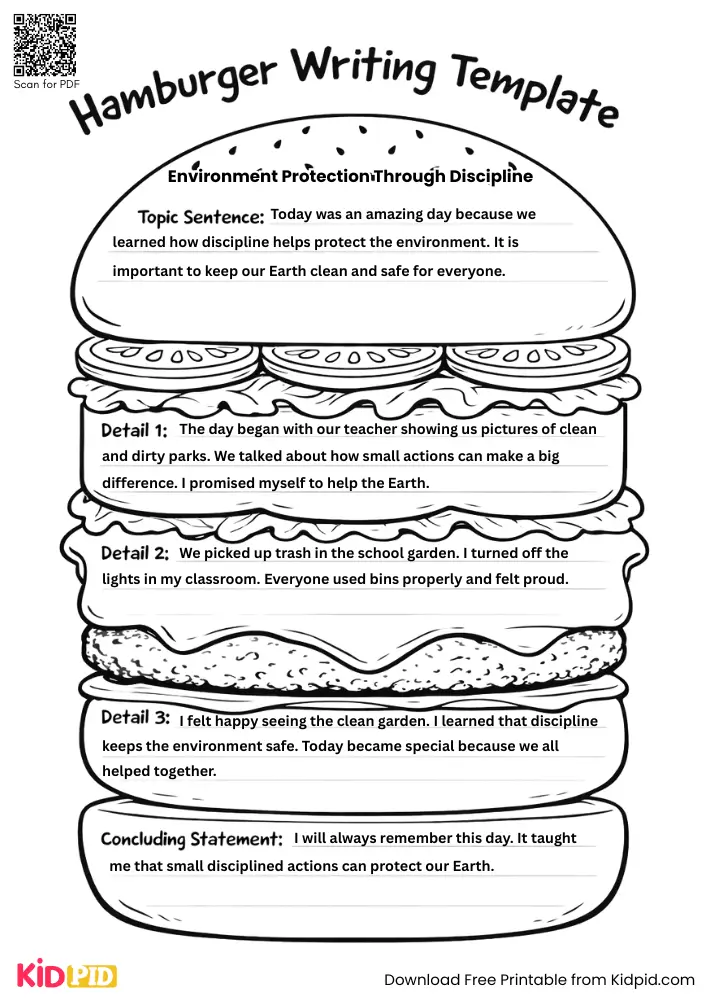
Environmental protection requires discipline such as saving energy, reducing pollution, and maintaining cleanliness. Responsible daily habits help conserve natural resources and support long-term sustainability.
How Cleanliness Supports Nature

Cleanliness supports nature by reducing pollution, protecting wildlife, and maintaining healthy ecosystems. Proper waste disposal, recycling, and sanitation practices contribute to environmental protection and sustainable communities.