“Flexibility is more than bending your body—it’s also about bending your mind! Being flexible helps you adjust to new situations, try different ideas, and stay calm when plans change. It makes learning easier, friendships stronger, and playtime more fun. Practicing flexibility every day keeps you healthy, happy, and ready for anything.”
5 Pointers on “Importance of Flexibility ”
- Flexibility helps us adjust to new situations easily.
- It teaches us to accept change without fear.
- Being flexible helps us solve problems calmly.
- It improves friendships and teamwork.
- Flexibility makes learning and growing easier in life.
‘Importance of Flexibility’ Paragraph Writing
Hamburger Paragraph on ‘Importance of Flexibility’ (Free Template)

Topic Sentence : The day we learned about the importance of flexibility was truly memorable. It was important because it showed how flexibility strengthens both body and mind.
Details 1 : The day began with a warm-up session and a discussion on body movement. Our teacher explained how muscles and joints work together. We realized stretching prepares the body for activity.
Details 2 : We took part in sports and physical exercises. Flexibility helped us perform better and avoid injuries. The activities became more enjoyable and effective.
Details 3 : I felt motivated and confident after learning this lesson. I understood that flexibility also means being adaptable in life. It helps us face changes calmly and wisely.
Concluding Statement : This day will always be remembered because it taught a powerful lesson. Flexibility helps us bend, not break, in both life and health.
Short Paragraph on ‘Importance of Flexibility’ – 50 Words for Grades 2 to 3
Flexibility is super important! It helps your body move easily and stay safe during play. When you are flexible, you can run, jump, and bend without getting hurt. It also helps you feel less stiff and more relaxed. Stretching a little every day keeps your body happy and healthy!
Long Paragraph on ‘Importance of Flexibility’ – 100 Words for Grade 4
Flexibility is very important for everyone, especially kids! It means your muscles and joints can move freely. Being flexible helps you in sports and games, making it easier to run, reach, and twist. It also prevents injuries, so you are less likely to get hurt if you fall. When your body isn’t stiff, you feel more comfortable and full of energy. Simple activities like stretching, dancing, or doing yoga can make you more flexible. Try to stretch a little each day. A flexible body is a strong, healthy, and happy body ready for all kinds of fun adventures!
‘Importance of Flexibility’ Essay Writing
‘Importance of Flexibility’ – 150 to 200 Words Essay for Grades 5 to 7 Students
Imagine your body is like a superhero’s rubber band—strong but able to stretch and bend without snapping! That’s what flexibility does for us. It’s super important because it keeps us safe and happy when we play. When your muscles are flexible, you can run faster in the park, reach higher to catch a ball, and tumble on the grass without getting hurt. It’s like giving your body a superpower to move freely!
But flexibility isn’t just for your body; it’s for your brain, too! Think about when plans change suddenly—like outdoor play getting rained out. If you’re flexible in your mind, you can quickly think, “Okay, let’s build an awesome fort inside instead!” and still have a great time. Being flexible helps you solve problems, try new things, and not get stuck when things are different. So, by stretching our bodies with fun exercises and stretching our minds by embracing change, we become stronger, safer, and ready for any adventure!
‘Importance of Flexibility’ – 300 Words Essay for Grades 8 to 10 Students
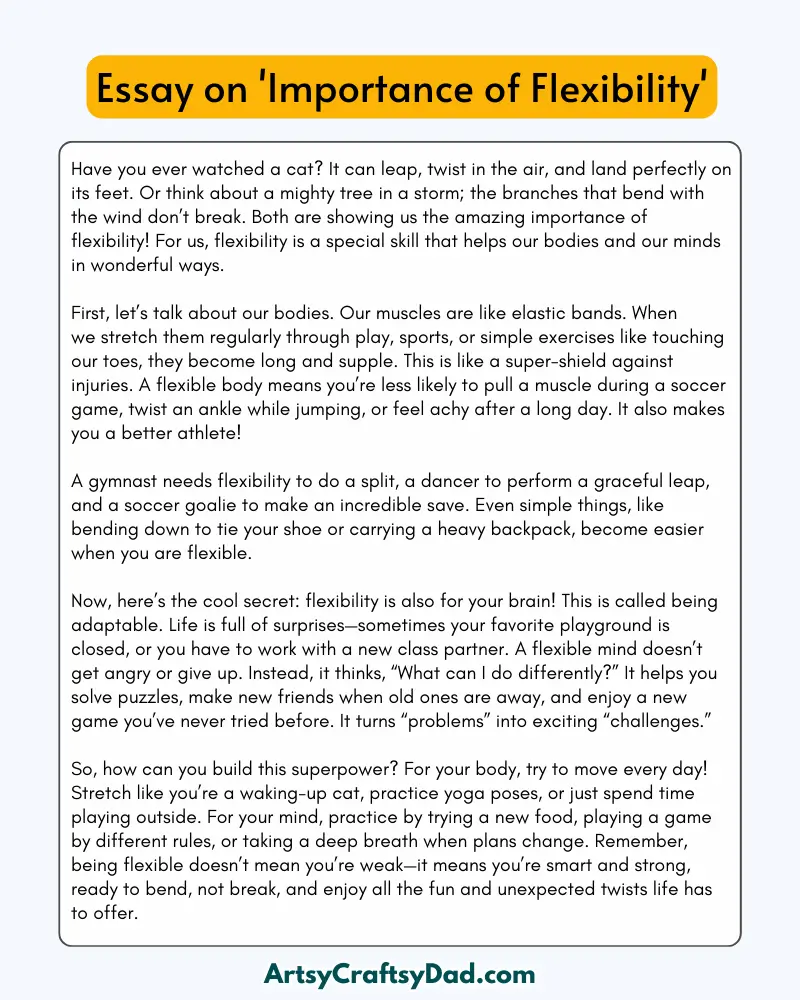
Have you ever watched a cat? It can leap, twist in the air, and land perfectly on its feet. Or think about a mighty tree in a storm; the branches that bend with the wind don’t break. Both are showing us the amazing importance of flexibility! For us, flexibility is a special skill that helps our bodies and our minds in wonderful ways.
First, let’s talk about our bodies. Our muscles are like elastic bands. When we stretch them regularly through play, sports, or simple exercises like touching our toes, they become long and supple. This is like a super-shield against injuries. A flexible body means you’re less likely to pull a muscle during a soccer game, twist an ankle while jumping, or feel achy after a long day. It also makes you a better athlete! A gymnast needs flexibility to do a split, a dancer to perform a graceful leap, and a soccer goalie to make an incredible save. Even simple things, like bending down to tie your shoe or carrying a heavy backpack, become easier when you are flexible.
Now, here’s the cool secret: flexibility is also for your brain! This is called being adaptable. Life is full of surprises—sometimes your favorite playground is closed, or you have to work with a new class partner. A flexible mind doesn’t get angry or give up. Instead, it thinks, “What can I do differently?” It helps you solve puzzles, make new friends when old ones are away, and enjoy a new game you’ve never tried before. It turns “problems” into exciting “challenges.”
So, how can you build this superpower? For your body, try to move every day! Stretch like you’re a waking-up cat, practice yoga poses, or just spend time playing outside. For your mind, practice by trying a new food, playing a game by different rules, or taking a deep breath when plans change. Remember, being flexible doesn’t mean you’re weak—it means you’re smart and strong, ready to bend, not break, and enjoy all the fun and unexpected twists life has to offer
Related Essay & Paragraph Topics
- Why Flexibility Is Important in Our Daily Life
- The Role of Flexibility in Personal Growth
- Flexibility Helps Us Face Challenges
- Importance of Being Flexible in Learning and Education
- How Flexibility Makes Life Easier and Happier
You May like this:
Becoming Better Daily

Daily improvement builds discipline, confidence, and growth. Small consistent efforts enhance skills, habits, and mindset while encouraging lifelong personal development.
Learning Self-Reflection
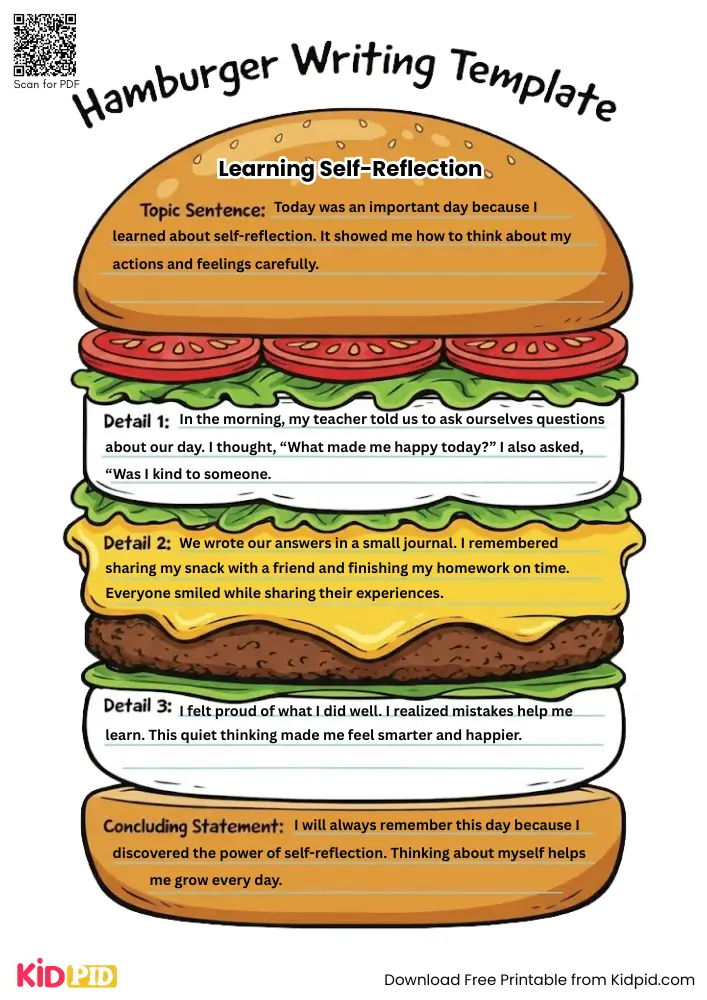
Self-reflection improves awareness, decision-making, and growth. Evaluating actions helps individuals learn from experiences and improve behavior.
Working On Weaknesses

Addressing weaknesses strengthens skills, confidence, and progress. Focused effort transforms limitations into strengths and supports development.
Continuous Self-Growth

Self-growth encourages learning, adaptability, and success. Seeking improvement builds confidence and lifelong development.
Personal Development Journey

Personal growth journeys build resilience, confidence, and purpose. Continuous learning shapes character and success.