Saving food at home is important for children and families. It prevents waste, saves money, and teaches responsibility. Children learn to take only what they can eat, store leftovers properly, and value every meal. Saving food builds good habits, care for others, and respect for the environment.
5 Pointers on ‘Importance of Saving Food at Home’
- Saving food prevents waste and helps the environment.
- It ensures food is available for everyone at home.
- Children learn to appreciate the effort needed to grow food.
- Saving food teaches responsibility and good habits.
- Leftover food can be reused safely for later meals.
‘Importance of Saving Food at Home’ Paragraph Writing
Hamburger Paragraph on ‘Importance of Saving Food at Home’ (Free Template)
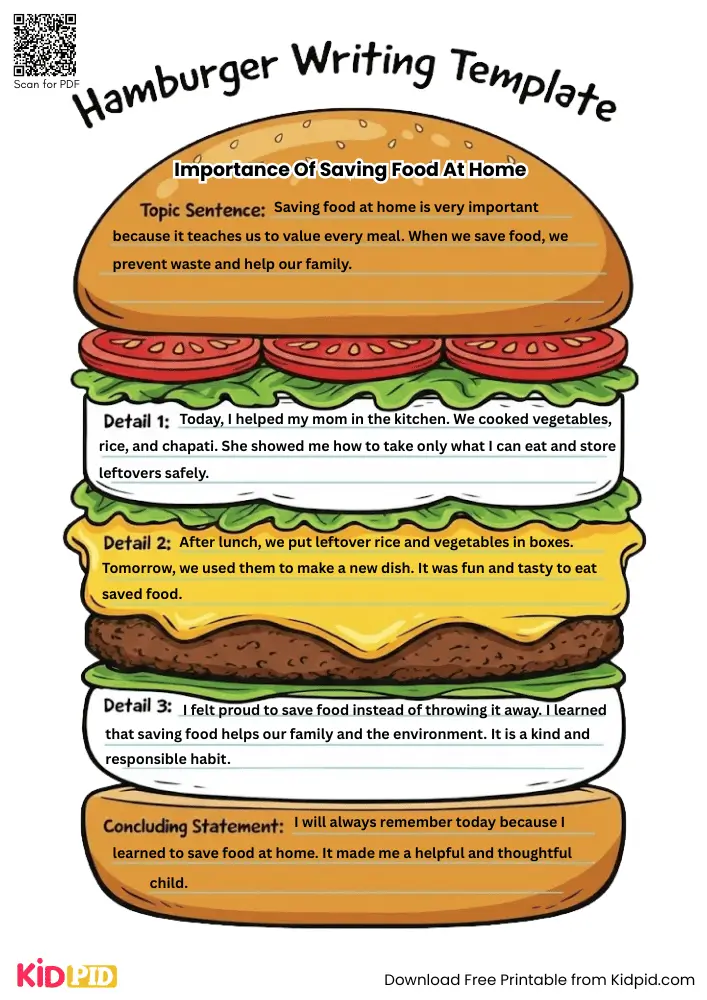
Topic Sentence: Saving food at home is very important because it teaches us to value every meal. When we save food, we prevent waste and help our family.
Details 1: Today, I helped my mom in the kitchen. We cooked vegetables, rice, and chapati. She showed me how to take only what I can eat and store leftovers safely.
Details 2: After lunch, we put leftover rice and vegetables in boxes. Tomorrow, we used them to make a new dish. It was fun and tasty to eat saved food.
Details 3: I felt proud to save food instead of throwing it away. I learned that saving food helps our family and the environment. It is a kind and responsible habit.
Concluding Statement: I will always remember today because I learned to save food at home. It made me a helpful and thoughtful child.
Short Paragraph on ‘Importance of Saving Food at Home’ – 50 Words for Grades 2 to 3
Saving food at home is important to prevent waste. Children learn to take only what they can eat, store leftovers safely, and appreciate food. It teaches responsibility, care for others, and respect for the environment. Saving food helps children develop good habits and thoughtful behavior.
Long Paragraph on ‘Importance of Saving Food at Home’ – 100 Words for Grade 4
The importance of saving food at home is that it prevents waste and teaches children to value every meal. Children learn to take only what they can eat, store leftovers properly, and share extra food. Saving food builds responsibility, patience, and care for others. It also helps families save money and resources. Parents can guide children by showing them how to reuse leftovers creatively and safely. Learning to save food teaches children respect for the effort behind every meal and develops good habits that prepare them to be responsible and caring adults.
‘Importance of Saving Food at Home’ Essay Writing
‘Importance of Saving Food at Home’—150 to 200 Words Essay for Grades 5 to 6 Students
Saving food at home is a super-important habit that shows respect for our world and for each other. When we waste food, we’re not just throwing away an apple or a slice of bread. We’re wasting all the water, energy, and hard work that went into growing it, transporting it, and cooking it. It also wastes the money your family spent on it. Furthermore, when food ends up in the trash, it rots in landfills and releases harmful gases that hurt our planet.
By saving food, we do the opposite: we show gratitude. We can help by taking only what we know we can eat, storing leftovers properly for the next day, and getting creative with recipes to use up what we have. It’s also a way of thinking about people who are hungry and don’t have enough. Every bit of food we save is a small act of kindness toward our family’s budget, our community, and the Earth. It’s a simple way to be a hero every single day.
‘Importance of Saving Food at Home’ – 300 Words Essay for Grades 7 to 8 Students
Saving food at home might seem like a small thing, but it is one of the most powerful and responsible habits we can develop. It connects to bigger ideas about respect, resourcefulness, and caring for our world. Every piece of food on our plate has an incredible journey behind it—planted by a farmer, watered by rain, harvested by workers, transported by trucks, and prepared by someone’s care. When we toss it away without a thought, we disregard that entire journey and the precious resources it used, like water, soil, and fuel.
There are very practical reasons to save food, too. For our families, it means saving money. Throwing out spoiled groceries or unfinished meals is like throwing cash straight into the trash. By planning meals, making smart shopping lists, and storing food correctly, we make our family budget stretch further. But the importance goes beyond our own kitchen. Wasted food is a major contributor to climate change. In landfills, it decomposes without air and produces methane, a potent greenhouse gas that traps heat in our atmosphere. By reducing waste, we directly help the environment.
Most importantly, saving food teaches us mindfulness and empathy. While we might have a full fridge, millions of people around the world struggle with hunger. Being careful with what we have is a way of honoring that good fortune and showing solidarity with those who have less. It turns mealtime into an act of responsibility. Simple steps like serving smaller portions, loving leftovers, and composting scraps can make a huge collective difference. When we save food, we aren’t just cleaning our plates; we are making a choice to be respectful stewards of our home, our community, and our planet.
Related Essay & Paragraph Topics
- Importance of Saving Food at Home
- How Saving Food Helps Families and the Environment
- Learning to Value Every Meal
- Good Habits: Saving Food at Home
- Why Children Should Save Food
You May like this:
Improving Oneself

Self-improvement enhances skills, mindset, and opportunities. Regular learning and discipline support progress.
Learning Self-Awareness

Self-awareness improves emotional control, relationships, and decisions. Understanding strengths and weaknesses supports balanced growth.
Building Better Habits

Positive habits improve productivity, discipline, and health. Consistent routines support long-term success and stability.
Accepting Self-Improvement
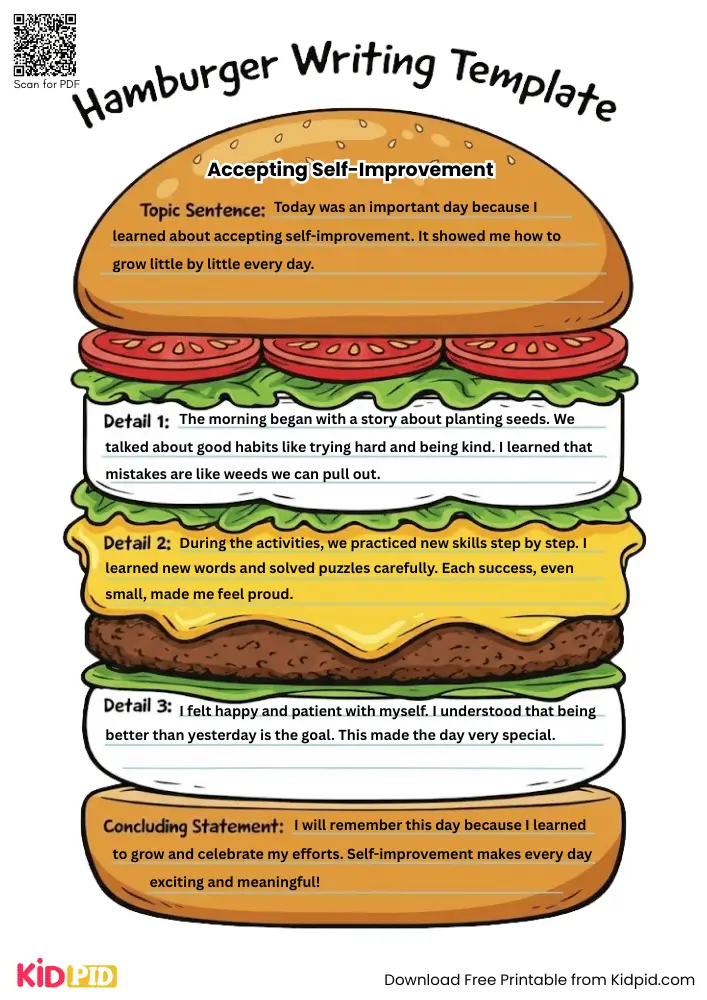
Welcoming improvement builds maturity, adaptability, and confidence. Openness to change encourages learning, resilience, and personal growth.
Improving Personal Habits

Better habits improve productivity, health, and success. Replacing negative routines with positive actions builds discipline and long-term achievement.