Public places belong to everyone, so keeping them clean is everyone’s responsibility. Clean parks, roads, and buildings help prevent illness and make communities pleasant. Teaching children simple cleanliness habits encourages care for shared spaces and helps build a healthier, more beautiful environment for all.
5 Pointers on ‘Keeping Public Places Clean’
- Clean public places keep people healthy and safe.
- Throwing waste in dustbins helps stop diseases.
- Clean surroundings make cities look beautiful.
- Everyone should protect parks, roads, and playgrounds.
- Clean habits show good manners and responsibility.
‘Keeping Public Places Clean’ Paragraph Writing
Hamburger Paragraph on ‘Keeping Public Places Clean’ (Free Template)

Topic Sentence: Today was an exciting day because we learned the importance of keeping public places clean. Public places are shared by many people, so cleanliness matters a lot.
Detail 1: We began our day at the school playground. The teacher showed us some trash lying on the ground. We learned how litter can make the place dirty and unsafe.
Detail 2: We collected wrappers, bottles, and plastic and put them in dustbins. It was enjoyable working together as a team. The playground looked clean and beautiful after our effort.
Detail 3: I felt happy and proud to help the environment. I realized everyone has a duty to keep public areas clean. This made the day very special.
Concluding Statement: I will always remember this day because I helped make my playground clean. Clean public places make everyone happy and safe.
Short Paragraph on ‘Keeping Public Places Clean’ – 50 Words for Grades 3 to 4
Keeping public places clean is very important. Clean parks, roads, and schools keep us healthy. We should always use dustbins and never litter. Good cleanliness habits make our surroundings neat and safe for everyone to enjoy.
Long Paragraph on ‘Keeping Public Places Clean’ – 100 Words for Grade 5

Public places are shared by many people, so they must be kept clean. Dirty surroundings can spread diseases and cause problems. We should throw waste in dustbins and avoid using plastic. Keeping parks, roads, and buses clean makes our city beautiful. Clean public places help people feel happy and safe. Everyone has a responsibility to protect public property. When we follow good cleanliness habits, we help create a healthy environment for ourselves and others. Clean places show care, discipline, and respect for our community.
‘Keeping Public Places Clean’ Essay Writing
‘Keeping Public Places Clean’—150 to 200 Words Essay for Grades 6 to 7 Students
Public places like parks, playgrounds, libraries, and sidewalks are gifts we all share. Keeping them clean is a simple but important duty for every responsible citizen. Think of your favorite park. It’s fun to play there when the grass is green and the paths are clear. But if everyone threw their wrappers and bottles on the ground, it would soon become dirty, smelly, and unsafe. No one would want to play there anymore.
Keeping public places clean is easy. Always use a dustbin. If you can’t find one, hold onto your trash until you do. Never throw anything out of a car or bus window. You can even go a step further by joining a community cleanup day or simply picking up one piece of litter you see.
When we keep our shared spaces clean, we show respect for our neighbors, protect our environment, and make our town more beautiful for everyone. It’s a small habit that makes a very big difference.
‘Keeping Public Places Clean’ – 300 Words Essay for Grades 8 to 10 Students
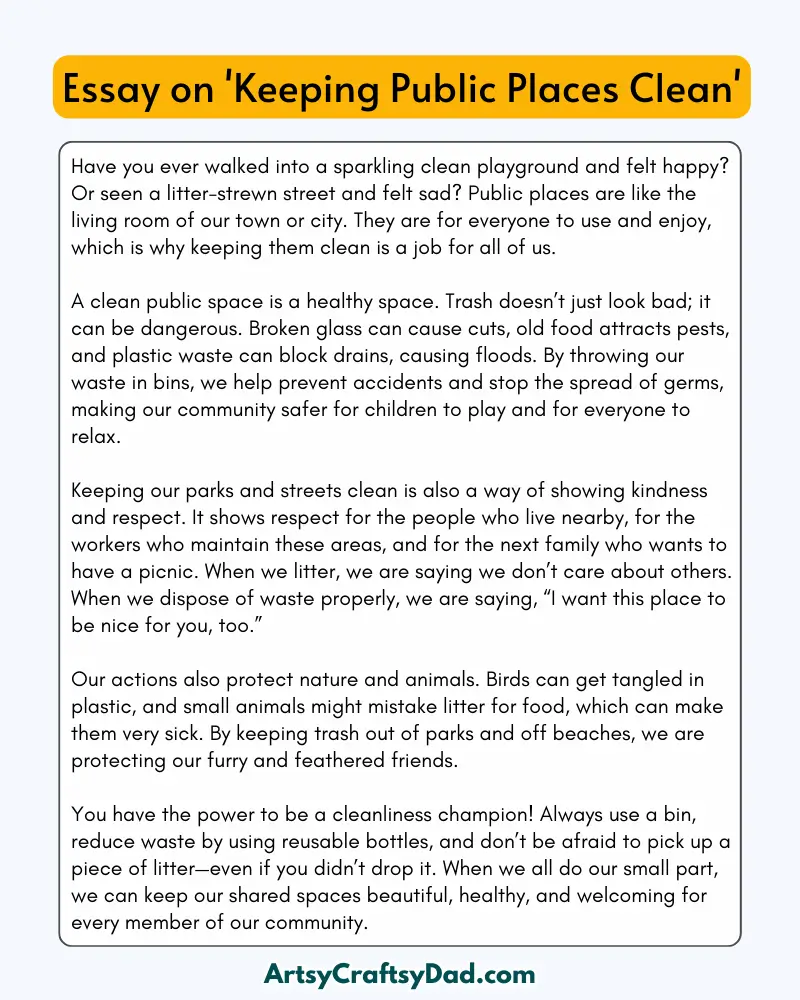
Have you ever walked into a sparkling clean playground and felt happy? Or seen a litter-strewn street and felt sad? Public places are like the living room of our town or city. They are for everyone to use and enjoy, which is why keeping them clean is a job for all of us.
A clean public space is a healthy space. Trash doesn’t just look bad; it can be dangerous. Broken glass can cause cuts, old food attracts pests, and plastic waste can block drains, causing floods. By throwing our waste in bins, we help prevent accidents and stop the spread of germs, making our community safer for children to play and for everyone to relax.
Keeping our parks and streets clean is also a way of showing kindness and respect. It shows respect for the people who live nearby, for the workers who maintain these areas, and for the next family who wants to have a picnic. When we litter, we are saying we don’t care about others. When we dispose of waste properly, we are saying, “I want this place to be nice for you, too.”
Our actions also protect nature and animals. Birds can get tangled in plastic, and small animals might mistake litter for food, which can make them very sick. By keeping trash out of parks and off beaches, we are protecting our furry and feathered friends.
You have the power to be a cleanliness champion! Always use a bin, reduce waste by using reusable bottles, and don’t be afraid to pick up a piece of litter—even if you didn’t drop it. When we all do our small part, we can keep our shared spaces beautiful, healthy, and welcoming for every member of our community.
Related Essay & Paragraph Topics
- Importance of Clean Public Places
- Our Duty to Keep Public Areas Clean
- Clean Surroundings, Healthy Life
- Why Cleanliness Matters in Public Places
- Role of Citizens in Public Cleanliness
You May like this:
Avoiding Wastefulness
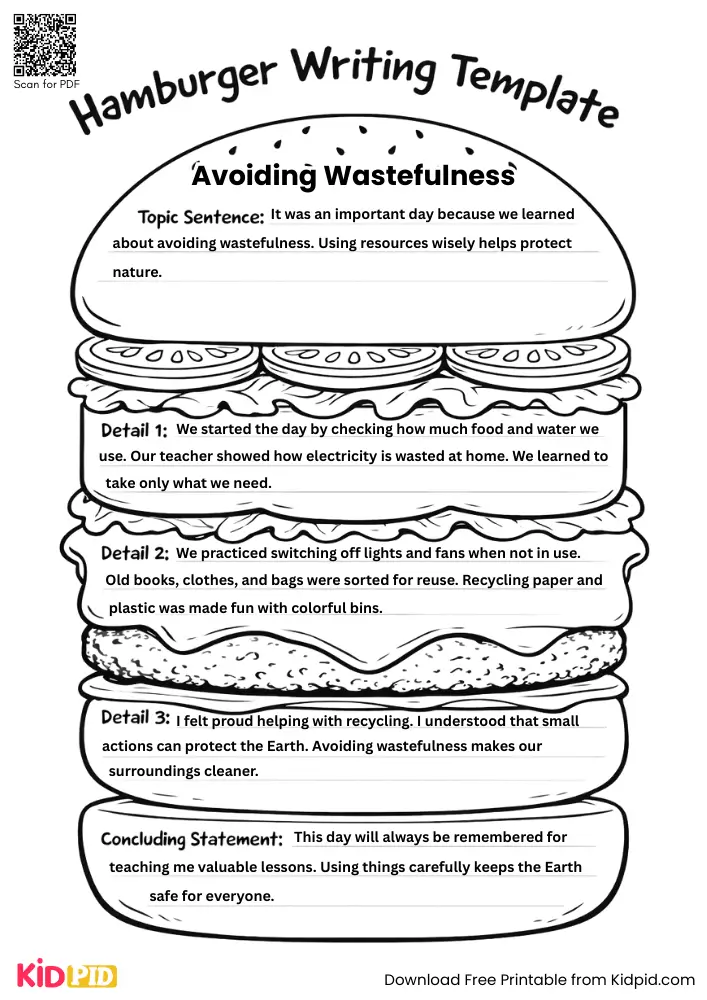
Avoiding waste saves resources, money, and energy. Responsible consumption encourages sustainability, efficiency, and mindful living while protecting the environment.
Living Eco-Friendly

Eco-friendly living supports sustainability, reduced pollution, and conservation. Using reusable items, saving energy, and reducing waste help protect the planet and promote responsible lifestyles.
Keeping Nature Clean
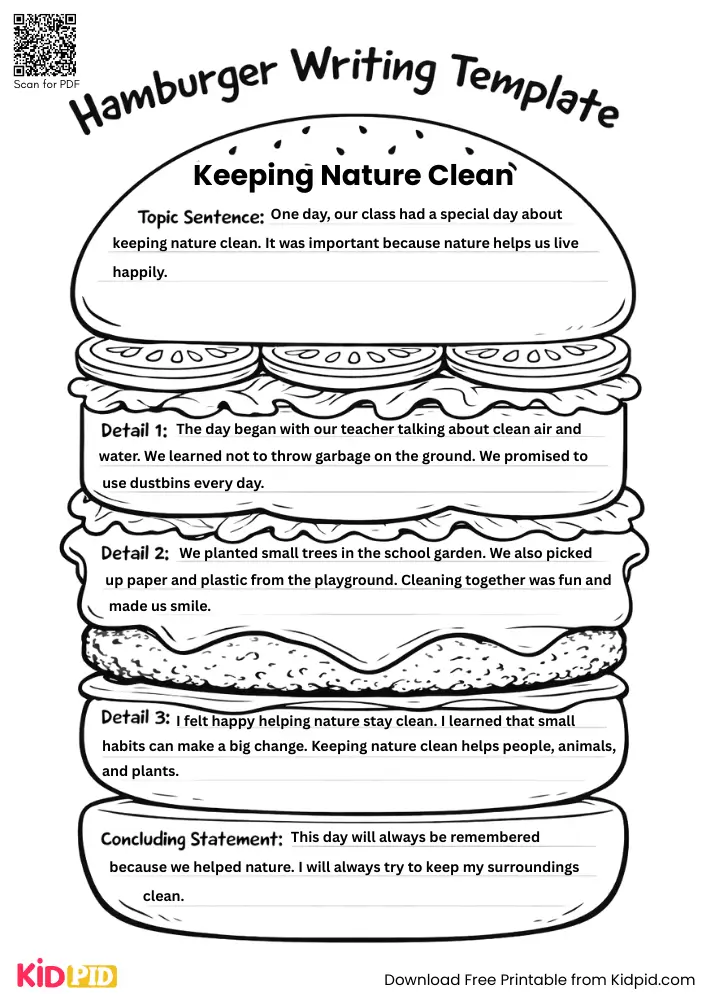
Clean environments protect health, biodiversity, and beauty. Avoiding litter, managing waste, and promoting cleanliness preserve ecosystems while encouraging environmental responsibility and sustainable living habits.
Acting Responsibly

Responsible actions build reliability, maturity, and trust. Fulfilling duties, making thoughtful decisions, and considering consequences strengthen character, relationships, and social stability while promoting ethical living and accountability.
Standing By Values

Staying true to values builds character, confidence, and trust. Strong principles guide decisions, encourage integrity, and support meaningful life choices.