The internet offers learning, fun, and connection for children. But using it without limits can cause problems. This essay explains why learning self-control online is important and how children can build safe, healthy, and smart habits while using the digital world responsibly.
5 Pointers on ‘Learning Self-Control Online’
- Self-control online helps us use the internet wisely.
- It teaches us when to stop using screens.
- Good self-control keeps us safe on the internet.
- Thinking before clicking is an important habit.
- Self-control online helps us balance study, play, and rest.
‘Learning Self-Control Online’ Paragraph Writing
Hamburger Paragraph on ‘Learning Self-Control Online’ (Free Template)

Topic Sentence: Today was an unforgettable day about learning self-control online. It showed us how to enjoy the internet safely and wisely.
Detail 1: The day began with our teacher explaining that the internet is like a giant city full of games, videos, and websites. She told us self-control is our “pause button” to make good choices.
Detail 2: We tried fun activities to practice using our pause button. Everyone paused before clicking links or playing games for too long. It was exciting to see how making small choices could change our day.
Detail 3: I felt proud when I stopped playing a game on time. I learned self-control helps me study, play, and rest in balance. This day made me realize that I can be the boss of my online time.
Concluding Statement: I will always remember this day because it taught me a skill I can use every day. Learning self-control online will help me grow smarter and kinder.
Short Paragraph on ‘Learning Self-Control Online’- 50 Words for Grade 3
Learning self-control online is important for children. It helps them use the internet wisely and safely. With self-control, children know when to stop using screens. This gives time for play, rest, and family. Self-control keeps children healthy and happy.
Long Paragraph on ‘Learning Self-Control Online’- 100 Words for Grade 4
The internet is useful for learning and fun, but children must learn self-control online. Self-control means using the internet for a limited time and for good purposes. Too much online time can affect eyes and sleep. Learning self-control helps children stay safe and avoid unknown links or strangers. It also teaches children to be polite online. With guidance from parents and teachers, children can balance online activities with play, study, and rest.
‘Learning Self-Control Online’ Essay Writing
‘Learning Self-Control Online’- 150 to 200 Words Essay for Grades 5 to 6 Students
The internet is like a giant, exciting city with endless things to see and do. Learning self-control online is your personal map and compass to navigate it safely and happily. It means you are in the driver’s seat, not the videos, games, or comments. One big part of self-control is the “pause button” in your brain. Before you post a comment, share a picture, or even click on a flashy link, you hit pause. You ask yourself, “Could this hurt someone’s feelings? Is this a good use of my time? Is this information real?” That tiny pause gives you the power to make a good choice.
Self-control also means being the boss of your time and attention. It’s about saying, “I’ve played this game for 30 minutes; now I’m going outside,” even when it’s tempting to play “just one more level.” It’s about choosing to watch a documentary about space instead of watching silly videos for an hour. When you learn to control your clicks, your time, and your words online, you build a stronger, smarter, and kinder you—both on the screen and off.
‘Learning Self-Control Online’ – 300 Words Essay for Grades 7 to 10 Students
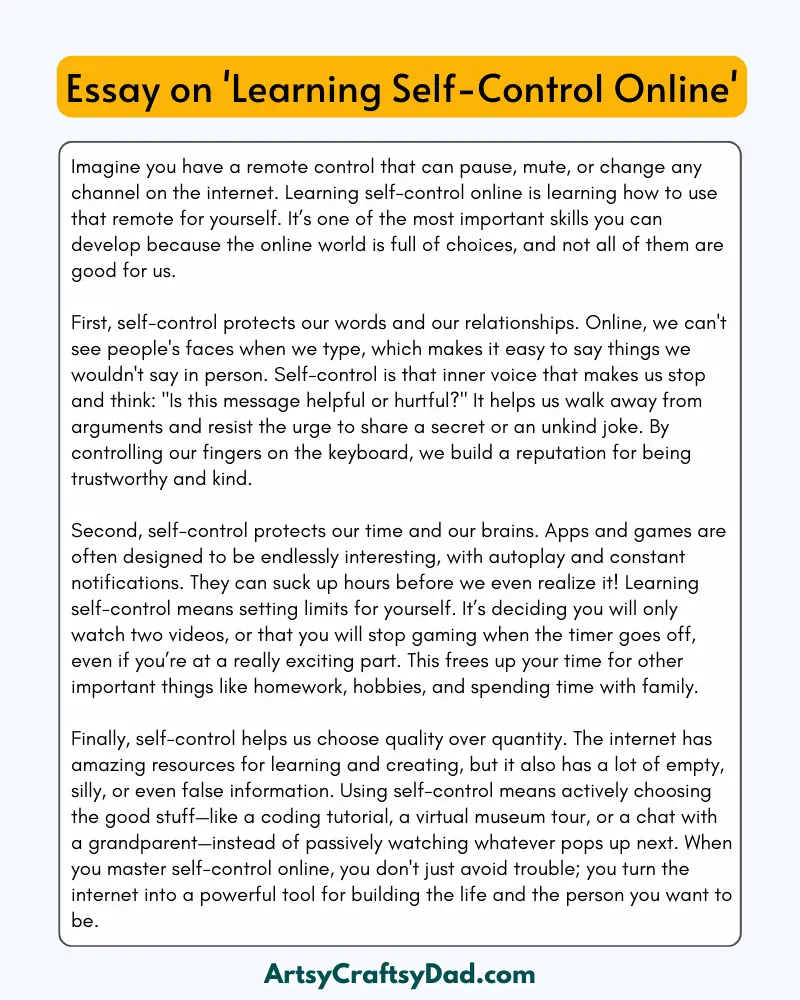
Imagine you have a remote control that can pause, mute, or change any channel on the internet. Learning self-control online is learning how to use that remote for yourself. It’s one of the most important skills you can develop because the online world is full of choices, and not all of them are good for us.
First, self-control protects our words and our relationships. Online, we can’t see people’s faces when we type, which makes it easy to say things we wouldn’t say in person. Self-control is that inner voice that makes us stop and think: “Is this message helpful or hurtful?” It helps us walk away from arguments and resist the urge to share a secret or an unkind joke. By controlling our fingers on the keyboard, we build a reputation for being trustworthy and kind.
Second, self-control protects our time and our brains. Apps and games are often designed to be endlessly interesting, with autoplay and constant notifications. They can suck up hours before we even realize it! Learning self-control means setting limits for yourself. It’s deciding you will only watch two videos, or that you will stop gaming when the timer goes off, even if you’re at a really exciting part. This frees up your time for other important things like homework, hobbies, and spending time with family.
Finally, self-control helps us choose quality over quantity. The internet has amazing resources for learning and creating, but it also has a lot of empty, silly, or even false information. Using self-control means actively choosing the good stuff—like a coding tutorial, a virtual museum tour, or a chat with a grandparent—instead of passively watching whatever pops up next. When you master self-control online, you don’t just avoid trouble; you turn the internet into a powerful tool for building the life and the person you want to be.
Related Essay & Paragraph Topics
- Smart Internet Habits for Children
- Learning to Use the Internet Wisely
- Self-Control in the Digital World
- Staying Safe and Balanced Online
- Good Online Behavior for Kids
You May like this:
Keeping Surroundings Tidy

Keeping surroundings tidy improves hygiene, organization, mental clarity, environmental cleanliness, and responsible living.
Standing In Line Patiently

Standing in line patiently shows discipline, respect, self-control, social responsibility, and emotional intelligence.
Becoming A Better Version Of Myself

Becoming better involves self-improvement, discipline, continuous learning, positive habits, resilience, and meaningful personal development.
Growing Through Challenges
Growing through challenges builds resilience, emotional strength, confidence, perseverance, adaptability, and success.
Importance Of Continuous Improvement

Continuous improvement enhances productivity, skills, innovation, adaptability, efficiency, and long-term success.