“Practicing patience daily helps children stay calm and think clearly. It teaches them to wait without getting upset and handle challenges wisely. Being patient improves friendships, self-control, and kindness. When children learn to pause, breathe, and stay calm, they grow into thoughtful, happy, and confident individuals ready for life’s small and big moments.”
5 Pointers on ‘Practicing Patience Daily’
- Patience helps children stay calm and peaceful.
- It teaches children to wait without getting angry.
- Practicing patience improves self-control.
- Patience helps children make better decisions.
- Being patient helps build good behavior and friendships.
‘Practicing Patience Daily’ Paragraph Writing
Hamburger Paragraph on ‘Practicing Patience Daily’ (Free Template)
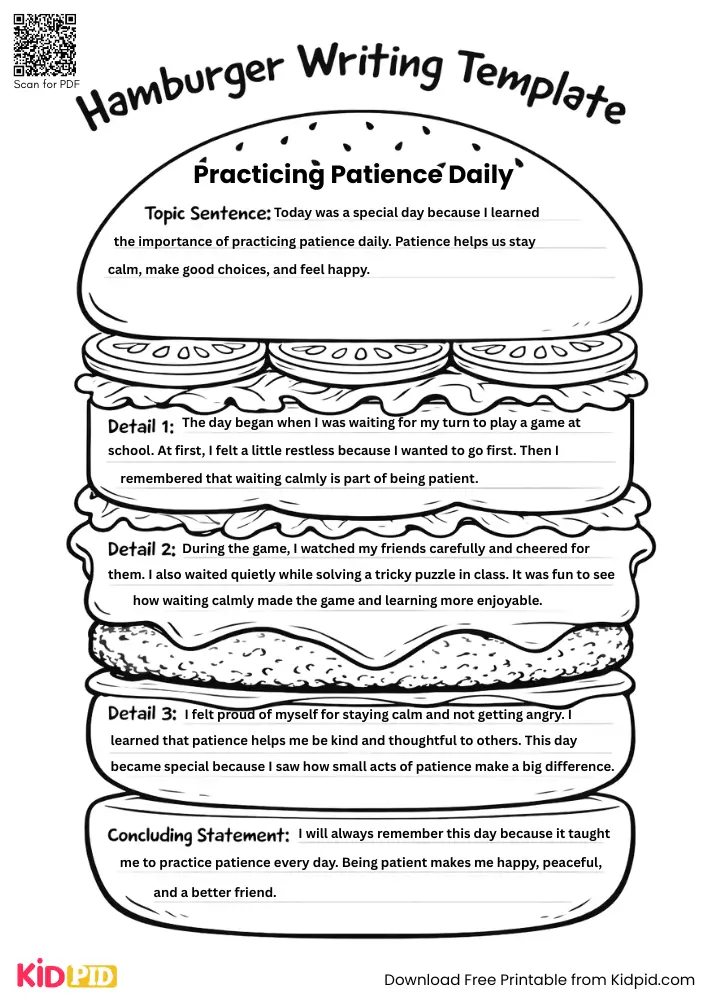
Topic Sentence : Today was a special day because I learned the importance of practicing patience daily. Patience helps us stay calm, make good choices, and feel happy.
Details 1 : The day began when I was waiting for my turn to play a game at school. At first, I felt a little restless because I wanted to go first. Then I remembered that waiting calmly is part of being patient.
Details 2 : During the game, I watched my friends carefully and cheered for them. I also waited quietly while solving a tricky puzzle in class. It was fun to see how waiting calmly made the game and learning more enjoyable.
Details 3 : I felt proud of myself for staying calm and not getting angry. I learned that patience helps me be kind and thoughtful to others. This day became special because I saw how small acts of patience make a big difference.
Concluding Statement : I will always remember this day because it taught me to practice patience every day. Being patient makes me happy, peaceful, and a better friend.
Short Paragraph on ‘Practicing Patience Daily’ – 50 Words for Grades 2 to 3
Practicing patience daily helps children stay calm. It teaches them to wait without getting angry. Patience helps children make good choices. It builds kindness and self-control. Patient children feel happy and peaceful.
Long Paragraph on ‘Practicing Patience Daily’ – 100 Words for Grades 4 to 5

Practicing patience daily means learning to wait and stay calm in every situation. Sometimes we feel angry or frustrated when things take time, but patience helps us control our feelings. We can practice patience while waiting in line, doing homework, or learning new skills. Being patient also helps us listen to others and understand them better. Children who practice patience are more thoughtful and kind. It teaches us not to rush or argue and to enjoy small moments in life. Daily patience makes our hearts calm and our minds strong, helping us grow into good and wise people.
‘Practicing Patience Daily’ Essay Writing
‘Practicing Patience Daily’ – 150 to 200 Words Essay for Grades 6 to 8 Students
Practicing patience daily is like training a muscle in your heart and mind. It’s the skill of staying calm and positive even when you really want something now. We use it every single day, from waiting in line for the slide to listening as a friend tells a long story.
Why is daily practice so important? Because patience makes tough moments easier. When you’re working on a tricky puzzle, patience whispers, “Keep trying,” instead of letting you knock the pieces over in frustration. It helps you be a kinder friend because you learn to wait your turn and give people time to explain their ideas. Building patience also helps you achieve amazing things. A beautiful garden starts with a patient little seed. Learning to read or ride a bike takes patient practice. Each day you choose to take a deep breath and wait calmly, you make your patience muscle stronger, turning you into a more peaceful and determined person.
‘Practicing Patience Daily’ – 300 Words Essay for Grades 9 to 10 Students

Patience is the ability to wait calmly without getting upset. Practicing patience daily is very important for everyone, especially children. Life is full of small and big challenges. Sometimes we have to wait for our turn, finish our homework, or learn new skills. If we rush or get angry, things become difficult. Daily practice of patience helps us stay calm, think clearly, and make better decisions.
Children can practice patience in many ways. For example, while waiting in line at school or a shop, they can stay calm and not complain. When learning a new subject or skill, patience helps them try again and again without giving up. It teaches them that good things take time. Practicing patience also helps us control anger and frustration. We learn to think before acting and speak politely to others.
Patience makes our relationships strong. When we listen carefully and wait for others to speak, they feel respected and loved. It helps us share, cooperate, and help friends and family. Children who practice patience are kinder, more understanding, and more confident in handling problems.
Daily patience also helps our mind and body. Calm thinking reduces stress, and waiting without anger makes us happier. It teaches us to enjoy every small moment in life instead of rushing. Over time, patience becomes a habit, and we handle challenges with ease and grace.
In conclusion, practicing patience daily is a key to success and happiness. It makes us kind, thoughtful, and wise. With patience, we learn, grow, and build strong relationships. A patient child becomes a strong, happy, and caring person, ready to face life with courage and calmness.
Related Essay & Paragraph Topics
- Learning to Be Patient Every Day
- Why Patience Is Important for Children
- The Power of Patience in Life
- Practicing Patience at School and Home
- Patience Builds Strong Character
You May like this:
Importance Of Queue Discipline

This essay explains why queue discipline promotes fairness, order, and respect in public places. Encourages patience, good manners, civic responsibility, and organized behavior in daily life.
Learning To Apologize Sincerely

This essay explains how sincere apologies help repair relationships and build trust. Encourages honesty, humility, emotional maturity, and taking responsibility for mistakes in daily life.
Respecting Rules Even When Alone

This essay highlights the importance of following rules even when no one is watching. Encourages integrity, self-discipline, honesty, moral values, and responsible behavior in everyday life.
Importance Of Honesty In Small Acts

This essay highlights how honesty in small daily actions builds trust and strong character. Encourages truthfulness, integrity, ethical behavior, and positive values for responsible living.
Responsibility Of Using Freedom

This essay explains that freedom comes with responsibility. Encourages respecting rules, making wise decisions, and using personal freedom in a way that benefits society and promotes discipline.