“Learning mindfulness helps children notice what is happening right now. It teaches them to focus, stay calm, and handle feelings gently. Mindfulness makes learning easier, improves concentration, and brings peace. By practicing a few minutes each day, children grow more patient, confident, and aware of the small joys in life.”
5 Pointers on ‘Learning Mindfulness’
- Mindfulness helps children stay calm and focused.
- It teaches children to pay attention to the present moment.
- Mindfulness improves thinking and learning.
- It helps children control emotions.
- Practicing mindfulness builds inner peace and confidence.
‘Learning Mindfulness’ Paragraph Writing
Hamburger Paragraph on ‘Learning Mindfulness’ (Free Template)

Topic Sentence : Today was a very special day because we learned about mindfulness. Learning mindfulness is important because it helps us stay calm and focus on the present moment.
Details 1 : The day began with our teacher asking us to sit quietly and close our eyes. We started by taking deep breaths and noticing how our bodies felt. At first, it was a little hard to stay still, but we tried our best.
Details 2 : Then, we listened carefully to the sounds around us, like birds chirping and leaves rustling. We also practiced noticing our thoughts without judging them. It was fun to pay attention to small things that we usually miss.
Details 3 : I felt peaceful and relaxed after the exercises. I learned that mindfulness helps me control my feelings and stay patient. This day became special because I discovered a way to feel calm anytime I want.
Concluding Statement : I will always remember this day because it taught me a useful skill for life. Learning mindfulness makes every day feel happier and more peaceful.
Short Paragraph on ‘Learning Mindfulness’ – 50 Words for Grade 4
Learning mindfulness helps children stay calm. It teaches them to focus on the present. Mindfulness helps control emotions. Children feel peaceful and relaxed. It helps them learn better and behave kindly.
Long Paragraph on ‘Learning Mindfulness’ – 100 Words for Grade 5
Learning mindfulness means being aware of what is happening right now. We pay attention to our breathing, our feelings, and the world around us. Mindfulness helps children stay calm when they feel upset or worried. It teaches us to focus on one thing at a time, like drawing, reading, or playing. When we practice mindfulness, we enjoy small moments, like the sound of birds or the taste of food. It also helps us control our thoughts and emotions. Mindful children are patient, kind, and happy. Daily mindfulness makes our minds clear and our hearts peaceful.
‘Learning Mindfulness’ Essay Writing
‘Learning Mindfulness’ – 150 to 200 Words Essay for Grades 6 to 8 Students
Learning mindfulness is like becoming a friendly scientist of your own mind. It’s the practice of paying full attention to what is happening right here, right now. This means noticing your thoughts, feelings, and the world around you without judging them as good or bad.
Why is this a helpful skill? First, it is a powerful tool for calming big emotions. When you feel angry or nervous, you can pause and take three deep breaths, feeling the air go in and out. This simple act helps press a “pause” button in your brain. Second, mindfulness makes everyday life more wonderful. It helps you truly taste the sweetness of a strawberry, hear all the different birds singing, or feel the softness of your pet’s fur. You start to notice beautiful details you used to miss. By practicing for just a few minutes each day—maybe by listening to a bell ring until the sound fades—you train your brain to be more focused, calm, and happy.
‘Learning Mindfulness’ – 300 Words Essay for Grades 9 to 10 Students
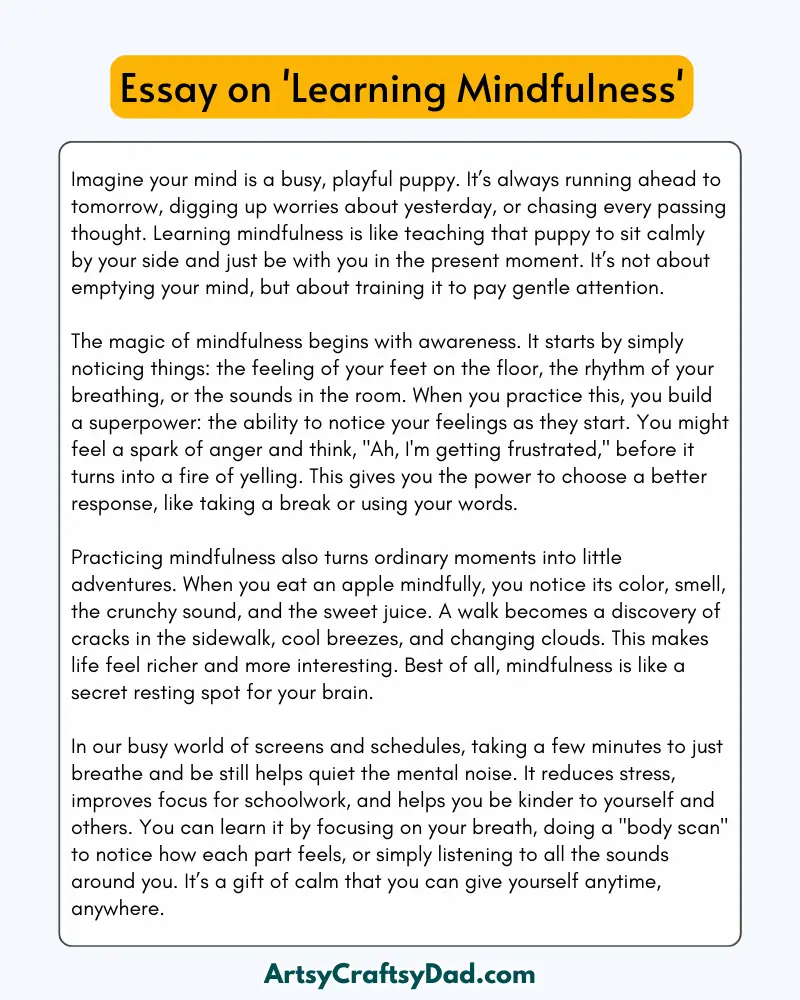
Imagine your mind is a busy, playful puppy. It’s always running ahead to tomorrow, digging up worries about yesterday, or chasing every passing thought. Learning mindfulness is like teaching that puppy to sit calmly by your side and just be with you in the present moment. It’s not about emptying your mind, but about training it to pay gentle attention.
The magic of mindfulness begins with awareness. It starts by simply noticing things: the feeling of your feet on the floor, the rhythm of your breathing, or the sounds in the room. When you practice this, you build a superpower: the ability to notice your feelings as they start. You might feel a spark of anger and think, “Ah, I’m getting frustrated,” before it turns into a fire of yelling. This gives you the power to choose a better response, like taking a break or using your words.
Practicing mindfulness also turns ordinary moments into little adventures. When you eat an apple mindfully, you notice its color, smell, the crunchy sound, and the sweet juice. A walk becomes a discovery of cracks in the sidewalk, cool breezes, and changing clouds. This makes life feel richer and more interesting. Best of all, mindfulness is like a secret resting spot for your brain. In our busy world of screens and schedules, taking a few minutes to just breathe and be still helps quiet the mental noise. It reduces stress, improves focus for schoolwork, and helps you be kinder to yourself and others. You can learn it by focusing on your breath, doing a “body scan” to notice how each part feels, or simply listening to all the sounds around you. It’s a gift of calm that you can give yourself anytime, anywhere.
Related Essay & Paragraph Topics
- Learning to Be Mindful Every Day
- Why Mindfulness Is Important for Children
- The Power of Mindful Thinking
- Mindfulness for a Calm Mind
- Growing with Mindfulness
You May like this:
Why Silence Is Important Sometimes

This essay highlights how silence helps improve thinking, listening, and emotional control. Encourages calmness, mindfulness, self-reflection, and better communication in daily life.
Respecting Time Of Others
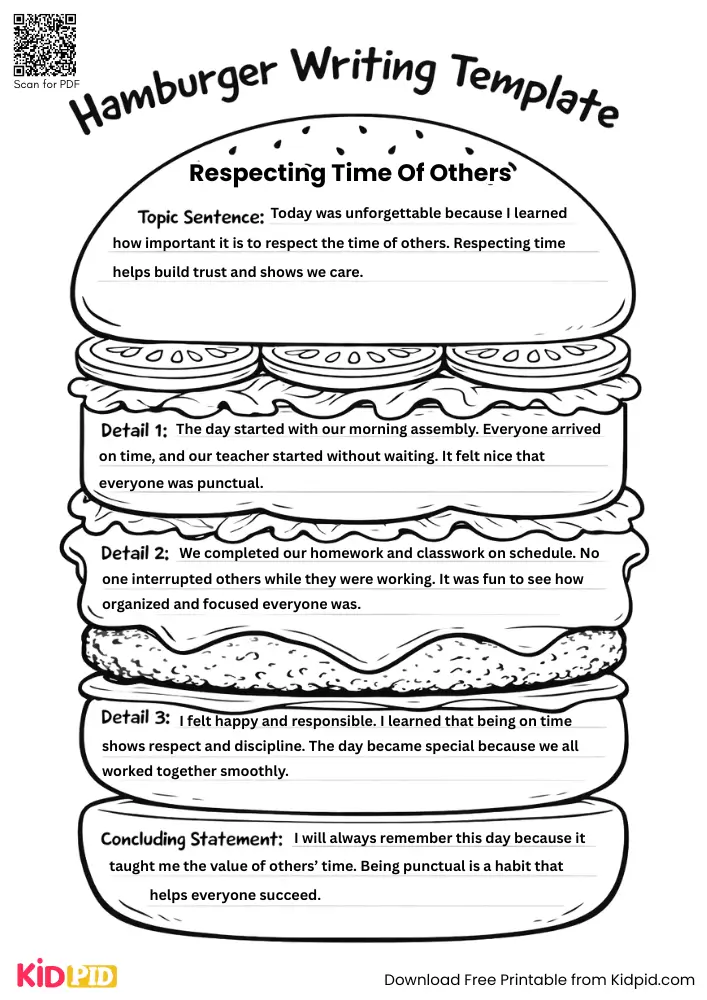
This essay explains why respecting others’ time shows discipline and good manners. Encourages punctuality, responsibility, time management, and respectful behavior in school and society.
Caring For Things We Borrow
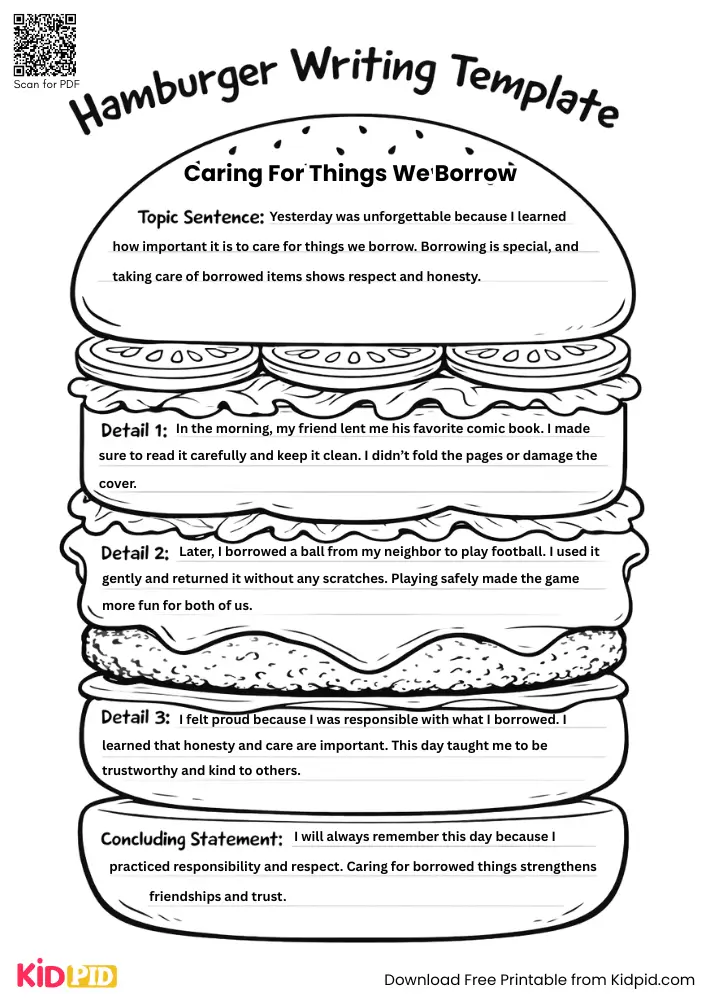
This essay explains why borrowed items should be handled carefully and returned properly. Encourages honesty, responsibility, respect for others’ belongings, and good character development.
Learning Responsibility Through Actions
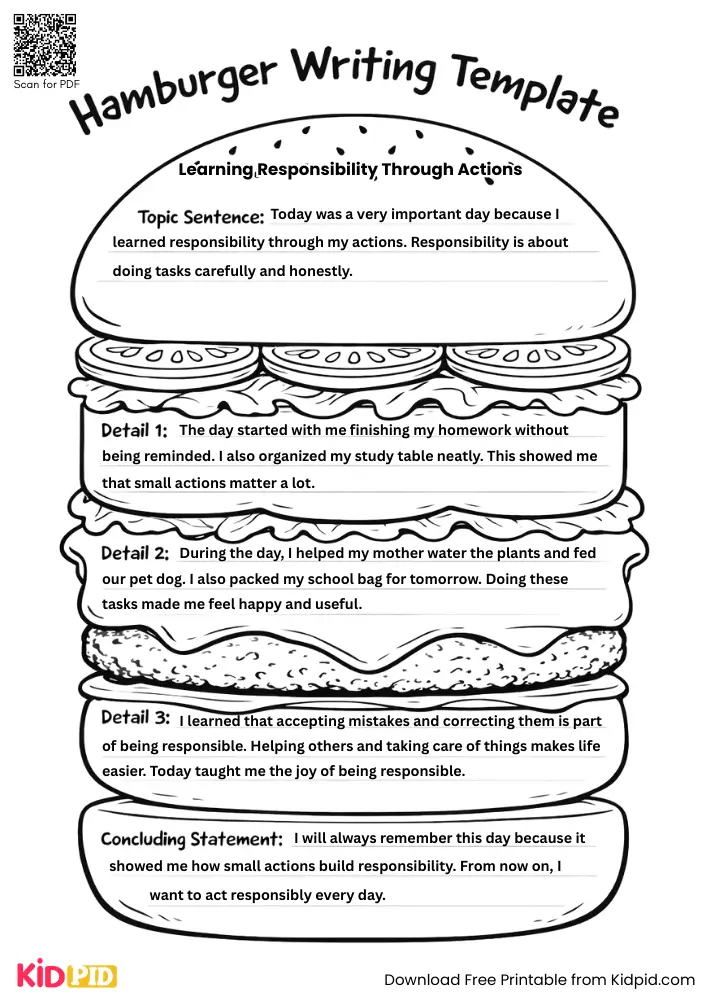
This essay highlights how actions teach responsibility better than words. Encourages accountability, practical learning, discipline, and responsible behavior in everyday life.
How Attitude Affects Success
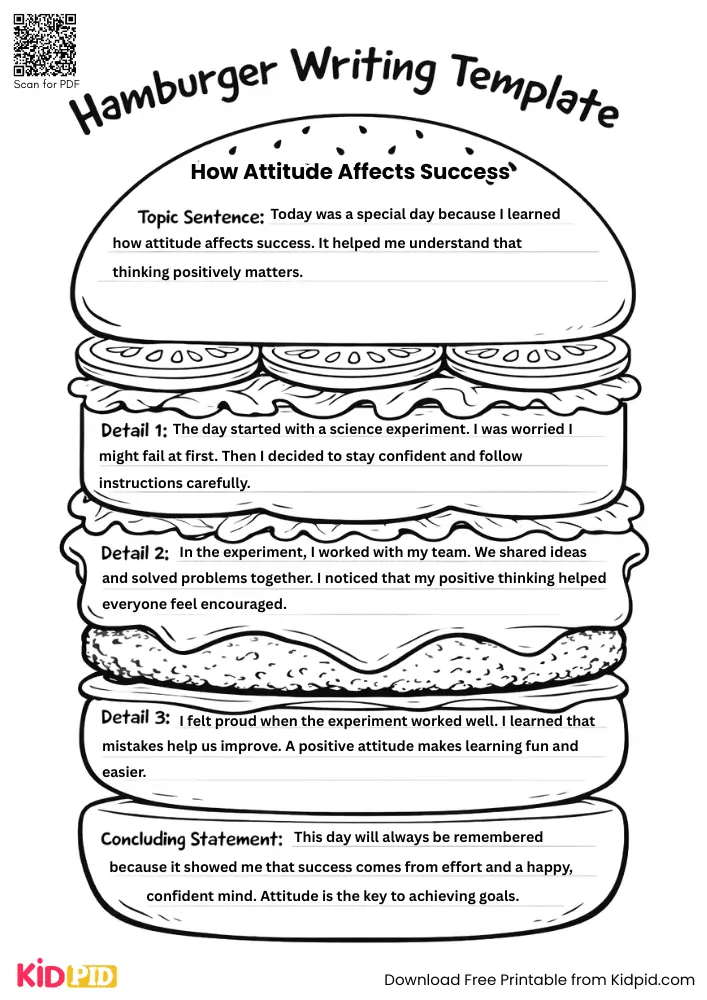
This essay explains how a positive attitude improves motivation, confidence, and success. Encourages determination, optimism, strong mindset, and personal development for achieving goals.