Personal responsibility means understanding that our actions have effects on ourselves and others. It teaches us to make good choices, admit mistakes, and learn from them. By practicing responsibility every day, we grow into trustworthy, independent, and thoughtful individuals who can handle life’s challenges confidently.
5 Pointers on “Understanding Personal Responsibility”
- Personal responsibility means owning our actions and choices.
- It teaches us to be honest and accept mistakes.
- Being responsible helps us gain trust from others.
- Small duties at home and school build good habits.
- Responsibility helps us grow into confident and independent people.
‘Understanding Personal Responsibility’ Paragraph Writing
Hamburger Paragraph on ‘Understanding Personal Responsibility’ (Free Template)
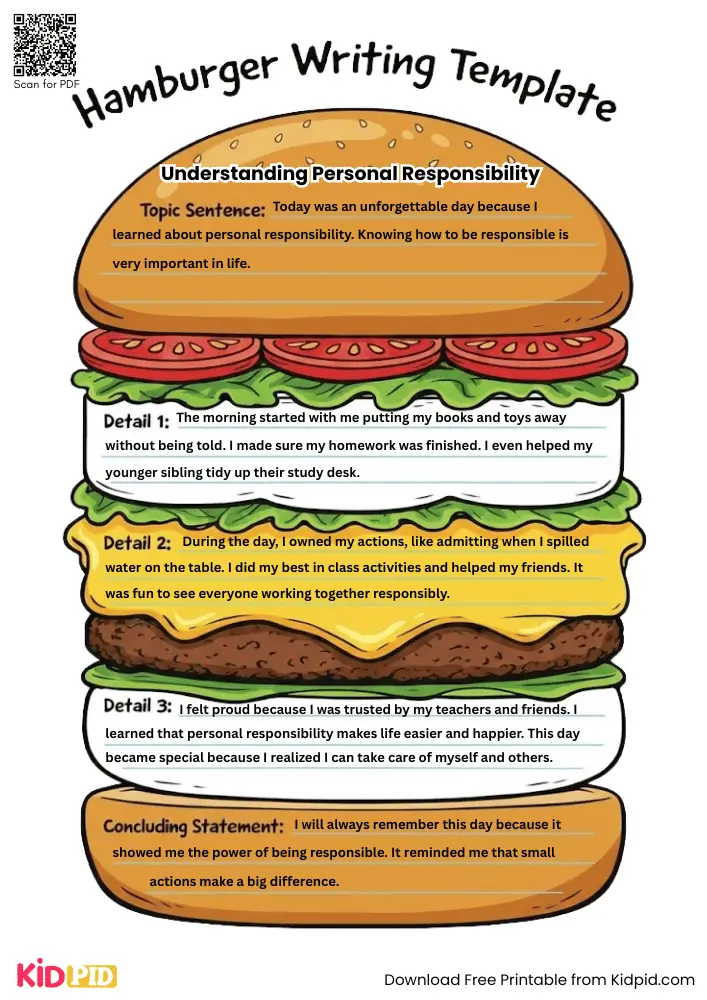
Topic Sentence: Today was an unforgettable day because I learned about personal responsibility. Knowing how to be responsible is very important in life.
Details 1: The morning started with me putting my books and toys away without being told. I made sure my homework was finished. I even helped my younger sibling tidy up their study desk.
Details 2: During the day, I owned my actions, like admitting when I spilled water on the table. I did my best in class activities and helped my friends. It was fun to see everyone working together responsibly.
Details 3: I felt proud because I was trusted by my teachers and friends. I learned that personal responsibility makes life easier and happier. This day became special because I realized I can take care of myself and others.
Concluding Statement: I will always remember this day because it showed me the power of being responsible. It reminded me that small actions make a big difference.
Short Paragraph on ‘Understanding Personal Responsibility’ – 50 Words for Grade 3
Personal responsibility means you are in charge of your own actions. You clean up your mess. You finish your homework. You say sorry if you hurt someone. When you do these things, you become more trustworthy and feel proud of yourself. It’s how you show you can be counted on.
Long Paragraph on ‘Understanding Personal Responsibility’ – 100 Words for Grade 4
Personal responsibility is about being the boss of your own choices and actions. It means you do your chores without being told and put your toys away. If you make a mistake, like breaking something, you own up to it. You try your best with schoolwork and remember to be kind. It’s not about being perfect, but about trying and learning. When you are responsible, people see that they can trust you. You also feel strong and happy inside because you know you are doing the right thing. It’s a superpower that helps you grow!
‘Understanding Personal Responsibility’ Essay Writing
‘Understanding Personal Responsibility’ – 150 to 200 Words for Grades 5 to 7 Students
Understanding personal responsibility is like being the captain of your own ship. It means you are in charge of yourself! It starts with the little things, like putting your toys away after playing or remembering to bring your homework to school. When you do these things, you are taking responsibility.
A big part of responsibility is owning your actions. If you accidentally spill some milk, you don’t pretend it didn’t happen. You say, “I’ll clean it up!” That shows you are reliable. It also means keeping your promises. If you tell your friend you’ll help them, you follow through. Being responsible doesn’t mean you never make mistakes. Everyone does! It means you learn from them. Maybe you forgot to study for a quiz and got a bad grade. Instead of getting upset, you can decide to study earlier next time. When you are responsible, people trust you, you feel proud of yourself, and you help make your home, classroom, and world a better, happier place.
‘Understanding Personal Responsibility’ – 300 Words Essay for Grades 8 to 10 Students
Imagine you have a superpower that makes you stronger, smarter, and more trusted every time you use it. That superpower is called personal responsibility. It’s not a magic trick; it’s a choice you make every day to be the boss of your own actions and life.
So, what does this look like? First, it means taking care of your own jobs. These are things like brushing your teeth without being told, packing your own school bag, or finishing your homework before turning on the TV. When you do these things, you are telling the world, “I can handle this!” It also means looking after your stuff. A responsible person hangs up their coat, keeps their books neat, and doesn’t leave their bike out in the rain. By caring for your things, you show respect for what you have.
The most important part of responsibility is owning your choices, both good and bad. If you share your snack with someone who forgot theirs, you can feel proud—that’s your positive choice! But if you say something mean or break a rule, responsibility means having the courage to say, “I was wrong, and I’m sorry.” You don’t blame your brother or the dog! You learn from the mistake and try to do better. This is how you grow.
Why is this so important? Because responsibility builds trust. Your parents, teachers, and friends will know they can count on you. It also creates confidence inside you. Every time you complete a task or fix a mistake, you prove to yourself how capable you are. Finally, it makes your community better. When everyone does their part—picking up litter, being kind, doing their work—the whole classroom, home, and neighborhood become happier places.
Remember, being responsible isn’t about being perfect. It’s about trying your best, cleaning up your messes (real and metaphorical!), and knowing that you have the power to make good things happen. Start small, and watch your superpower grow!
Related Essay & Paragraph Topics
- The Importance of Taking Responsibility for Your Actions
- How Personal Responsibility Shapes Our Character
- Learning from Mistakes: A Key to Personal Growth
- Being Accountable in School, Home, and Friends
- Small Choices, Big Impact: Understanding Responsibility
You May like this:
Role Of Discipline In Environmental Care

Explains how disciplined habits like saving water, reducing waste, and keeping surroundings clean support environmental protection. Encourages responsible behavior, sustainable living, and eco-friendly practices.
How Daily Actions Impact Nature

Explains how everyday actions like waste disposal, energy use, and water conservation affect the environment. Encourages mindful habits and sustainable practices.
Importance Of Reducing Unnecessary Consumption

Discusses how reducing unnecessary consumption helps conserve resources and reduce pollution. Encourages mindful spending, sustainable living, and environmental responsibility.
Respecting Nature In Daily Life

Highlights how respecting nature through eco-friendly habits supports environmental balance. Promotes sustainability, conservation awareness, and responsible living.
How Children Can Protect Nature

Children can protect nature by planting trees, reducing waste, saving water, recycling materials, and practicing eco-friendly habits. Teaching environmental protection and sustainability helps build responsible future citizens.