Listening skills are essential for learning and success in school. When students listen carefully, they understand lessons, follow instructions, and avoid mistakes. Good listening improves communication, respect, and cooperation. Developing listening skills helps children perform better, stay confident, and enjoy school activities while becoming responsible learners.
5 Pointers on ‘Why Listening Skills Matter in School’
- Listening carefully helps us learn new topics.
- Good listening ensures we do tasks correctly.
- Listening helps us respond politely to teachers and friends.
- Paying attention reduces errors in homework and classwork.
- Listening shows we care about what others say.
‘Why Listening Skills Matter in School’ Paragraph Writing
Hamburger Paragraph on ‘Why Listening Skills Matter in School’ (Free Template)
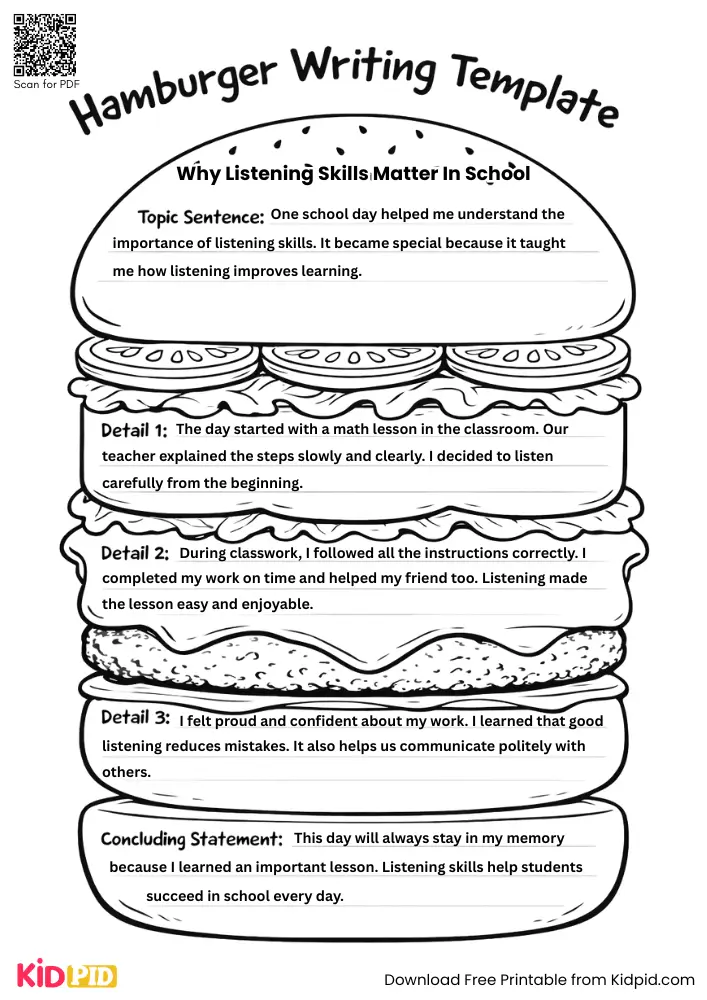
Topic Sentence: One school day helped me understand the importance of listening skills. It became special because it taught me how listening improves learning.
Details 1: The day started with a math lesson in the classroom. Our teacher explained the steps slowly and clearly. I decided to listen carefully from the beginning.
Details 2: During classwork, I followed all the instructions correctly. I completed my work on time and helped my friend too. Listening made the lesson easy and enjoyable.
Details 3: I felt proud and confident about my work. I learned that good listening reduces mistakes. It also helps us communicate politely with others.
Concluding Statement: This day will always stay in my memory because I learned an important lesson. Listening skills help students succeed in school every day.
Short Paragraph on ‘Why Listening Skills Matter in School’ – 50 Words for Grade 4
Listening skills are very important in school. When we listen carefully, we understand lessons better and follow instructions correctly. Listening also helps us communicate politely with teachers and friends. Good listening reduces mistakes and shows respect. It helps us learn more, behave well, and succeed in school.
Long Paragraph on ‘Why Listening Skills Matter in School ‘ – 100 Words for Grade 5

Listening skills are very important for students in school. When we listen carefully, we can understand lessons and instructions from teachers easily. Good listening helps us answer questions correctly and complete tasks on time. It also helps us communicate politely with classmates and teachers. Students who listen well make fewer mistakes in homework and classwork. Listening shows respect for others and helps us learn from them. Practicing listening skills every day makes learning easier, improves focus, and helps students perform better in school activities. Good listening is a skill that supports success in school and daily life.
‘Why Listening Skills Matter in School’ Essay Writing
‘Why Listening Skills Matter in School’- 150 to 200 Words Essay for Grades 6 to 8 Students
Listening skills are a superpower in school, and I learned this the hard way during a science experiment. Our teacher, Ms. Lopez, gave clear, step-by-step instructions for mixing our solutions. I was excited and only half-listening, focused more on the cool beakers than her words. When we started, I rushed ahead and mixed the wrong liquids. My experiment fizzed wildly and then went completely flat, while my partner’s, who had listened carefully, turned a perfect blue. I felt frustrated and left out. From that day, I decided to practice being a “whole-body listener”—ears open, eyes on the speaker, and hands still. The difference was amazing. I stopped missing important details in history lessons and understood math explanations better. I also became a better friend because I listened when others shared their ideas. Good listening isn’t just about being quiet; it’s about actively working to understand. It’s the key that unlocks learning, helps you follow directions, and shows everyone that you care.
‘Why Listening Skills Matter in School’ – 300 Words Essay for Grades 9 to 10 Students

Strong listening skills are the invisible engine that powers success and friendship in school. They are far more than just “hearing” what someone says; they are about actively working to understand and connect. I realized their true value during a group project to build a model of an ancient Egyptian pyramid.
Our group of four had many ideas, but at first, we all just waited for our turn to talk instead of truly listening. We argued over the size, the material, and even the color of the sand. Progress was zero. Our teacher reminded us that collaboration starts with listening. We decided that before anyone could share a new idea, they first had to summarize what the last person said. This simple rule changed everything. When I listened to understand my classmate Sam’s point about cardboard stability, I realized it solved my worry about the model collapsing. Because I listened to Priya’s research on paint colors, we made our pyramid historically accurate.
This experience showed me that listening is the foundation of all learning. In class, it allows me to capture not just facts from the teacher, but also the connections between them—why an event happened, how a formula works. It prevents the silly mistakes that come from missing a single word in a set of directions. Socially, listening builds trust. When a friend is upset, listening—without immediately trying to fix things—shows I care. It helps resolve conflicts because I can finally understand the other person’s side. School is full of voices: teachers giving lessons, friends sharing stories, and coaches explaining plays. Honing the skill to filter, focus, and truly comprehend these voices turns noise into knowledge and groups of individuals into real teams. Listening isn’t passive; it’s the most active and important part of communication. It is how we learn about the world and about each other.
Related Essay & Paragraph Topics
- How Listening Helps Me Learn Better
- The Importance of Paying Attention in Class
- Listening Skills for Group Activities
- How I Became a Better Listener
- Why Teachers Say Listening Is Important
You May like this:
Handling Disappointment Positively

Handling disappointment positively builds resilience, optimism, emotional strength, growth mindset, and perseverance.
Understanding Others’ Feelings

Understanding others’ feelings enhances empathy, communication skills, trust, compassion, and social harmony.
Learning Self-Control
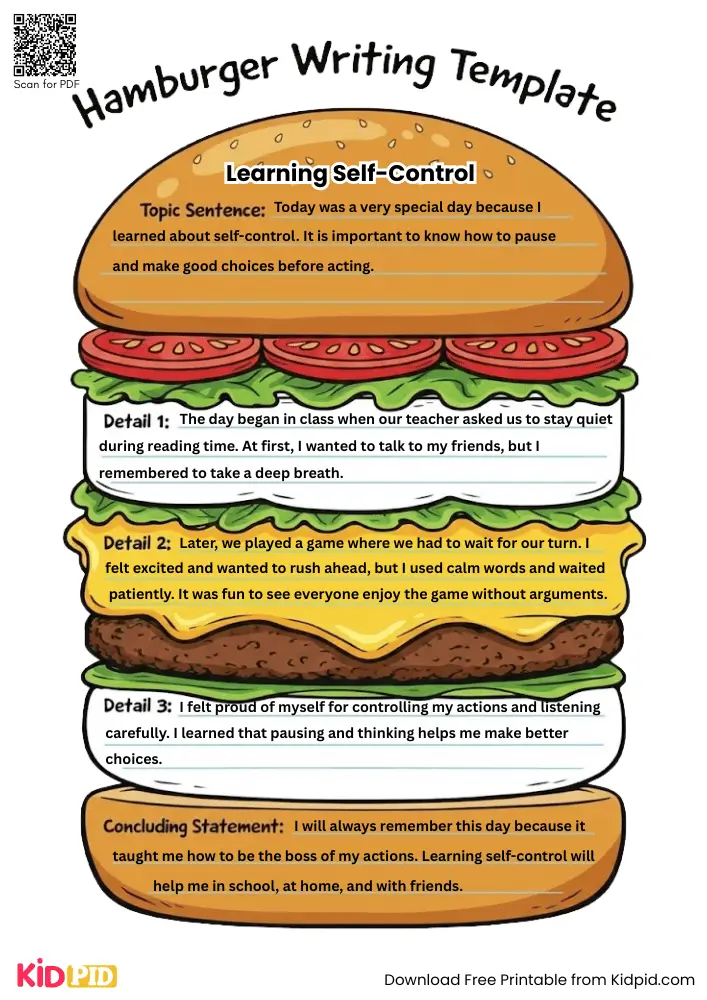
Learning self-control builds discipline, emotional regulation, responsible behavior, patience, and long-term success.
Building Emotional Strength
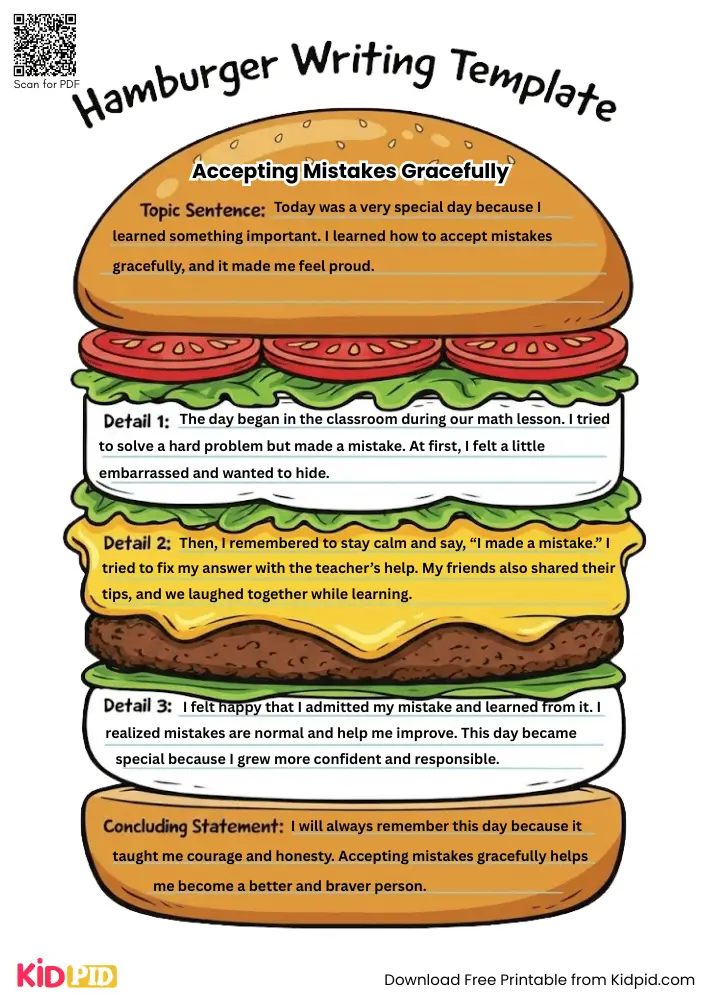
Building emotional strength supports mental health, resilience, confidence, stress management, and personal development.
Respecting National Symbols

Respecting national symbols reflects patriotism, civic responsibility, cultural pride, unity, national identity, and respect for heritage.