Trees are very important for life on Earth. They help us breathe clean air, give homes to animals, and keep our surroundings cool and safe. Trees also provide food, shade, and wood. By protecting trees, we protect nature, animals, and our own future.
5 Pointers on ‘Why Trees are Important’
- Trees give us oxygen to breathe.
- Trees provide food, shade, and shelter.
- Trees help keep the air clean and fresh.
- Trees protect soil and save water.
- Trees make our Earth green and beautiful.
‘Why Trees are Important’ Paragraph Writing
Hamburger Paragraph on ‘Why Trees are Important’ (Free Template)
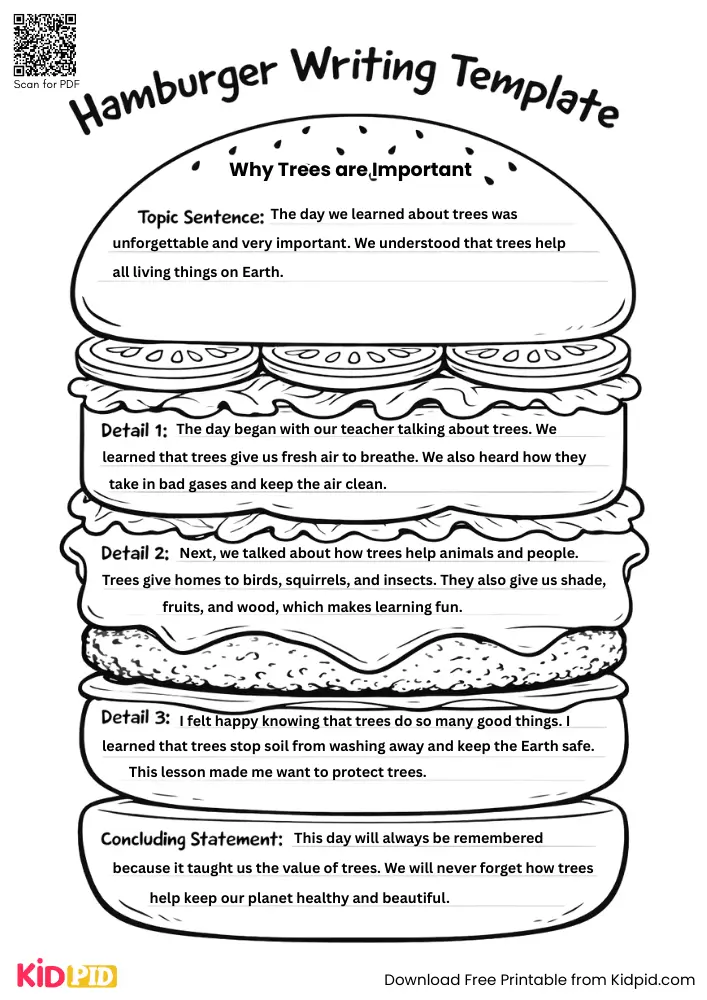
Topic Sentence: The day we learned about trees was unforgettable and very important. We understood that trees help all living things on Earth.
Details 1: The day began with our teacher talking about trees. We learned that trees give us fresh air to breathe. We also heard how they take in bad gases and keep the air clean.
Details 2: Next, we talked about how trees help animals and people. Trees give homes to birds, squirrels, and insects. They also give us shade, fruits, and wood, which makes learning fun.
Details 3: I felt happy knowing that trees do so many good things. I learned that trees stop soil from washing away and keep the Earth safe. This lesson made me want to protect trees.
Concluding Statement: This day will always be remembered because it taught us the value of trees. We will never forget how trees help keep our planet healthy and beautiful.
Short Paragraph on ‘Why Trees are Important’ – 50 Words for Grade 3
Trees are very important. They give us clean air to breathe by taking in bad gases. They give homes to birds and animals. Trees give us shade, fruit, and wood. They also help stop soil from washing away. Trees keep our planet healthy and beautiful for everyone.
Long Paragraph on ‘Why Trees are Important’ – 100 Words for Grade 4

Trees are like superheroes for our planet. First, they clean our air. They breathe in carbon dioxide and give out fresh oxygen, which all people and animals need. Second, trees are homes for squirrels, birds, and insects. Their roots hold the soil tight to stop floods. Trees also give us cool shade on hot days, yummy fruits to eat, and strong wood. They make our world more beautiful and peaceful. Without trees, Earth would be a hotter, dirtier, and lonelier place. We must protect trees because they protect us and all living things.
‘Why Trees are Important’ Essay Writing
‘Why Trees are Important’ – 150 to 200 Words Essay for Grade 5
Trees are like the quiet, gentle superheroes of our planet. We sometimes forget how much they do for us every single day. First and most importantly, they are essential for the air we breathe. Trees absorb carbon dioxide—a gas we don’t need—and release fresh oxygen, which every person and animal needs to live. They are our planet’s natural air filters.
Trees are also busy creating homes. Their branches, leaves, and trunks provide food and shelter for countless birds, insects, and mammals. A single tree can be a whole apartment building for wildlife! For us, trees are generous givers. They offer us cool shade on a sunny day, delicious fruits to eat, and strong wood to build with. They also make our world more beautiful and peaceful, giving us places to climb, read, or have a picnic. By protecting trees, we are protecting the clean air, animal friends, and natural beauty that make Earth a wonderful home.
‘Why Trees are Important’ – 300 Words Essay for Grades 6 to 7 Students

Imagine trying to breathe underwater. It’s impossible because you need air. Now, imagine a world without trees—it would be just as difficult to breathe! Trees are fundamental to life on Earth, acting as the planet’s lungs, guardians, and caretakers in ways we often overlook.
Their most vital job is being our atmosphere’s managers. Through a magical process called photosynthesis, trees take in carbon dioxide (a gas that contributes to climate change) and, using sunlight, transform it into the oxygen we need for every breath. A single mature tree can provide a day’s supply of oxygen for up to four people. They are also climate control experts. Their leaves provide shade, cooling the ground and our homes, while they release water vapor that humidifies and cools the surrounding air—a natural air conditioning system.
Beyond the air, trees are the architects of healthy ecosystems. Their strong roots are like giant hands gripping the soil, preventing it from washing away during heavy rains. This protects our clean water by filtering it through the earth. Trees are also bustling habitats. From the highest leaf to the deepest root, they support an incredible variety of life, offering food, shelter, and nesting sites for birds, insects, mammals, and fungi. A forest is a thriving community built by trees.
Finally, trees are incredible givers to humanity. They provide the wood for our homes, the paper for our books, and countless medicines. They give us delicious fruits, nuts, and maple syrup. Perhaps just as importantly, they give us beauty, tranquility, and a sense of wonder. A walk in a forest can calm our minds and lift our spirits. In short, trees are not just part of our landscape; they are essential partners for our survival, our planet’s health, and our happiness. Protecting them is one of the smartest and most important things we can do.
Related Essay & Paragraph Topic
- My Favorite Animal
- The Importance of Water
- A Day at the Park
- My Best Friend
- Why Cleanliness Is Important
You May like this:
Standing In Line Patiently

Standing in line patiently shows discipline, respect, self-control, social responsibility, and emotional intelligence.
Keeping Surroundings Tidy

Keeping surroundings tidy improves hygiene, organization, mental clarity, environmental cleanliness, and responsible living.
Sharing Limited Resources

Sharing limited resources promotes fairness, cooperation, empathy, teamwork, gratitude, and social harmony.
Respecting Others’ Time
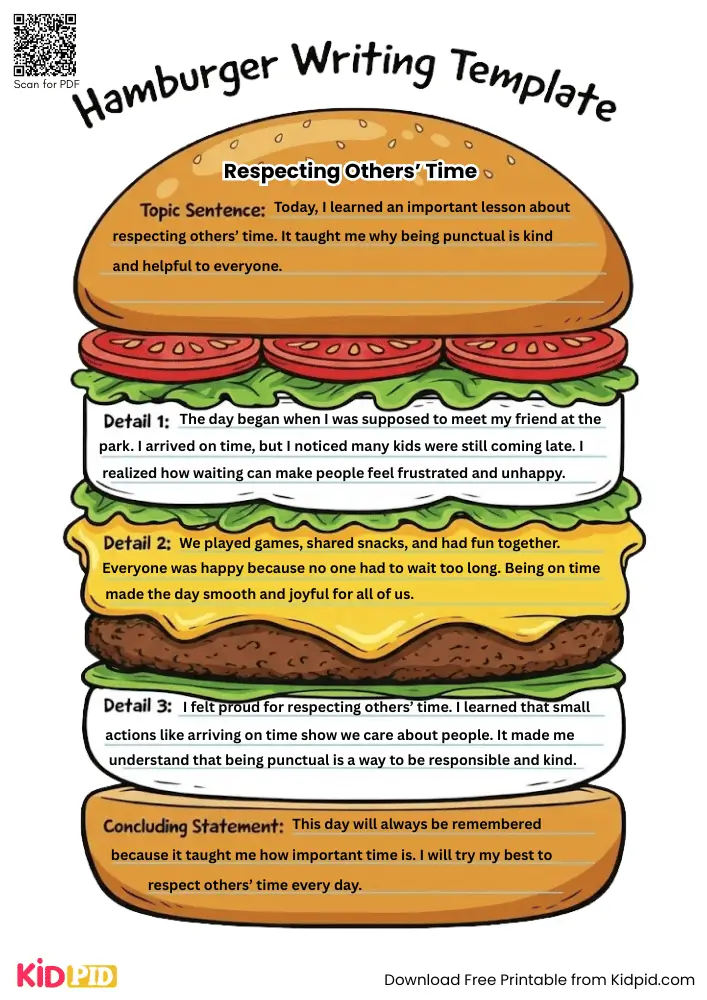
Respecting others’ time builds trust, professionalism, courtesy, strong relationships, and social responsibility.
Taking Care of Common Spaces

Taking care of common spaces promotes cleanliness, civic responsibility, respect, sustainability, and community well-being.