“Mistakes are a natural part of learning and growing every day. Accepting mistakes gracefully helps us stay calm, take responsibility, and try again with confidence. When we admit errors and learn from them, we become wiser and stronger. This positive attitude builds trust, courage, and better habits for life.”
5 Pointers on ‘Accepting Mistakes Gracefully’
- Everyone makes mistakes, and it is okay to make them.
- Accepting mistakes helps us learn and improve.
- Saying “sorry” shows honesty and responsibility.
- Staying calm helps us fix our mistakes.
- Learning from mistakes makes us stronger and wiser.
‘Accepting Mistakes Gracefully’ Paragraph Writing
Hamburger Paragraph on ‘Accepting Mistakes Gracefully’ (Free Template)
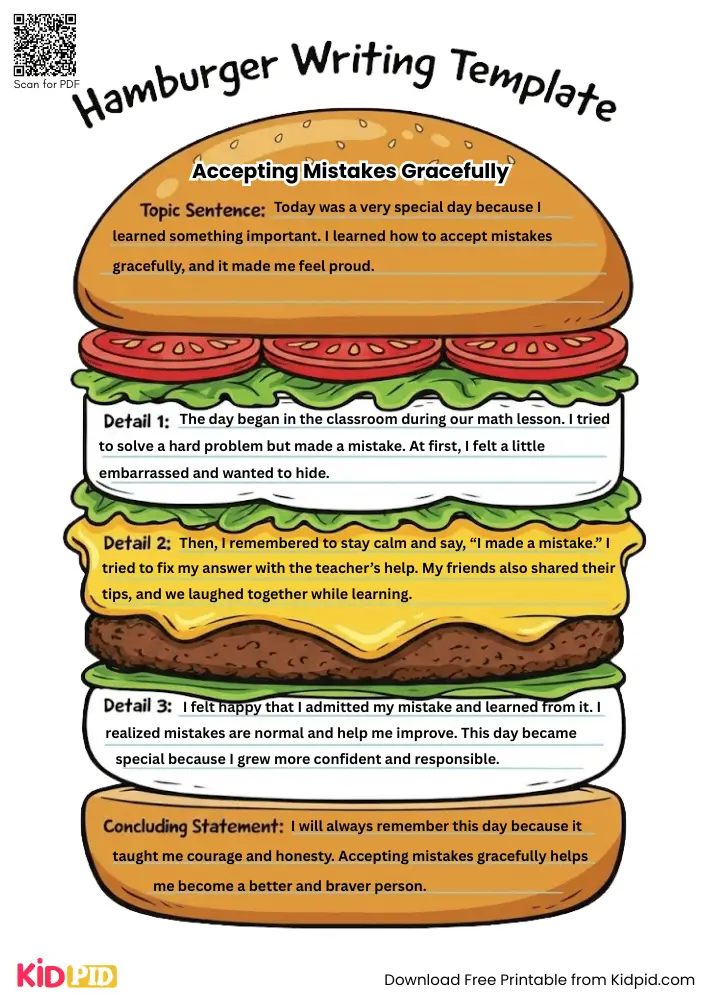
Topic Sentence: Today was a very special day because I learned something important. I learned how to accept mistakes gracefully, and it made me feel proud.
Details 1: The day began in the classroom during our math lesson. I tried to solve a hard problem but made a mistake. At first, I felt a little embarrassed and wanted to hide.
Details 2: Then, I remembered to stay calm and say, “I made a mistake.” I tried to fix my answer with the teacher’s help. My friends also shared their tips, and we laughed together while learning.
Details 3: I felt happy that I admitted my mistake and learned from it. I realized mistakes are normal and help me improve. This day became special because I grew more confident and responsible.
Concluding Statement: I will always remember this day because it taught me courage and honesty. Accepting mistakes gracefully helps me become a better and braver person.
Short Paragraph on ‘Accepting Mistakes Gracefully’ – 50 Words for Grade 4
Everyone makes mistakes. Making mistakes is normal. Accepting mistakes gracefully means saying “sorry” and trying to fix them. We should stay calm and learn from our mistakes. When we accept mistakes, we become better and more confident every day.
Long Paragraph on ‘Accepting Mistakes Gracefully’ – 100 Words for Grade 5
Accepting mistakes gracefully is an important habit. Everyone makes mistakes while learning new things. We should not feel ashamed or angry when we make a mistake. Instead, we should accept it calmly. Saying “sorry” when we are wrong shows honesty and good manners. We should also think about how to fix our mistakes. Mistakes help us learn and improve. When we accept mistakes, teachers and parents trust us more. Learning from mistakes makes us stronger and wiser. Accepting mistakes gracefully helps us grow into responsible and confident people.
‘Accepting Mistakes Gracefully’ Essay Writing
‘Accepting Mistakes Gracefully’ – 150 to 200 Words Essay for Grades 6 & 7 Students
Making a mistake can feel embarrassing or make you want to hide. But accepting mistakes gracefully is a sign of real strength. It starts with understanding that everyone makes mistakes. They are a normal part of learning and growing.
When you make a mistake, the first step is to admit it calmly. You can say, “I made a mistake.” If it affected someone else, look at them and say a simple, “I’m sorry.” Then, see if you can fix it. Cleaning up a spill or offering to help repair something shows you are responsible.
Most importantly, learn from it. Ask yourself, “What will I do differently next time?” This turns the mistake into a useful lesson. Finally, be kind to yourself. Don’t call yourself names or stay upset. Everyone, from famous scientists to your favourite athletes, has made mistakes. What makes them great is how they learned and tried again. You can do that too.
‘Accepting Mistakes Gracefully’ – 300 Words Essay for Grades 8 to 10 Students
Have you ever felt your face get hot after spilling your juice, giving a wrong answer in class, or accidentally hurting a friend’s feelings? That’s the sting of making a mistake. It doesn’t feel good, but learning to accept mistakes gracefully is one of the most important skills you can learn. It doesn’t mean you like making errors; it means you handle them with courage and wisdom.
First, change how you see mistakes. Mistakes are not failures; they are teachers. Every single person who has ever learned something new—riding a bike, playing an instrument, solving math problems—has made many mistakes along the way. They are proof that you are trying and challenging yourself.
When a mistake happens, acknowledge it honestly. Take a deep breath and say, “I see what happened.” If your mistake upset someone, offer a sincere apology. Look them in the eye and say, “I’m sorry I knocked over your tower. I wasn’t being careful.” A good apology focuses on your action and their feelings, not on excuses.
Next, take responsible action. This is called making amends. If you made a mess, clean it. If you broke something, help fix it or replace it. This step shows others—and yourself—that you are accountable.
Now, do the most powerful part: look for the lesson. Ask yourself, “What can I learn from this so it doesn’t happen again?” Maybe you learn to walk slowly with a full cup, to double-check your work, or to look where you’re going. This turns a “bad” moment into a valuable guide for the future.
Finally, practice self-compassion. Talk to yourself with kindness. Say, “It’s okay. I made a mistake, and now I know better.” Then, let it go and try again. By accepting mistakes gracefully, you show that you are brave, honest, and always growing. That’s the mark of a truly strong and smart person.
Related Essay & Paragraph Topic
- Understanding Why Mistakes Happen
- Learning Important Lessons From Errors
- Being Brave To Admit Mistakes
- Growing Better After Making Mistakes
- Staying Positive When Things Go Wrong
You May like this:
How Plants Make Food
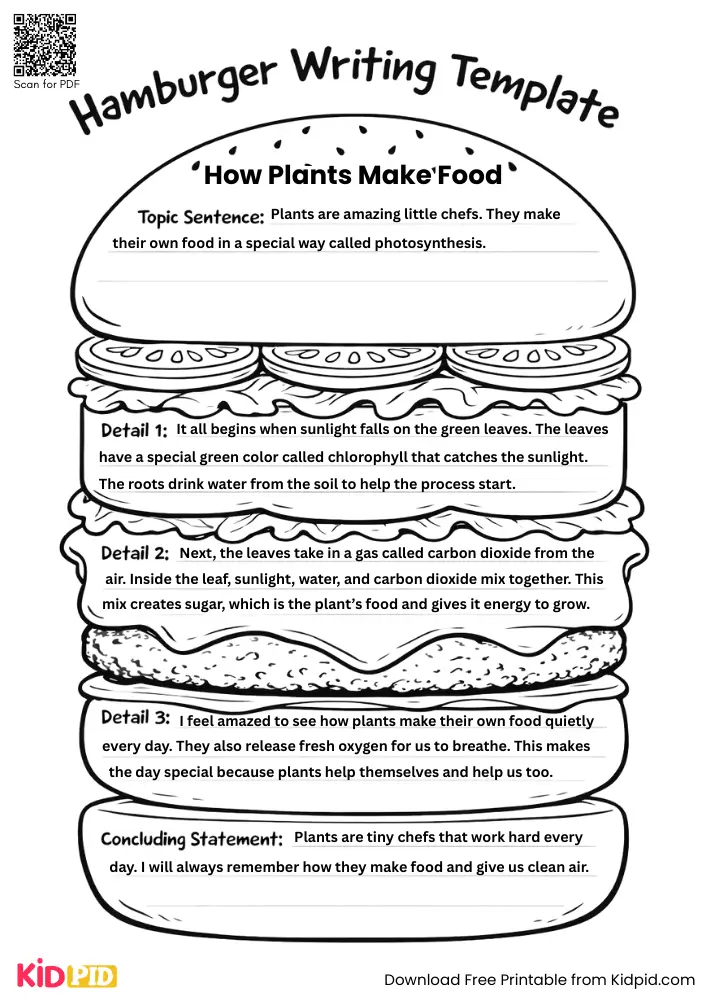
Plants make food through photosynthesis, using sunlight, carbon dioxide, water, chlorophyll, and energy conversion to produce glucose.
The Functions Of The Human Heart
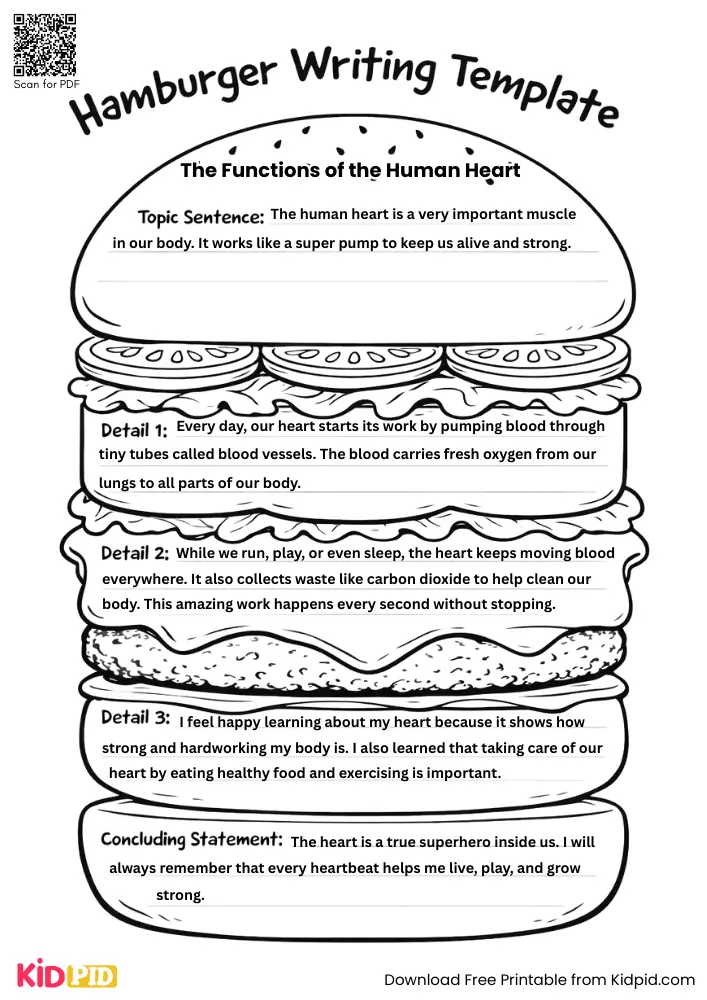
The human heart pumps oxygenated blood, maintains circulation, supplies nutrients, removes waste, regulates blood pressure, and supports overall body function.
How Vaccines Protect Us

Vaccines strengthen the immune system, prevent infectious diseases, reduce outbreaks, create herd immunity, and protect public health safely.
Why Recycling Must Increase
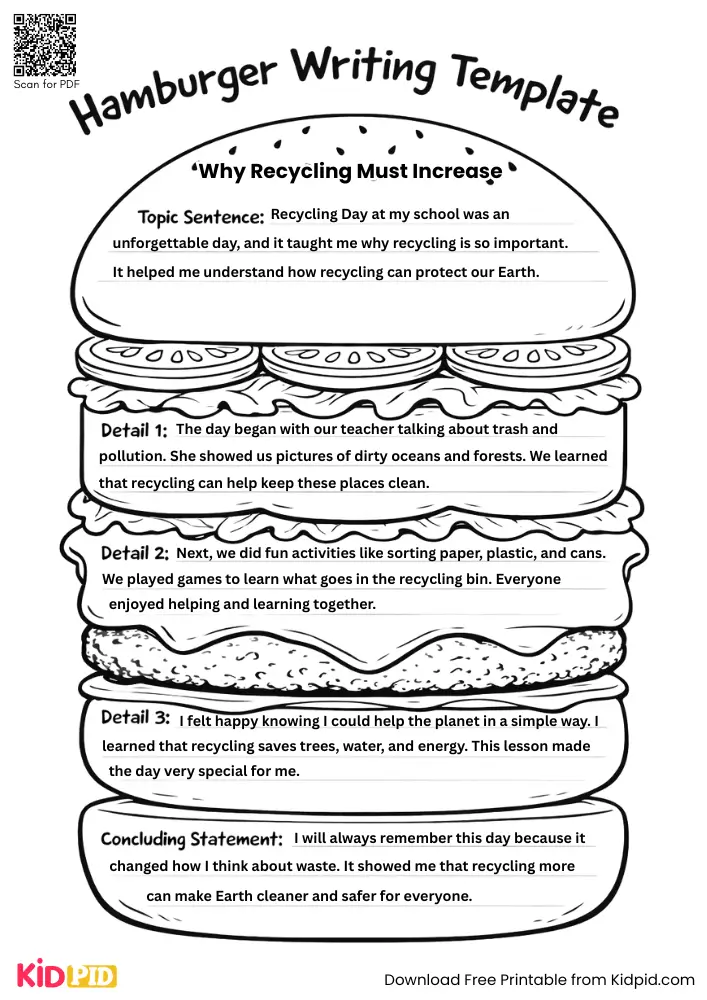
Increasing recycling reduces waste, conserves natural resources, saves energy, lowers pollution, protects ecosystems, and supports sustainable development.
Why Renewable Energy Matters

Renewable energy reduces carbon emissions, combats climate change, promotes sustainability, conserves resources, and supports clean energy solutions.