Learning adaptability gradually helps children face change with confidence and calmness. It teaches them to adjust, learn from mistakes, and stay positive in new situations. When children develop adaptability early, they gain strong life skills that support growth, learning, and success in a changing world.
5 Pointers on ‘Learning Adaptability Gradually’
- Learning adaptability helps children adjust to new situations.
- It teaches children to accept change calmly.
- Small changes help children learn adaptability slowly.
- Adaptability builds confidence and courage.
- Learning adaptability prepares children for future challenges.
‘Learning Adaptability Gradually’ Paragraph Writing
Hamburger Paragraph on ‘Learning Adaptability Gradually’ (Free Template)
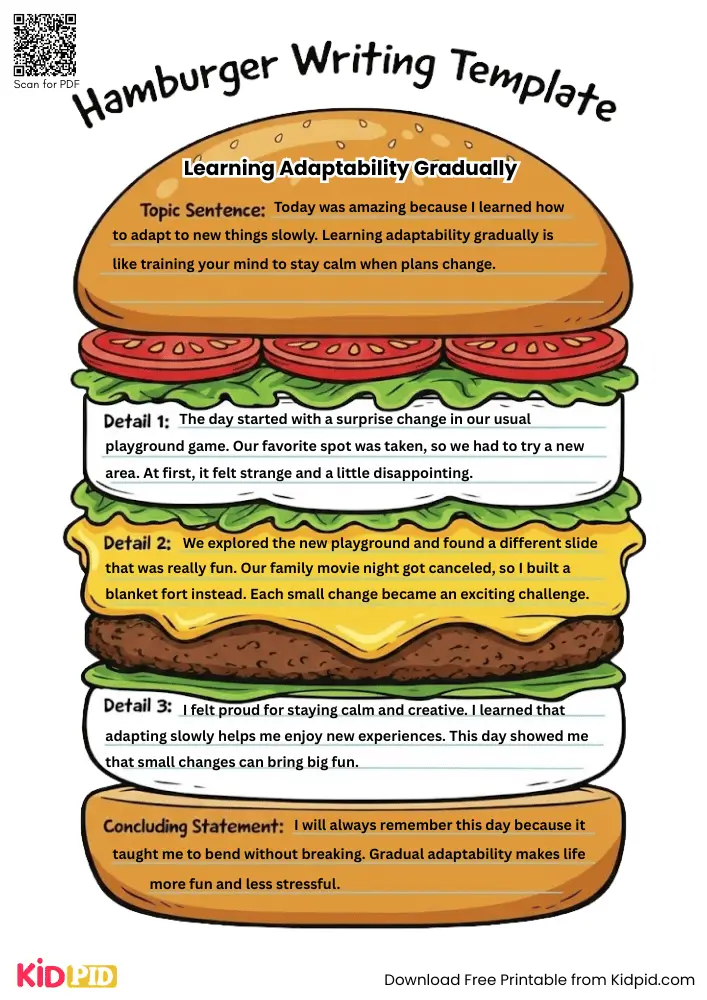
Topic Sentence: Today was amazing because I learned how to adapt to new things slowly. Learning adaptability gradually is like training your mind to stay calm when plans change.
Details 1: The day started with a surprise change in our usual playground game. Our favorite spot was taken, so we had to try a new area. At first, it felt strange and a little disappointing.
Details 2: We explored the new playground and found a different slide that was really fun. Our family movie night got canceled, so I built a blanket fort instead. Each small change became an exciting challenge.
Details 3: I felt proud for staying calm and creative. I learned that adapting slowly helps me enjoy new experiences. This day showed me that small changes can bring big fun.
Concluding Statement: I will always remember this day because it taught me to bend without breaking. Gradual adaptability makes life more fun and less stressful.
Short Paragraph on ‘Learning Adaptability Gradually’- 50 Words for Grade 4
Learning adaptability gradually helps children adjust to change easily. It teaches them to stay calm and positive in new situations. Small changes build confidence. This habit helps children learn better and face challenges with courage in school and everyday life.
Long Paragraph on ‘Learning Adaptability Gradually’- 100 Words for Grade 5
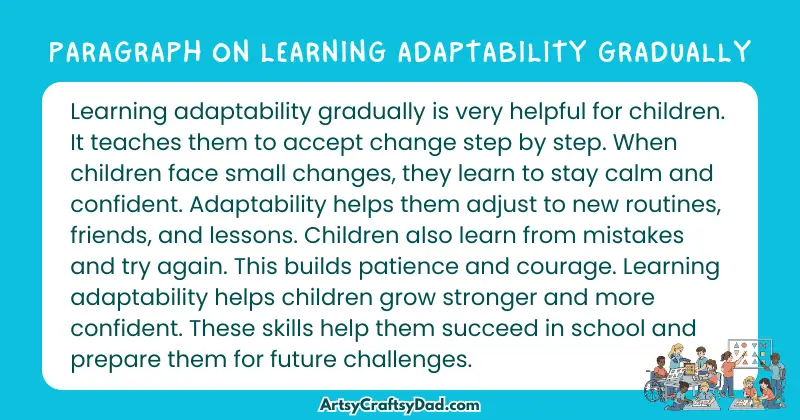
Learning adaptability gradually is very helpful for children. It teaches them to accept change step by step. When children face small changes, they learn to stay calm and confident. Adaptability helps them adjust to new routines, friends, and lessons. Children also learn from mistakes and try again. This builds patience and courage. Learning adaptability helps children grow stronger and more confident. These skills help them succeed in school and prepare them for future challenges.
‘Learning Adaptability Gradually’ Essay Writing
‘Learning Adaptability Gradually’- 150 to 200 Words Essay for Grades 6 to 8 Students
Think of your favorite tree in a storm. It doesn’t snap because it’s rigid. It adapts—it bends and sways with the wind. Learning to be adaptable is learning to bend without breaking when your plans change. You don’t have to become super-flexible all at once. Start gradually. Maybe your usual playground spot is taken, so you try a different one and discover a cool new slide. That’s adaptability! Or your family movie night gets canceled, so you build an epic blanket fort instead. When you practice with these small changes, you train your brain to stay calm and think of new options when bigger surprises come along. Being adaptable doesn’t mean you never feel disappointed. It means you don’t get stuck there. You learn to say, “Okay, that didn’t work. What can I do now?” This superpower makes life more fun and much less stressful, because you’re always ready for the next adventure, even if it’s not the one you planned.
‘Learning Adaptability Gradually’ – 300 Words Essay for Grades 9 to 10 Students
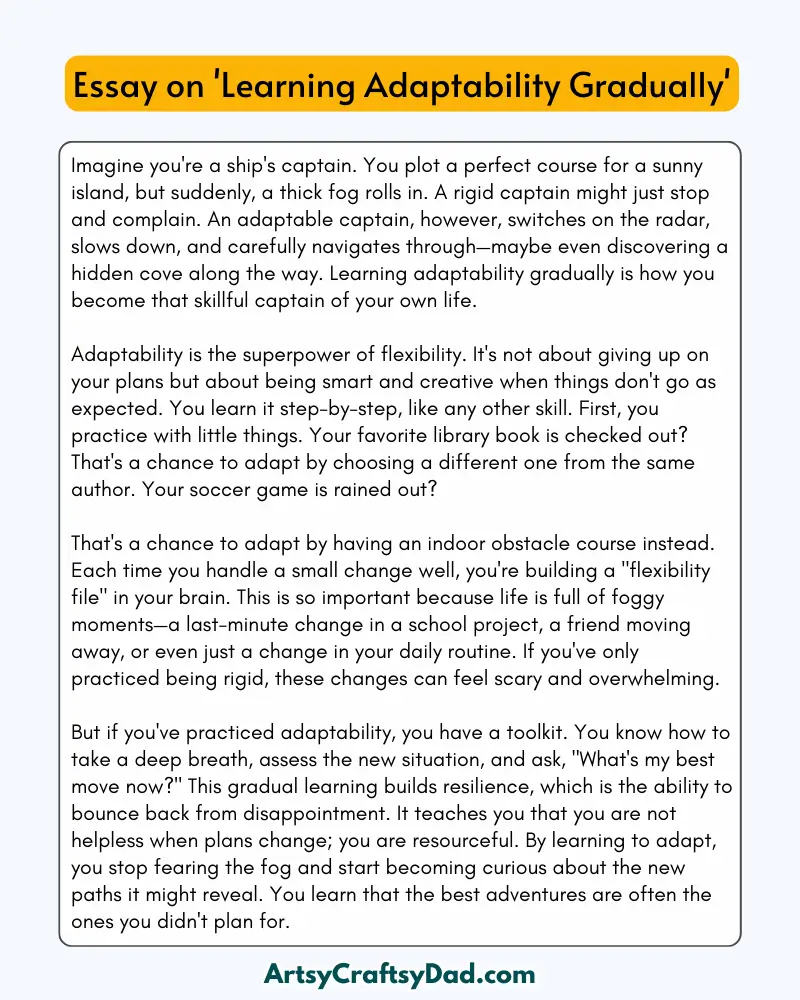
Imagine you’re a ship’s captain. You plot a perfect course for a sunny island, but suddenly, a thick fog rolls in. A rigid captain might just stop and complain. An adaptable captain, however, switches on the radar, slows down, and carefully navigates through—maybe even discovering a hidden cove along the way. Learning adaptability gradually is how you become that skillful captain of your own life.
Adaptability is the superpower of flexibility. It’s not about giving up on your plans but about being smart and creative when things don’t go as expected. You learn it step-by-step, like any other skill. First, you practice with little things. Your favorite library book is checked out? That’s a chance to adapt by choosing a different one from the same author. Your soccer game is rained out? That’s a chance to adapt by having an indoor obstacle course instead. Each time you handle a small change well, you’re building a “flexibility file” in your brain.
This is so important because life is full of foggy moments—a last-minute change in a school project, a friend moving away, or even just a change in your daily routine. If you’ve only practiced being rigid, these changes can feel scary and overwhelming. But if you’ve practiced adaptability, you have a toolkit. You know how to take a deep breath, assess the new situation, and ask, “What’s my best move now?” This gradual learning builds resilience, which is the ability to bounce back from disappointment. It teaches you that you are not helpless when plans change; you are resourceful. By learning to adapt, you stop fearing the fog and start becoming curious about the new paths it might reveal. You learn that the best adventures are often the ones you didn’t plan for.
Related Essay & Paragraph Topics
- Learning to Adapt Step by Step
- The Power of Adaptability
- Why Adaptability Is Important for Children
- Growing with Change
- Learning Adaptability for a Better Future
You May like this:
The Value Of Extracurricular Activities
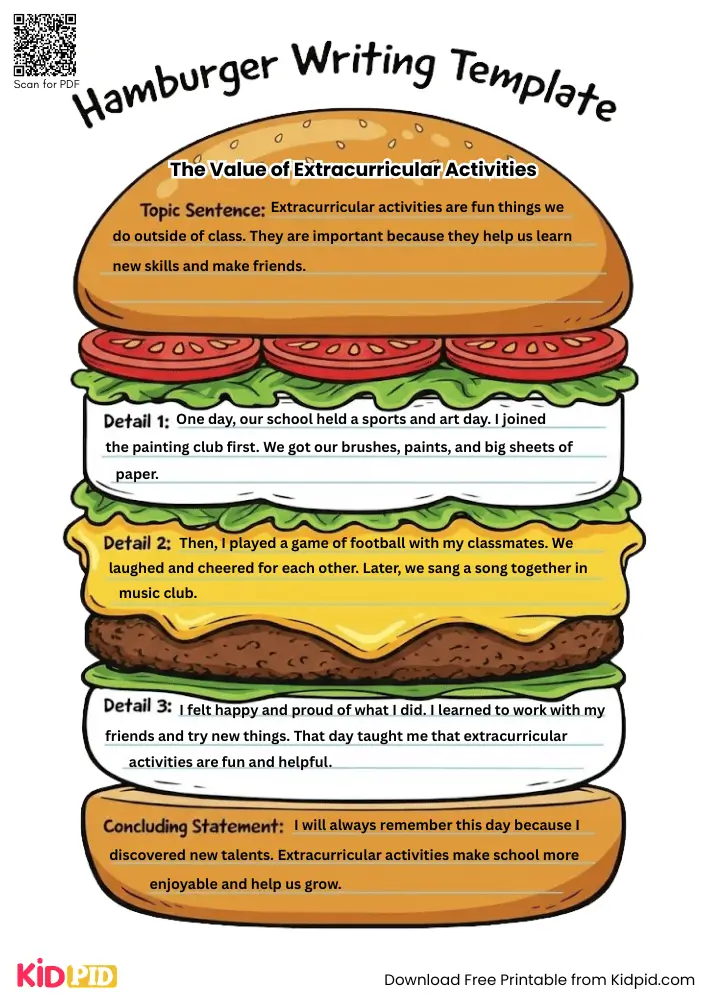
Extracurricular activities build leadership skills, teamwork, confidence, creativity, social development, physical fitness, talent enhancement, and academic balance.
The Role Of Technology In Education

Technology in education enhances digital learning, online resources, virtual classrooms, interactive lessons, accessibility, innovation, collaboration, and modern teaching strategies.
How To Stay Motivated In School

Staying motivated in school requires goal setting, positive mindset, time management, self-discipline, healthy habits, academic planning, encouragement, and consistent effort.
The Importance Of Homework

Homework improves academic performance, discipline, time management, independent learning, knowledge retention, responsibility, study skills, and overall student success.
A Lesson I learned The Hard Way

A lesson learned the hard way taught responsibility, accountability, personal growth, decision-making skills, resilience, maturity, and the importance of thoughtful actions.